«Trinkets.» Needlepoint Pillow based on the «Sewing» game
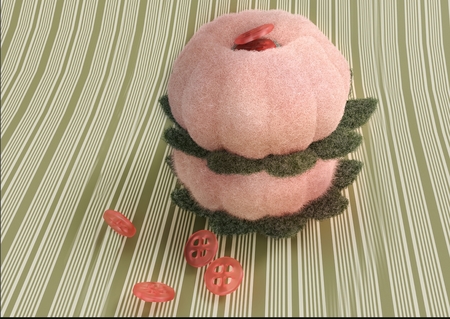
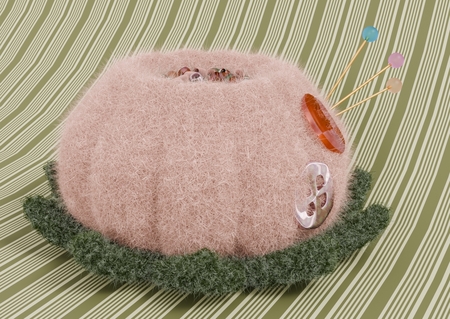
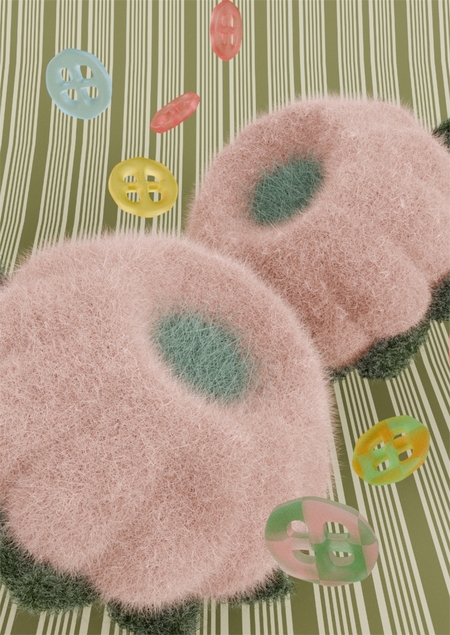
«Trinkets» — a soft pincushion made from scraps, threads, and buttons, created based on the motifs of the 3D game «Sew» as part of a learning module.It protects needles from wear and the artisan’s hands from accidental pricks. The weighted base prevents the cushion from tipping over during use, while the wool stuffing protects the needles from rust.Since each piece is sewn from unique scraps, no two are alike. The seams and patches here are not hidden—they are displayed: damage becomes decoration.
Let all blows fall upon the soft, so that the fragile may remain whole.
Idea: «Stitch» Game
In the apartment being cleared out after the owner’s death, belongings are sorted into boxes: «keep, ” „donate, ” and „toss.“ The player controls a cracked porcelain figurine from a sideboard that has ended up in the „toss“ box. To escape, she constructs a „hand made of thread, cotton, and paperclips, ” and then defends her fragile body against a cat, a vacuum cleaner, and „perfectly glued“ dolls. At the end of her journey, the player decides what the heroine will become. A sewing needle grew out of that makeshift hand: from the idea that the soft and handmade can absorb the blow meant for something delicate.
Subject
Patchwork pincushion: soft on the outside and stable on the inside.A weighted base prevents it from tipping over during use. Wool filling protects the needles from rust. Each cushion is sewn from unique scraps, so no two are alike.Connection to PlayFunction. The pincushion cradles the needles softly and protects the delicate items, much like a handmade arm absorbs impacts instead of a porcelain body.
Who is this for
Vera — a textile artist. She runs a small tailoring repair workshop.Workspace. A table by the window equipped with a sewing machine, embroidery hoops, and a basket of fabric scraps. The threads are still kept in her grandmother’s tin cookie box.Values. Handmade work, items with a history, care, comfort.
Problem
Needles and pins get lost in scraps and fall to the floor, where a cat or bare foot finds them.
Lightweight pin cushions tip over during use, and in synthetic stuffing, needles rust and ruin expensive fabrics.
Soulless plastic accessories do not fit into a space where every object holds memory.
In short—injuries, spoiled orders, and time wasted on searching.
References
Porcelain Doll-Busts, 1900–1930s fragility · vintage porcelain · hard and softKintsugi and Visible Mending mend as adornment · repair as decoration · asymmetryPatchwork and Mixed Artisan Dolls handmade · scraps and thread · rough texture
Solution
Soft, deliberately handmade form — like the heroine’s hand constructed from available materials.The seams and patches are not hidden but emphasized. It was important to maintain a balance between the aesthetic of a grandmother’s trinket box and its functional purpose so that the object wouldn’t just become a shelf ornament. Therefore, every decision within it serves a purpose:·Wool stuffing prevents the needles from rusting; ·The weighted base prevents the pincushion from tipping over; ·Unique scraps for each cushion make every piece one-of-a-kind; ·The simple and technological form allows the object to be reproduced in series.
Damage here becomes decoration
Structure and Dimensions
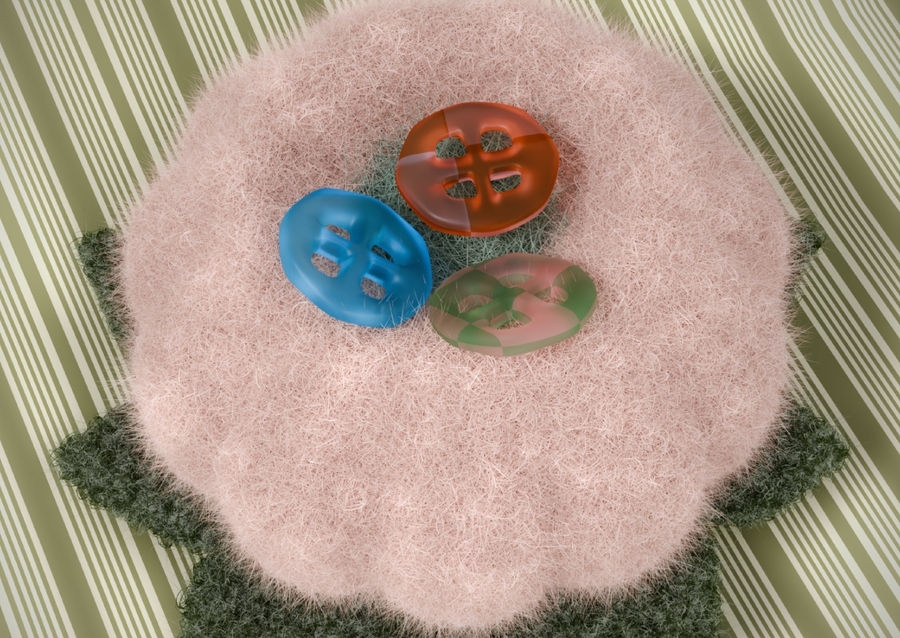
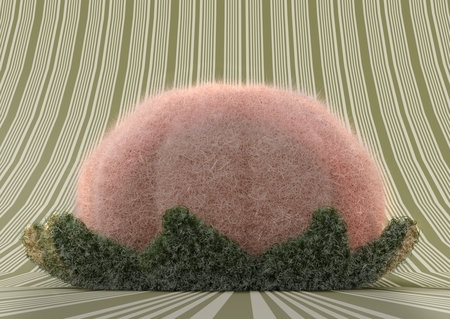
The pincushion consists of three parts.01 · Soft top. A dome made of six wedges. Each wedge is sewn from 2–3 woolen scraps, so the patchwork appears natural, not drawn on.02 · Weighted base. A round bottom made of dense cloth or felt. Inside is a pouch with a weight and a rigid disc to keep the cushion standing straight and from rocking.03 · Lacing. A sturdy wool thread passes completely through the center and is secured with buttons on the top and bottom. This gives the puffy cushion its shape and prevents the stuffing from shifting.Ø ≈ 10 cm · height ≈ 6 cm · weight ≈ 200 g This volume holds 30–40 needles and pins, and the weight keeps the pincushion in place when a needle is stuck in it.
Materials
In accordance with the module requirements, the pincushion is made from a monomaterial—wool. It incorporates the shell, stuffing, and thread.
Wool · Shell: Wool scraps (broadcloth, felt, felted fabric). Dense wool holds its shape, doesn’t slip in the hand, and barely sheds at the edge. · Stuffing: Natural sheep’s wool (carded wool), approx. 30–40 g per item. The lanolin in the wool protects the needles from rust, and the dense stuffing prevents them from sinking inside. · Thread: Contrasting wool thread for visible seams and cinching.Internal Components and Hardware · Weight: Glass beads, approx. 120–150 g in a separate pouch. Unlike rice or groats, they do not absorb moisture or spoil. · Rigid Base Disk: 3 mm plywood. · Hardware: Two buttons—wooden, metal, or vintage.Everything except the scraps is sold in regular craft stores. The wool scraps remain in any sewing workshop or atelier; therefore, for the series, only the color changes, not the material.
Fabrication and Assembly
Step 1. Unfold. The wedges and the base are cut according to the patterns. The patterns are laser-cut from 3 mm plywood or acrylic in the School’s workshop, so any artisan can replicate the form without the author’s involvement. The disc for the base is also cut on the laser there.
Step 2. Patch Wedges. Wool scraps are sewn together on a sewing machine to create pieces matching the wedge size.
Step 3. Dome. The wedges are sewn together, and decorative stitching is added to the seams by hand using contrasting wool thread.
Step 4. Base. The pouch with the weight is sewn shut and placed inside the base along with the plywood disc.
Step 5. Filling. The dome is tightly stuffed with wool and sewn to the base with a blind stitch.
Step 6. Tying. The thread is passed all the way through the center and secured with two buttons.
Approx. 1–1.5 hours per piece.
A short series
You can sew the pincushion yourself or take it to a small tailor shop. For reproduction, you just need the pattern, the technical assembly card, and extra fabric scraps.
Cost Per Unit · Wool — ≈ 70 ₽ · Glass weight — ≈ 120 ₽ · Wool felt for the base and plywood disc — ≈ 50 ₽ · Thread and buttons — ≈ 60 ₽ · Seamstress labor — ≈ 500–700 ₽
Total — around 800–1000 ₽ per piece. Minimum order quantity — 10 units.
The fabric is sourced from scraps, so each batch will have a unique color palette.