From the book «The World of Caffeine» Weinberg, Bennett Alan, Bealer, Bonnie K.
New York and London
Published in 2002 © 2001
Prologue
Coffee, tea, and cola are the three most popular beverages in the world. They have different tastes and aromas, but all of them contain high levels of caffeine. Given the enormous demand for these drinks, one can assume that caffeine—their common denominator—is a substance that nearly everyone enjoys and which may have stimulated people for many millennia. Some anthropologists, without sufficient evidence, suggest that most of the plants from which caffeine is derived were discovered in the Paleolithic era, 700,000 years BCE. According to them, people of the Stone Age likely chewed the seeds, roots, bark, and leaves of many plants and perhaps ground the caffeine-containing parts into a paste before consumption. The method of brewing plant material with hot water—using higher temperatures to extract caffeine—was discovered much later. Thanks to brewing, familiar caffeinated beverages like coffee, tea, and chocolate became popular, along with more exotic drinks such as guarana, yerba mate, yoko, casina, and tea cola. …
In 1732, Bach wrote the «Coffee Cantata”—a hymn set to the poems of the Leipzig poet Picander, praising the delights of coffee (which at the time was forbidden to women of reproductive age due to fears that it might cause infertility) in the life of a young bride. The cantata includes an aria that translates to, „Ah! How sweet the taste of coffee! Better than a thousand kisses, sweeter than mulled wine!“
The Origin of Coffee
Legend connects the discovery of coffee to the Ethiopian shepherd Kaldi (6th–7th centuries), who noticed the energizing effect of the berries on goats. The Arabs were the first to use coffee, initially as wine («qahwa»), and later as a hot beverage.
The Appearance of Tea
Tea arrived in Europe from China in the 17th century, thanks to Dutch merchants. Its consumption in China is known from the legendary times of Emperor Shennong (c. 2737 BCE). In Japan, tea became the centerpiece of a cultural ritual.
Coffee Shops in England
The first coffee houses opened in Oxford (1650) and London (1652). They quickly became centers for social, literary, and political life—places for discussion and the exchange of news.
I measured my life in coffee spoons.
Chocolate—the first «caffeinated» drink in Europe
Even though chocolate contains less caffeine, it reached Europe from South America 50 years before coffee and tea. Its popularity is also linked to the presence of the stimulant theobromine.
Caffeine Discovery
Caffeine was first isolated in 1819 by the young German chemist Friedrich Ferdinand Runge.
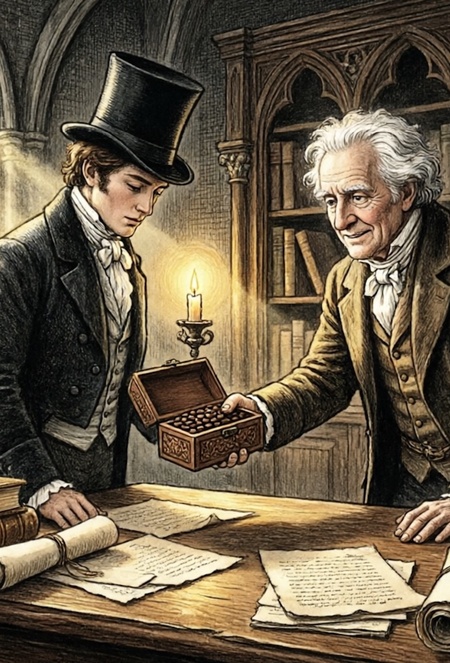
Goethe’s Role: Johann Wolfgang von Goethe played a key role in this discovery. Intrigued by Runge’s experiments with belladonna, he gave him a box of rare Mocha coffee beans and asked him to analyze them.
Runge’s Career: After discovering caffeine, Runge built a brilliant career in chemistry, pioneering work in synthetic dyes (first synthesizing aniline blue) and paper chromatography.
Tragic End: Despite his accomplishments, Runge was fired from the factory where he worked, lost a court battle over the right to live in his home, and died in poverty and obscurity in 1867. A monument was later erected in his honor.
Parallel Discoveries: The discovery of caffeine was inevitable—within a couple of years of Runge’s work, several other scientists in different countries independently isolated it, which confirms the maturity of scientific thought at that time.
The Nature of Caffeine
Caffeine is an alkaloid (like morphine, quinine, nicotine). Sertürner’s work on isolating morphine laid the foundation for understanding the nature of such substances.