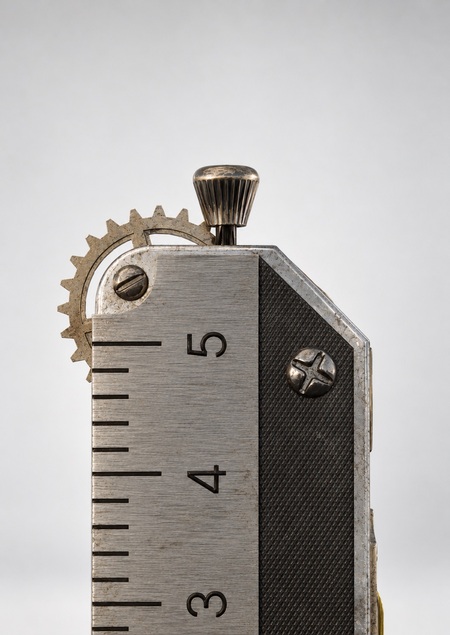

As part of a product design project, a wick lighter accessory was developed.


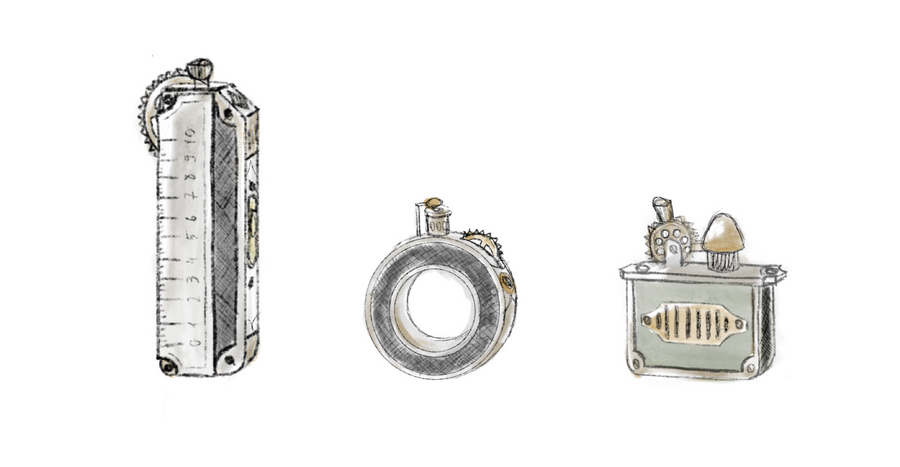
Sketches / Visual concept search
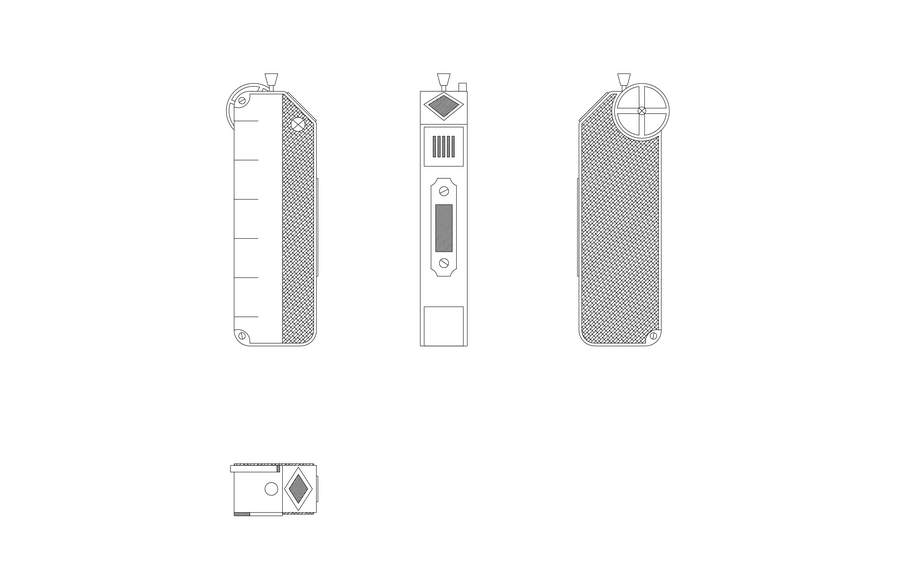
drawing / diagram
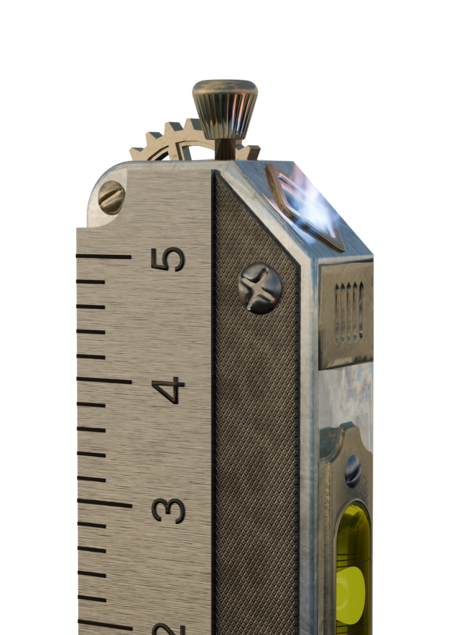
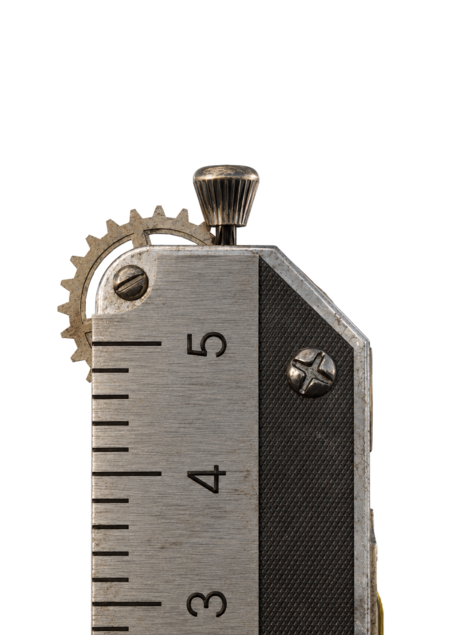
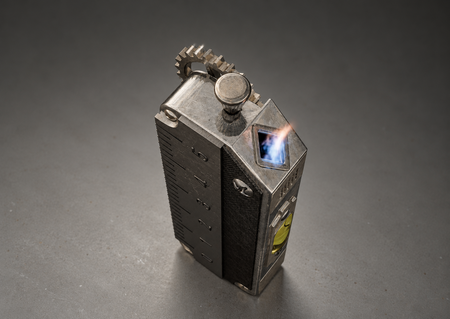
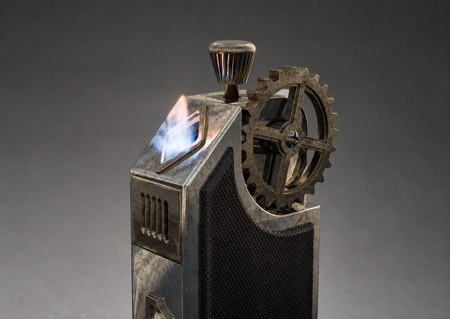
Concept of creation
1. General Construction
The object is a compact gasoline lighter, approximately 60 mm high, designed in the aesthetic of small industrial measuring instruments.
The core concept of the production is the combination of custom-fabricated metal parts with ready-made standard components. Unique elements of the casing and external structure are manufactured using 3D modeling, while standard mechanical components are purchased pre-made and integrated into the housing.
- Core Functional Units
The lighter consists of several independent systems:
- metal casing;
- front panel with measurement scale;
- side textured panel;
- flint ignition mechanism;
- wick and fuel reservoir;
- protective top grate;
- bubble spirit level;
- upper adjustment/control element;
- system of mounting screws;
- internal fastening and connection components.
3. Main Metal Chassis
Material:
Aluminum 6061/6082 or D16T is used for the prototype.
Aluminum is suitable for single CNC manufacturing due to its excellent machinability, the ability to achieve small chamfers, and subsequent surface finishing.
- Front Scale Panel
The front panel is a separate functional component. A measuring scale with divisions and numbers is located on its surface.
Material: Stainless steel with a thickness of 0.5–0.8 mm is used.
Manufacturing Process:
- Laser cutting of the contour.
- Mechanical surface polishing.
- Formation of the longitudinal metallic texture.
- Laser engraving of numbers and divisions.
- Final aging treatment.
- Mounting the panel onto the housing.
- Decorative Grey Textured PanelsThe panels are made of plastic featuring a net relief pattern.Material: matte grey plastic. Texture: fine mesh applied to the panel surface via stamping/molding.
6. Bubble Element—Structural Level
The bubble flask is a complete, functional structural element.
The assembly includes:
- A transparent flask;
- The working fluid;
- The air bubble;
- A metal holder;
- A fastening system.
The finished miniature flask is purchased separately. The metal holder is manufactured based on a custom 3D model.
- Gasoline System
The internal ignition system operates on gasoline fuel and utilizes a wick principle.
Key components include:
- Fuel reservoir;
- Absorbing filler;
- Wick;
- Wick holder;
- Working zone;
- Fuel supply system to the wick.
A ready-made gasoline lighter mechanism is used for the prototype. The external housing is designed taking into account its dimensions and mounting points.
- Flint Mechanism
The gear wheel is the working element of the ignition system.
Principle of operation: Wheel rotation $\rightarrow$ Friction against the flint $\rightarrow$ Spark generation $\rightarrow$ Ignition of fuel vapors at the wick.
The mechanism includes:
- Flint wheel;
- Shaft;
- Flint;
- Spring;
- Guide;
- Pusher.
14. Metal Surface Treatment
The product’s appearance reflects the aesthetic of vintage industrial tools.
The metal surfaces feature:
- matte texture;
- satin finish;
- soft reflections;
- minor signs of use;
- localized patina.
Main body: Satin finish → light aging → localized edge treatment.
Face panel: Linear sanding → engraving → light aging.
Brass components: Matting → patination → hand finishing.
16. Ready-Made Components
Purchased functional components:
- Level bubble flask;
- Gasoline mechanism;
- Wick;
- Fuel filler;
- Flint;
- Silicone wheel;
- Springs;
- Axles;
- Standard screws;
- Metal mesh;
- Transparent elements.
Manufactured parts:
- Body;
- Frames;
- Front panel;
- Measuring scale;
- Level holder;
- Top handle;
- Protective grille;
- Individual internal components;
- Metal structural elements.