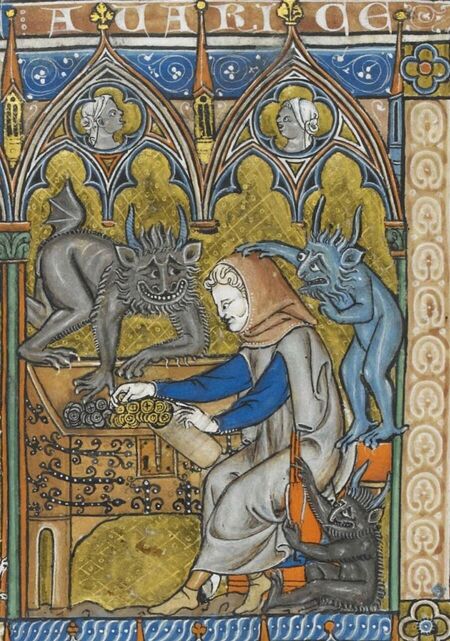
Bestiaries are a genre of medieval literature, presenting an illustrated collection of descriptions of real and mythical animals, birds, fish, and monsters, accompanied by allegorical interpretations and Christian moral lessons.
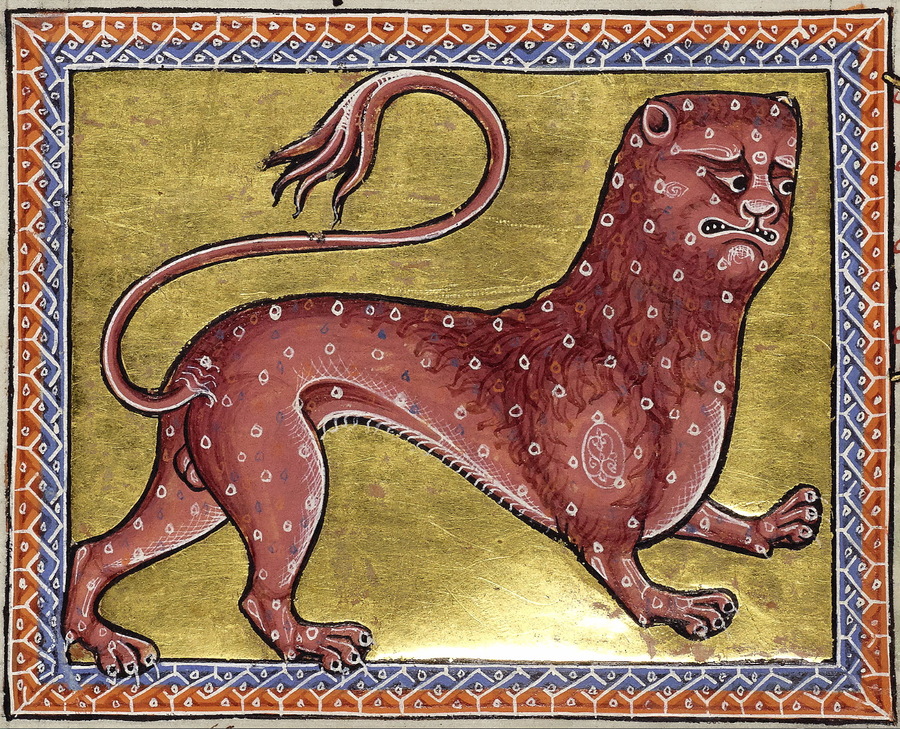
Leopard illustration, Aberdeen Bestiary, 12th century
This study aims to conduct a comparative analysis of illustrations from early and late medieval bestiaries to identify the evolution of the visual representation of animals and to determine the factors that drove this transformation.
Part 1: Introduction to the Bestiary
The medieval bestiary was a complex cultural phenomenon, its success and longevity stemming from the synthesis of three key functions: religious-allegorical, didactic-moralizing, and entertaining-didactic. Together, these functions transformed it into a powerful instrument for shaping the medieval worldview.
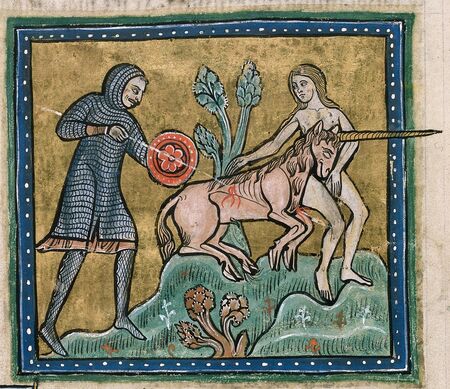
Religious-allegorical function:
The bestiary served as a «second Bible”—a Book of Nature through which God reveals Himself to humankind. Every animal, whether real or imaginary, was viewed as a religious symbol.
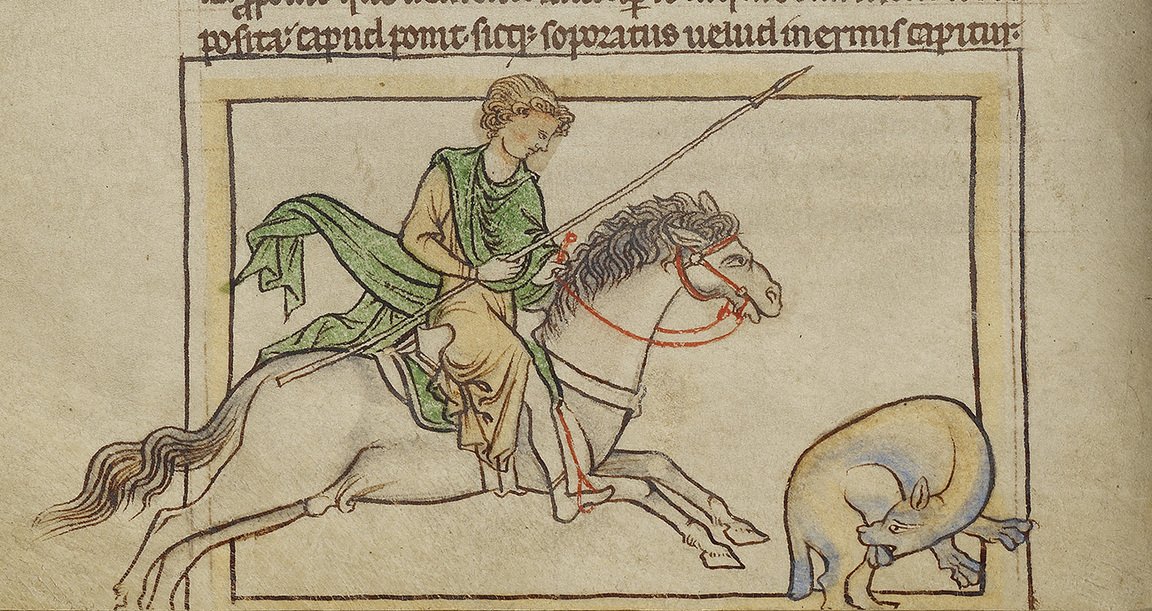
Example: The unicorn, which can only be captured by a pure maiden, is an allegory for Christ incarnate through the Virgin Mary. Illustration „Hunter Killing a Unicorn Tamed by a Maiden, ” Rochester Bestiary, 13th century.
Hunters slay the unicorn, Ashmolean Bestiary, 13th century
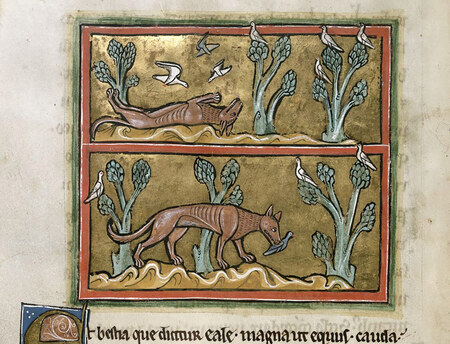
Didactic and Moralizing Function:
Descriptions of animals and their behavior were directly linked to human virtues and sins, providing vivid and memorable examples for sermons and teachings.
Example: The beaver, while being pursued, gnawing off its valuable glands (testicles), personifies the sinner who must renounce their vices («gnaw off» sin) to be saved. The fox, feigning death to catch birds, is a symbol of the devil deceiving the gullible. Illustration «The Fox» from the Rochester Bestiary, 13th century.
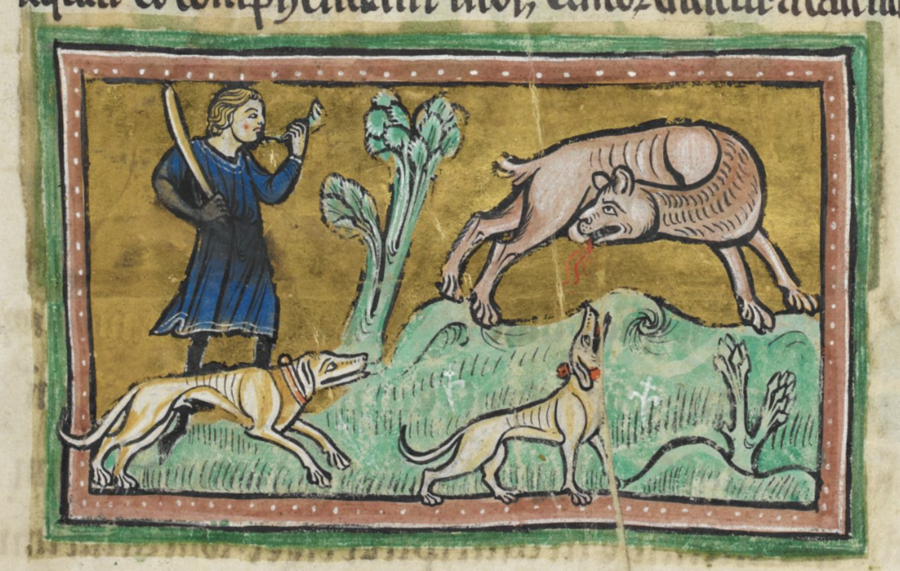
Entertaining and Educational Function:
Bestiaries satisfied the curiosity about exotic lands and unseen creatures, serving as a kind of «encyclopedia of wonders.» Vibrant illustrations made the manuscripts appealing not only to clergy but also to the nobility.
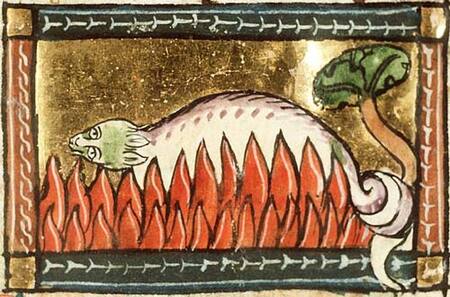
Example: Accounts of salamanders living in fire or mandrakes that shriek when pulled up carried an element of the marvelous. The illustration «Salamander, ” a miniature from the folio volume published by „Der naturen bloeme, ” by Jacob van Maerlant.
«Ancestors of the Bestiary»
Pliny the Elder, «Natural History» (1st Century AD) Contribution: Encyclopedic foundation.
«Physiologus» (2nd–4th Centuries AD) Contribution: Creation of allegorical structure.
Isidore of Seville, «Etymologies» (7th Century AD) Contribution: Systematization of knowledge.
Evolution: Facts (Pliny) → Symbols («Physiologus») → System (Isidore) → Bestiaries
Diagram of Bestiary Dissemination in Europe
- Origins: Alexandria (Greek «Physiologus») → Rome (Latin translations).
- Formation: Ancient heritage + Early Christian tradition → England (classical bestiaries).
- Mass Production: England → France (universities, secular culture).
- Secularization: France → Flanders (art for the court and the city).
- Pan-European Influence: From these centers, bestiaries spread to Germany, Italy, and Spain.
Visual Key: How to «Read» a Thumbnail
Animal Posture:
Aggressive → sin, devil Submissive → virtue, Christ Dynamic → secular context
Color:
Red → sacrifice, martyrdom Gold → divinity Blue → truth, heavens
Unicorn Pose: Head in Knees $\rightarrow$ Sacrificial Trust Virgin’s Cloak Color: Blue $\rightarrow$ Innocence Background: Paradise Garden $\rightarrow$ State Before the Fall of Man Virgin’s Gesture: Embracing Hand $\rightarrow$ Acceptance of the Incarnation
Background: Paradise Garden → innocence Desert/Cliffs → trial City → worldly life
Attributes: Mirror → truth/self-knowledge Nimbus → sanctity Chains → bondage to sin
Gestures: Raised paw → power Trampling the enemy → victory over evil Head tilt → humility
Part 2: The World of the Early Middle Ages: The Beast as Symbol
The formation of the bestiary genre in its classical form was a direct consequence of the key processes of the Early Middle Ages. Theocentrism defined its content, cultural synthesis shaped its form, and the general atmosphere of the «Age of Faith» dictated its primary function.
Style: Romanesque art. Massive walls, rigid forms, symbolism. Transferring the style to miniature.
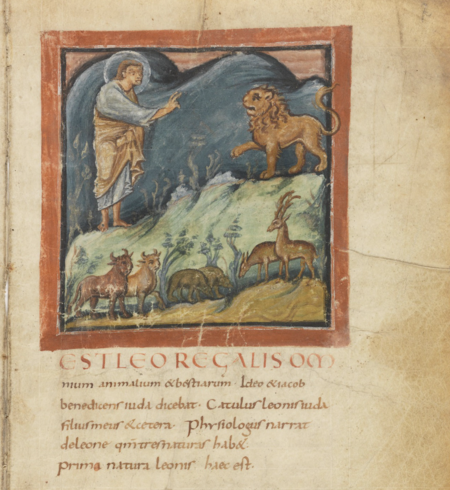
Lev — a symbol of Christ
Three main allegories:
1) Lion cubs brought to life by their father (Resurrection). 2) A lion sleeping with open eyes (Christ in the tomb). 3) A lion erasing traces with its tail (Christ concealing his divinity).
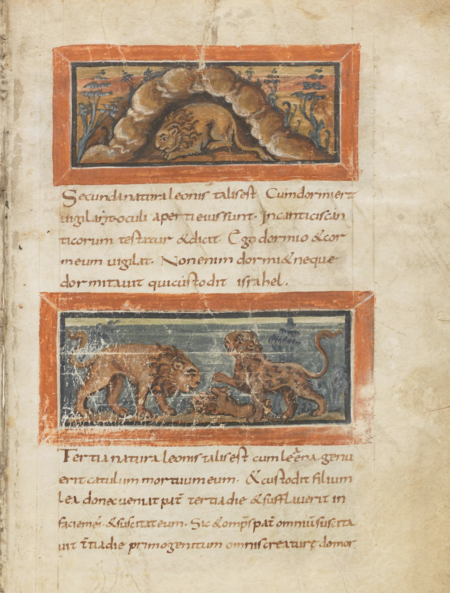
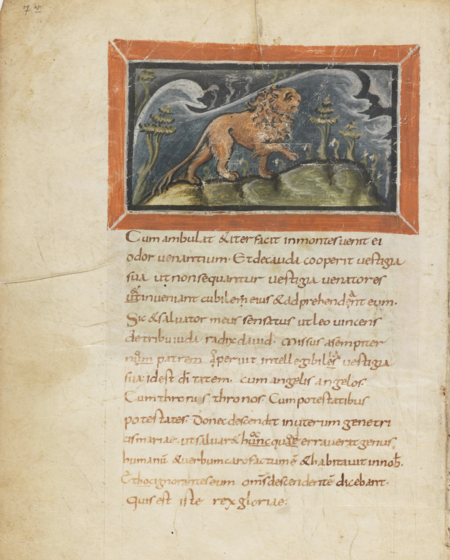
Lev, Bernese physiologist, 830 AD
Unicorn — Symbol of Embodiment
The Symbolism of the Unicorn:
- Christ and the Virgin Mary: The unicorn, tamed by a maiden, symbolizes Christ incarnated through the Virgin Mary.
- Atoning Sacrifice: Its capture and death by hunters are an allegory for Christ’s voluntary sacrifice for the salvation of humanity.
- Triumph of Purity: The unconquerable beast, subdued by innocence, demonstrates how virtue triumphs over sin.
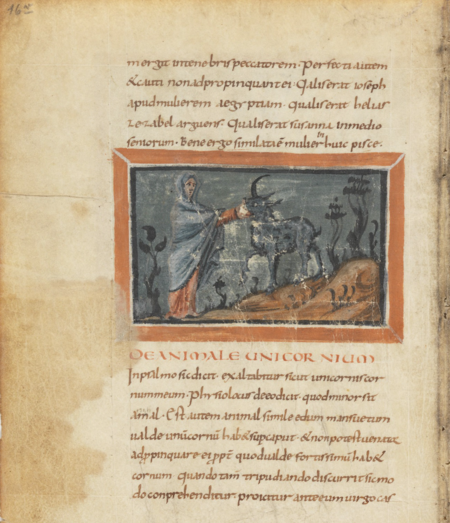
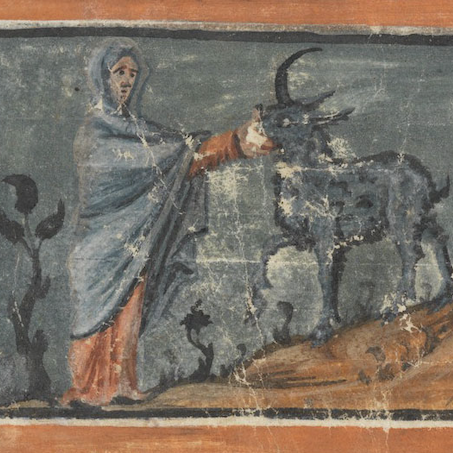
Maiden with a Unicorn, Bernese Bestiary, 830 AD
The Serpent—an image of sin and the devil
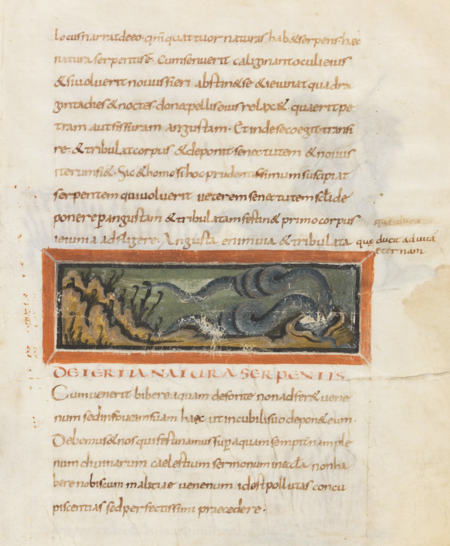
Allegories of the Serpent in Bestiaries:
- Devil and Sin: A direct embodiment of evil, the tempter from Paradise.
- Death and Decay: Its venom is an allegory for mortal sin, which destroys the soul.
- Repentance: Shedding its skin symbolizes purification from sin and resurrection.
- Wisdom: In rare cases, it represents Christ («wise as serpents»), but more often it refers only to the action, not the serpent itself.
Dragon, Bernese Bestiaries, 830 AD
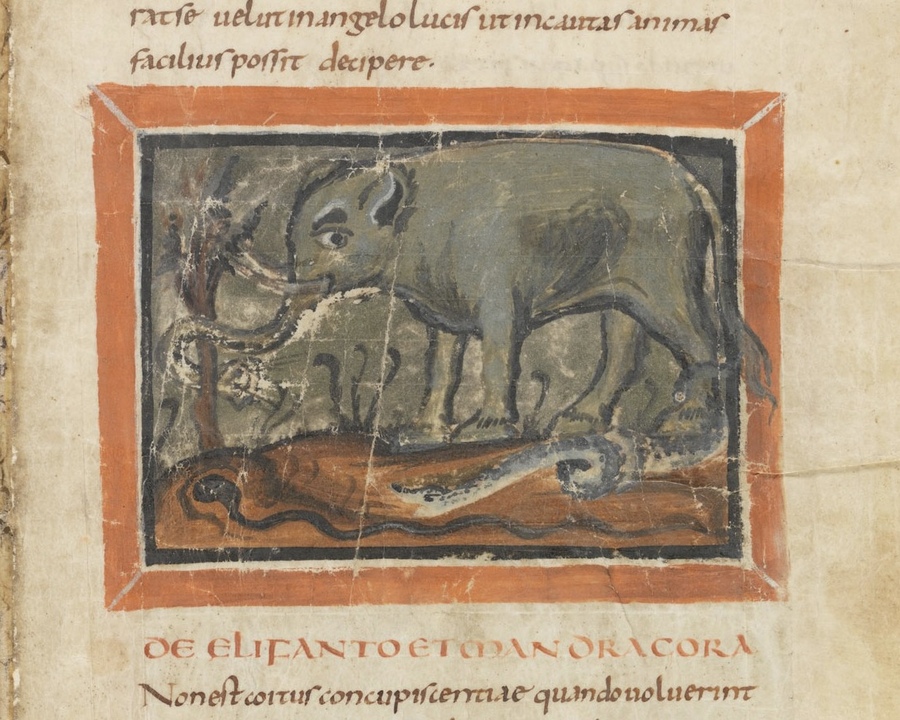
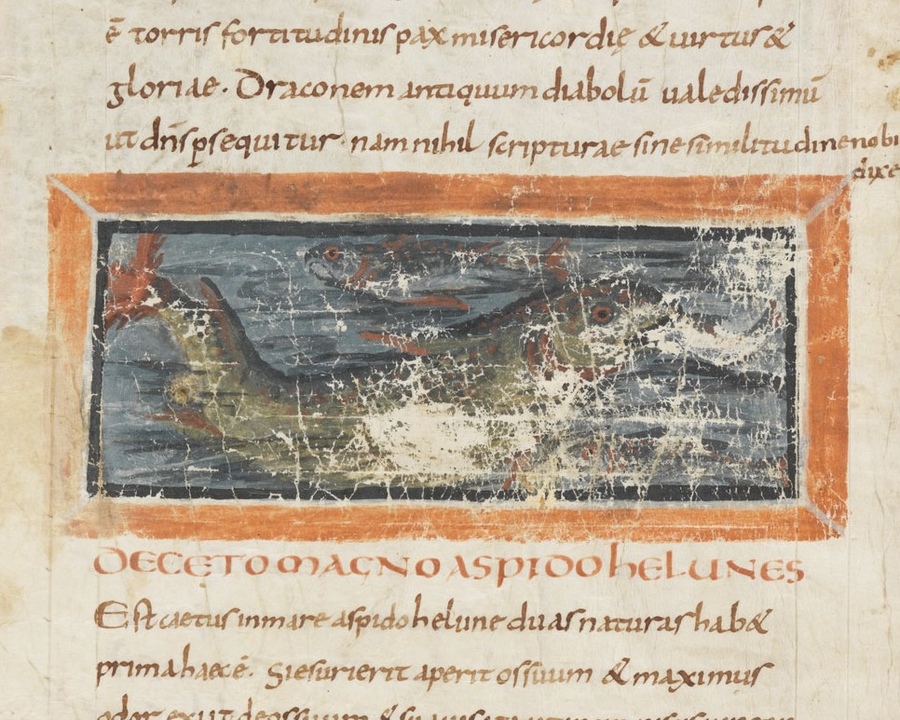
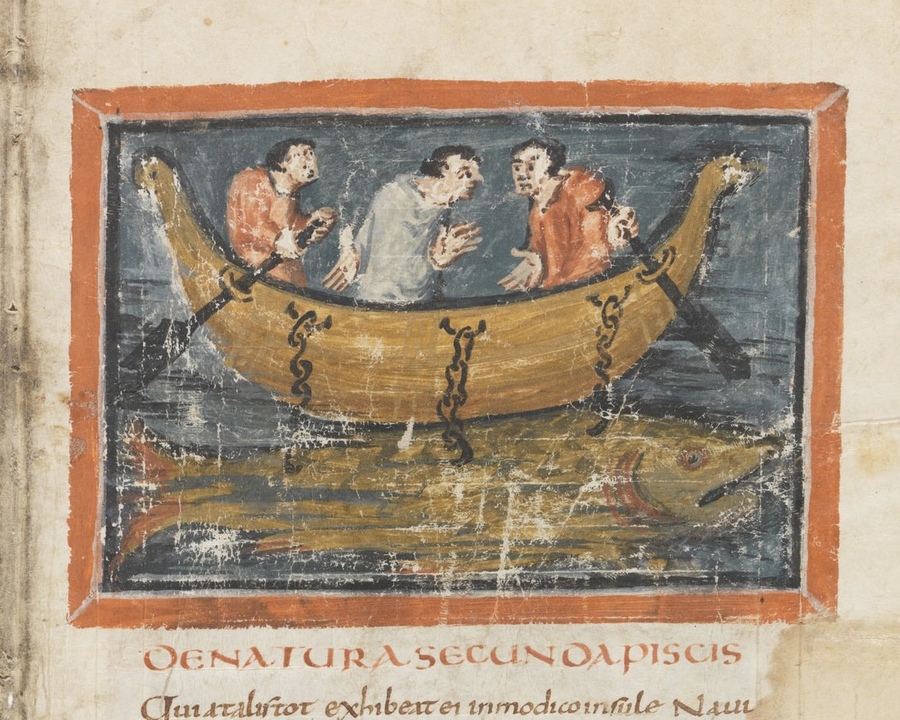
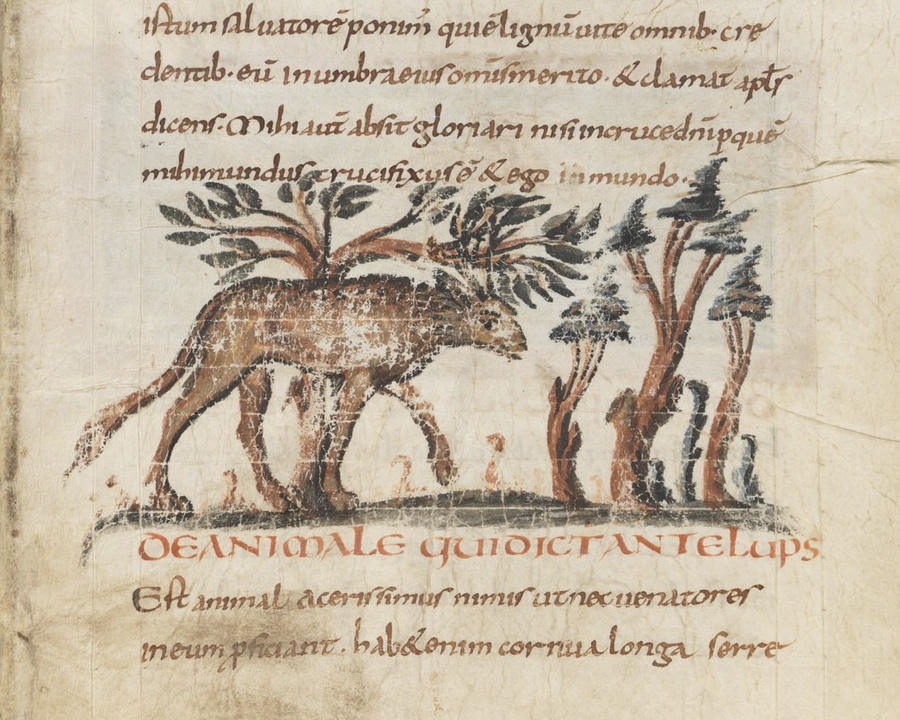
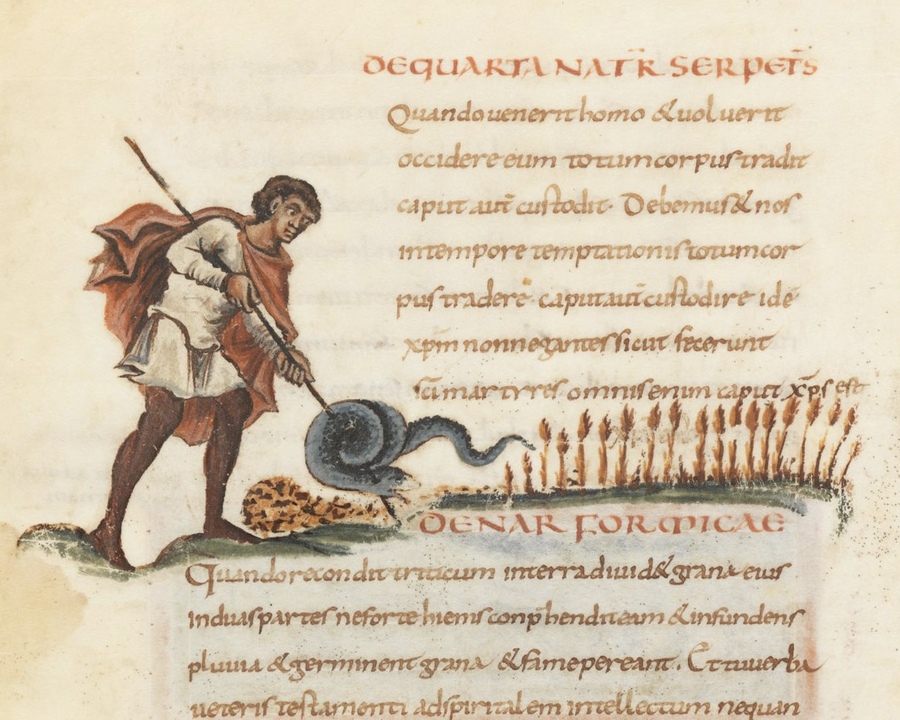
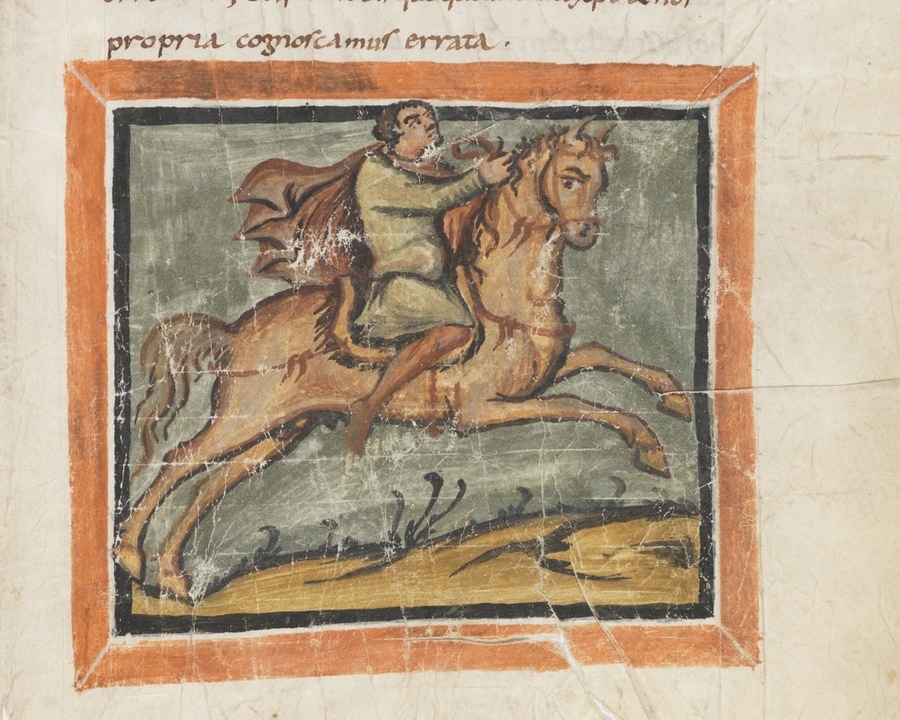
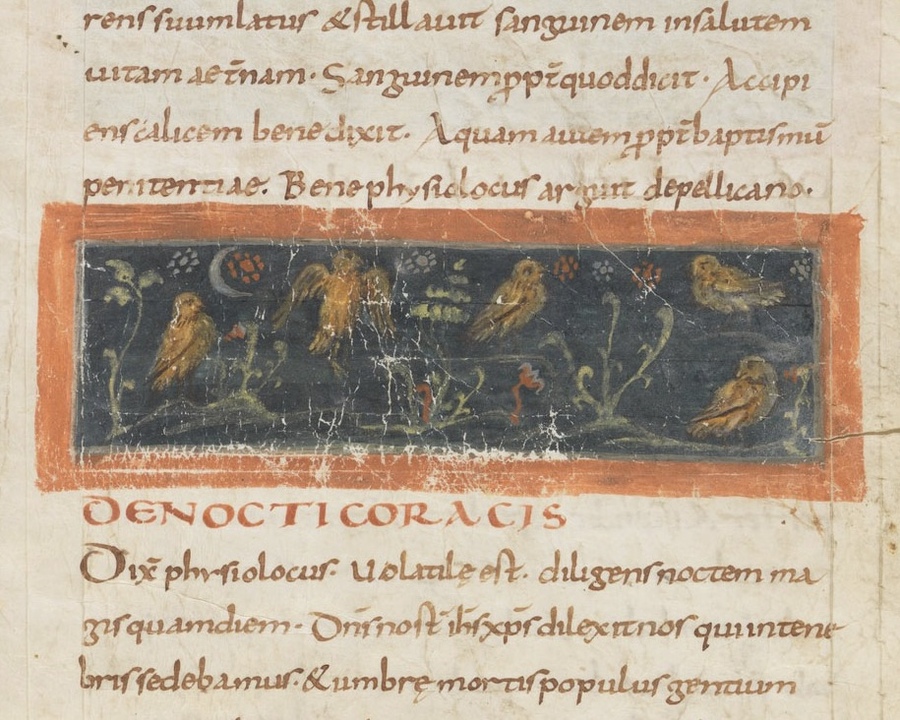
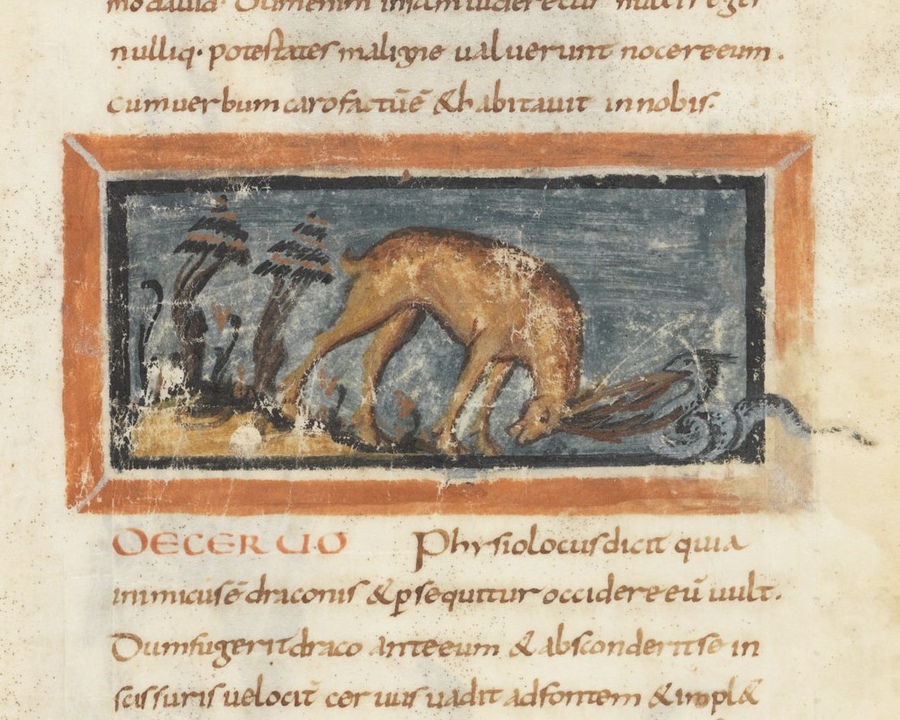
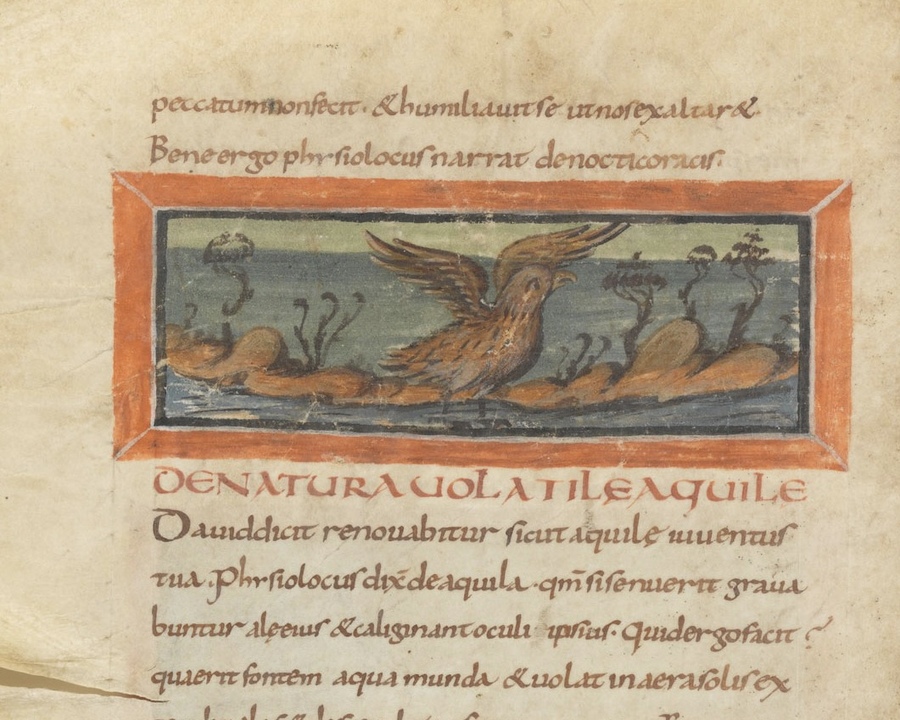
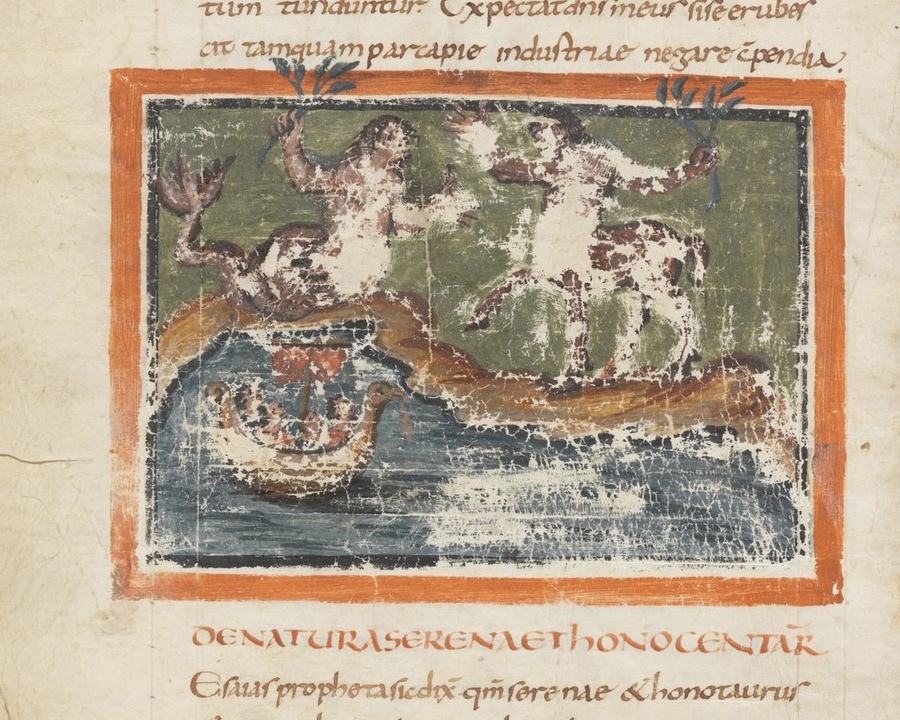
Bernese Bestiary, 830 AD
Brief Summary:
Before the 12th century, the bestiary functioned as a sacred encyclopedia where zoology served theology.
Its purpose was to answer the question, «What does this teach us about God?» rather than «What kind of animal is this?» The bestiary was an authoritative, unquestioned source—a tool for religious professionals (clergy) for spiritual education.



















