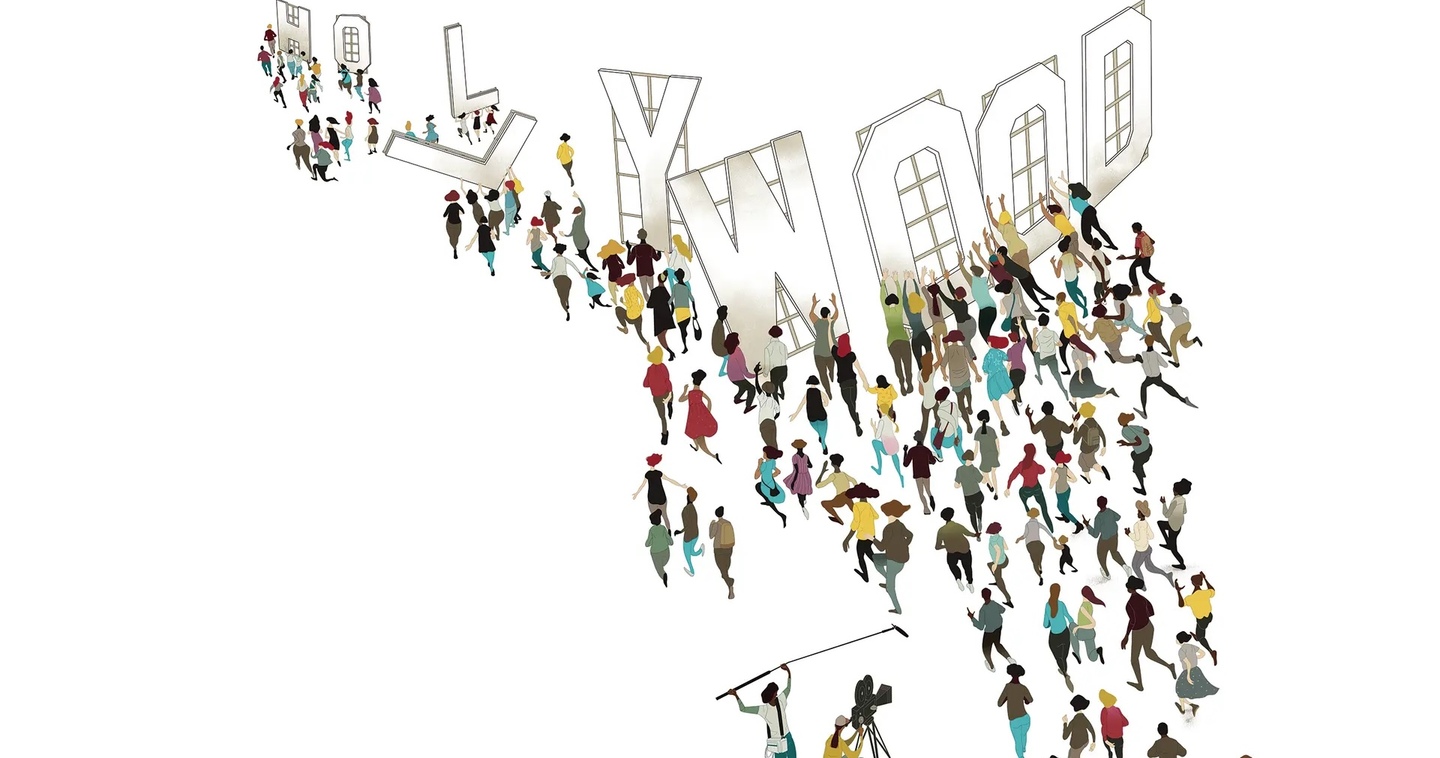
Слухи о моей смерти… Правда ли, что у Голливуда огромные проблемы?
Hollywood isn’t dying—but the familiar dream factory is certainly falling apart. What is happening to the industry that, for decades, dictated to the world what to watch?
In the summer of 2026, a colossal sinkhole unexpectedly formed on the famous Sunset Boulevard in Los Angeles. An ancient pipe burst, flooding everything around it. Seemingly just an ordinary, localized emergency, to film industry analysts and Hollywood insiders, it was no more symbolic—a massive gap gaped in the ground just a few miles from the heart of Hollywood. There, in the world’s premier entertainment factory, many high-ranking executives are desperately searching for an answer to the question: how do we patch up this ever-growing hole in the film industry?

However, the headlines of recent months have sounded much more optimistic. Box office revenue is rising, audiences are returning to theaters, and major blockbusters are being released. 2026 promises to be one of the most successful years for the American market since the pandemic—current estimates suggest North American gross could exceed $10 billion. Compared to $8.66 billion in 2025, this looks almost like a triumphant return to form. But there is one problem: Hollywood might be doing well at the box office while struggling severely as an industry.
However, financially, Hollywood is doing wonderfully. But the traditional system that has produced films and series in massive quantities for decades has truly begun to fall apart. Production is moving out of Los Angeles, streaming services are cutting costs, mid-budget filmmaking has nearly vanished, and studios are increasingly betting on a few gigantic hits instead of dozens of smaller films. What is happening to the world’s main entertainment factory?
More Money, Fewer Viewers
The easiest way to understand what is happening is to look not at the money, but at the number of people. In 2019, the last full year before the pandemic, movie theaters in the U.S. and Canada sold about 1.23 billion tickets. In 2025—only about 769 million. That is almost 40% less. However, box office revenue is gradually returning to previous levels. Why? Because tickets have become significantly more expensive, and the share of premium formats like IMAX and other high-end theaters has also grown. This results in a rather strange picture: theaters are earning more money from fewer people.
This does not mean that people have lost interest in cinema, and that we now need to brace for a cascade of bankruptcies among American studios. It simply means that the old system no longer works.
What Broke Netflix
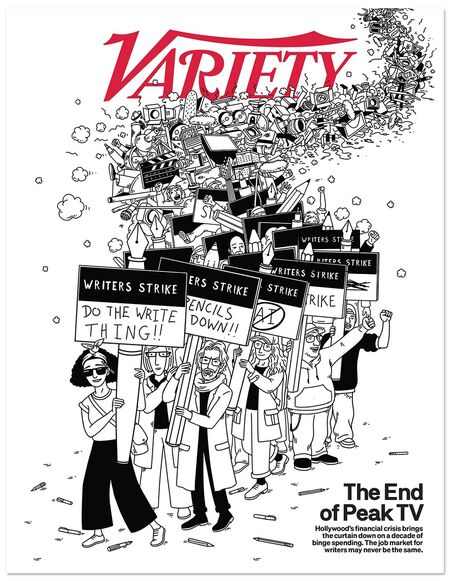
Streaming services were the most significant factor in the current situation. Over the last decade, Netflix and its competitors began flooding the market with money. Studios released an increasing number of series because each platform required its own massive library of content. The era of «Peak TV» arrived: in 2021, American distributors ordered about 759 scripted series—a historical high. It soon became apparent, however, that it was unsustainable to endlessly spend billions on new shows. Consequently, in 2022, investors started demanding profitability from the services, and the simple truth quickly emerged: a series costing $100–$200 million does not necessarily generate that much revenue for the company.Streaming services began cutting back on production. In the first half of 2025, the six largest global platforms—Netflix, Amazon, Apple, Disney+, Max, and Paramount+—ordered 242 scripted projects compared to 318 the year before. Furthermore, this is not merely a temporary pause following the pandemic and writers’ and actors’ strikes. The industry as a whole has shifted to a new logic: creating less, being more cautious, and selecting projects that have a higher likelihood of recouping their investment.
Where Did the Mid-Budget Films Go?
Just twenty years ago, there was a huge middle ground between the $200 million blockbuster and the indie film made for a couple of million. That space contained comedies, thrillers, melodramas, crime films, family movies, original dramas—films budgeted at $20–60 million that didn’t have to become the cultural event of the year. They simply had to be good and gather their audience. This segment has suffered the most. Now, studios prefer to think in two categories: either a massive event film with the potential to earn a billion, or a very low-budget project with limited risk. This explains the current strangeness of cinema exhibition.
In one year, something like Super Mario, another installment of Toy Story, or some other massive franchise can succeed brilliantly. Yet, next to them, a movie shot for a few million dollars can unexpectedly shine. A «decent adult film for $40 million,» however, faces a much tougher climb. This isn’t just an aesthetic problem. For the industry, the disappearance of the mid-level budget means the disappearance of a talent pipeline. A young director once could start with a relatively small film, move on to a larger project, and then tackle a major studio picture. If the average rung of the ladder disappears, ascending to the top becomes significantly more difficult.
Hollywood is Leaving Hollywood
Another major issue is geography. For decades, Los Angeles was the center of American cinema not just because of the actors and producers who lived there. There was the infrastructure: soundstages, studios, technical specialists, set designers, costume designers, editors, equipment rental companies, and tens of thousands of people who knew how to make movies. But production became too expensive.
Simultaneously, other cities and countries have literally begun buying Hollywood. They offer tax incentives, subsidies, ready-made soundstages, and lower production costs. As a result, a film can be called American, have an American studio, and feature American stars—while being shot somewhere in London, Budapest, or Sydney.
Meanwhile, employment in the Los Angeles film and sound recording industries is declining. According to Reuters figures, this indicator has dropped by approximately 40% since 2022, and the number of shooting days in the city itself has been halved. The problem is now taking on a very tangible nature. It is not due to the poor performance of Hollywood agents. People are losing jobs, sound stages are sitting empty, and filming crews are relocating.
But what does artificial intelligence have to do with this?
AI adds another layer of apprehension to this. Before generative AI, the Hollywood model assumed that making a film required huge teams of people: actors, artists, editors, cinematographers, visual effects specialists, set designers, translators, stand-ins, and so on. Now, part of this work can potentially be automated.
Discussions about a fully computer-generated «movie» are still far ahead of reality. However, AI is already being used for individual production elements: visual effects, backgrounds, storyboards, post-production, and other tasks. Reuters cites the film Killers of Satoshi by Doug Liman as an example, where the application of AI was intended to cut production costs by approximately 65%. This is extremely tempting for studios—if part of the work can be done faster and cheaper, why not give it a try?
A paradoxical situation arises. Hollywood is simultaneously producing too little high-budget content while trying to make production even cheaper.
Why do some films still earn billions?
Because the Hollywood crisis isn’t a crisis of demand for good films. On the contrary, 2026 demonstrates this perfectly. Successful projects aren’t limited to traditional franchises. Projects that unexpectedly find their own audience are also earning massive grosses. This is a crucial signal to the industry: the audience doesn’t necessarily demand just another superhero movie. People still want to go to the movies. But now, they need a reason to do so. Therefore, the main phenomenon of today’s hits is this: cinema must be more than just a movie—it must become an event!
New Competitors Emerged Directly from the Internet
While traditional Hollywood is aggressively cutting costs and searching for ways to fix its business model, new creators are emerging from places nobody used to look—from YouTube, TikTok, video games, and even internet horror.
New directors no longer need to spend years as assistants for a famous producer just to eventually get a chance to direct their own film. Such individuals may already have their own audience—millions, or even tens of millions of people.
The Competition for Attention
In August 2026, Reuters reported on the rapid growth of so-called micro-dramas—short, vertical series sometimes lasting only 45 seconds or two minutes. In the U.S., this market is already estimated at about $1.5 billion and continues to grow. This might seem worlds away from Hollywood. But this is often how technological shifts begin: a new form of entertainment first appears to be a passing fad for teens, only to suddenly become a serious business. Therefore, Hollywood now has to compete not only with other films but also for people’s spare time—a very difficult competition.
Is Hollywood Still Dying?
No. But the Hollywood we knew is truly ending. Nothing particularly bad is likely to happen to Disney, Warner Bros., Universal, Sony, or Paramount. We won’t be left without blockbusters, all the actors won’t lose their jobs, and the movie studios won’t become museums.
Before our eyes, the old model is disappearing—the model in which a gigantic industry could simultaneously produce hundreds of films and series, maintain massive infrastructure, constantly increase content costs, and still expect audiences to somehow watch it all.
Meanwhile, Hollywood itself remains an incredibly powerful machine. Reuters estimates the global entertainment market at around $3 trillion, and the show business industry contributes about $120 billion to Los Angeles, or roughly 12% of its economy. The Dream Factory remains. It’s just that for the first time in many decades, it is no longer the sole factory in the city. Perhaps this is the real «fall of Hollywood»: not a decline in interest in film, but the disappearance of the monopoly.