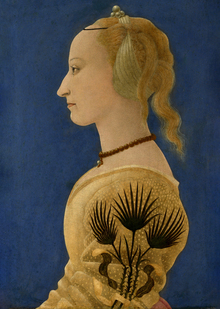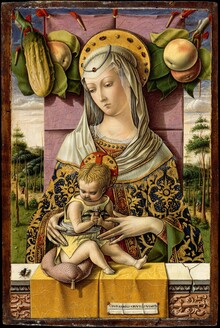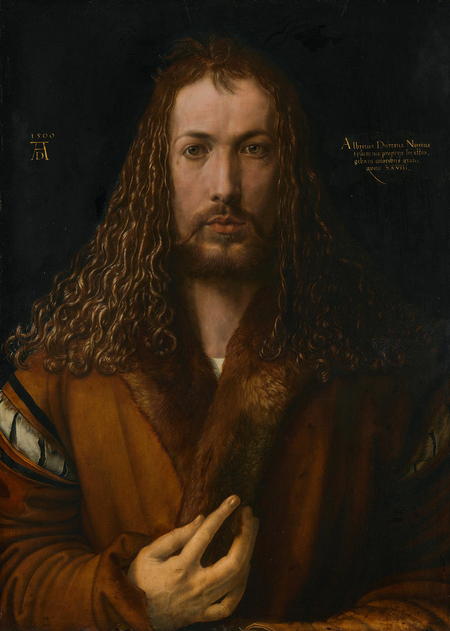
The Northern Renaissance—a phenomenon of European culture that developed parallel to the Italian Renaissance, yet by different laws. Here, there were no ancient ruins or a cult of physical beauty—instead, there was a meticulous focus on everyday life, mystical symbolism, and oil painting techniques perfected by Jan van Eyck. The art of artists who lived and worked north of the Alps evolved from the late Gothic spirituality of Robert Campin and Rogier van der Weyden to the dramatic altarpieces of Grünewald and the philosophical irony of Bosch. The peak of the Northern Renaissance arrived at the beginning of the 16th century, expressed in the genius of Dürer and Holbein, and concluded with the monumental synthesis of Bruegel, which foreshadowed a new era of painting and culture.
Около 1375–1379 — 26 апреля 1444 гг.
Robert Campen
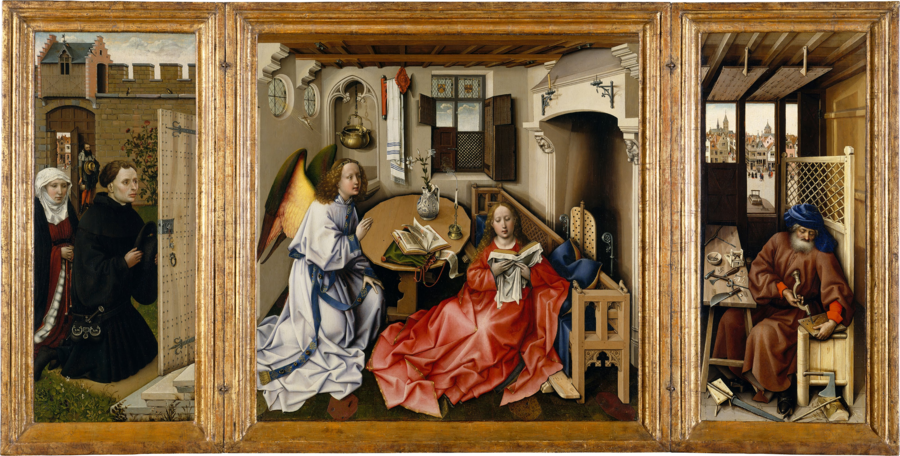
Robert Campin. The Merodealtar (also known as The Annunciation Triptych). Circa 1427–1432
Robert Campin—a Flemish painter from the late 14th to the first half of the 15th century—is one of the progenitors of Netherlandish painting and an immediate predecessor to Jan van Eyck. Campin’s work, closely tied to the Late Gothic tradition, already demonstrates a bold departure from medieval abstraction toward natural observation and everyday realism.
Campen primarily painted altarpieces depicting Gospel scenes, yet he infused them with everyday details, setting sacred events within the cozy interior of a bourgeois home. The artist meticulously rendered the textures of objects—wood, metal, fabric—and sculpted figures with dense, volumetric forms using chiaroscuro transitions. He was one of the first in Northern Europe to actively employ oil painting. Campen created an illusion of reality through mundane objects that carried a hidden symbolic meaning. His most famous works, attributed to Campen or his workshop, include «The Merode Triptych,» «Nativity,» «Annunciation,» «Madonna and Child by the Fireplace,» and «St. Veronica.» His works are housed in the collections of the Metropolitan Museum of Art, the Groningen Museum, the Musée des Beaux-Arts in Dijon, and the Royal Museum of Fine Arts in Antwerp.
Около 1390 — 9 июля 1441 гг.
Jan van Eyck
Jan van Eyck. The Chancellor’s Madonna. 1435. Fragment
Jan van Eyck—a Flemish painter of the first half of the 15th century and one of the greatest masters of the Northern Renaissance, he is the founder of modern oil painting. Van Eyck’s art transcends the conventions of medieval traditions through its precise and detailed depiction of the real world.
Van Eyck created works on religious themes and was a master of portraiture. In his portraits, Van Eyck sought to convey the specifics of his subjects' inner worlds, creating a truthful and realistic image without striving for idealization. He meticulously worked out every detail, incorporating elements copied directly from nature into his compositions. The artist rendered every fragment of the image in detail, employing subtle tonal gradations through the use of oil paint. All these techniques allowed him to create the illusion of reality, presenting a biblical or secular narrative as if it were an event currently unfolding. Known works by Jan van Eyck include «Ghent Altarpiece, ” „Arnolfini Portrait, ” and „Portrait of a Man in a Red Turban.“ These works vividly display the innovative techniques introduced by the master. Van Eyck’s works are featured in leading museums worldwide, including the Louvre, the National Gallery in London, and the Groningen Museum.
1399/1400 — 18 июня 1464 гг.
Rogier van der Weyden
Rogier van der Weyden. The Descent from the Cross. c. 1435
Rogier van der Weyden—a Flemish painter of the first half to the middle of the 15th century, one of the greatest masters of the Northern Renaissance, a student of Robert Campin, and a direct inheritor of the traditions of Early Netherlandish painting. Van der Weyden’s art departs from the contemplative realism of Van Eyck, distinguished instead by deep drama, expressive emotionality, and acute psychological depth.
Van der Weyden primarily created multi-figure altarpieces and portraits. In religious scenes, he placed paramount importance on human experience—sorrow, compassion, and awe—conveying these through expressive gestures, dynamic drapery folds, and tense, almost theatrical poses. The artist moved away from the detailed depiction of everyday surroundings characteristic of Campen, focusing instead on rhythmic composition and the plasticity of figures, placing them in abstract, gilded, or neutral space. He wielded line brilliantly: it became virtually his principal expressive medium. In portraiture, Van der Weyden eschewed excessive background detail, yet rendered the subject’s facial features and inner state with sharp intensity. Among the artist’s famous works are «The Descent from the Cross, ” „The Last Judgment, ” the altarpiece „The Seven Sacraments, ” „Portrait of a Young Woman, ” and „Madonna and Child.“ The works of Rogier van der Weyden are held in the Prado Museum, the Louvre, the Museum of Fine Arts in Antwerp, the Royal Museum of Fine Arts in Brussels, and the Alte Pinakothek in Munich.
1433/1435 — 11 августа 1494 гг.
Hans Memling
Hans Memling. The Annunciation. 1480–1489. Fragment
Hans Memling—a Flemish painter of the second half of the 15th century and one of the foremost masters of the Northern Renaissance—worked primarily in Bruges, blending the lyrical contemplation of Jan van Eyck with the dramatic expression of Rogier van der Weyden in his art. Memling’s work is characterized by a gentle, serene idealism, delicate spirituality, and exquisite decorative quality.
Memling created multi-panel altarpieces, diptychs, portraits, and small, intimate compositions on religious themes. In his work, Gothic rigor was softened by poetic lyricism: the Madonna appeared delicate and contemplative, and the saints were graceful and refined. The artist lovingly rendered landscape backgrounds, architectural details, and luxurious fabrics, while maintaining a balanced and clear composition. His portraits, often waist-length and set against a neutral dark background, were distinguished by psychological depth, soft facial modeling, and the nobility of their color combinations. In contrast to the starker Van der Weyden, Memling softened contrasts, using gentle hues of pink, blue, gold, and green to create an atmosphere of harmony and peace. Among his most celebrated works are «Triptych of St. John the Baptist and St. John the Evangelist, ” „Procession of Holy Virgins, ” „Ark of St. Ursula, ” „Diptych of Martin van Nieuwenhove, ” and „Madonna with Child and Angels.“ Memling’s works are housed in major museums worldwide: the Memling Museum at St. John’s Hospital in Bruges, the Louvre, the Prado, the National Gallery in London, the Uffizi Gallery, and the Alte Pinakothek in Munich.
Около 1435–1440–1482 гг.
Hugo van der Goes
Hugo van der Goes. The Montfort Altar. Adoration of the Magi. c. 1470
Hugo van der Goes—a Flemish painter of the second half of the 15th century, one of the leading masters of the Northern Renaissance. Van der Goes became famous for his monumental religious paintings, in which he introduced significant innovations to the painting of his era.
Key characteristics of Hugo van der Goes’s work included emotional depth, expressive facial expressions and gestures of his figures, subtle rendering of light and volume, and freedom combined with realism in depicting the surrounding environment. The artist placed particular emphasis on the materiality and tangibility of figures within space, meticulously detailing compositions and rendering characters with anatomical accuracy. All of this transformed religious narratives in Van der Goes’s paintings into vivid, compelling scenes. One of Van der Goes’s most significant masterpieces is the triptych «Portinari Altarpiece, ” which is now housed in the Uffizi Gallery in Florence. The canvas captivates viewers with its powerful spiritual energy, as well as its lively, realistic brushwork. Another renowned work by the artist—the „Adoration of the Shepherds“ (Berlinische Galerie)—is also characterized by its emotionality and detailed beauty.
Около 1450 — 9 августа 1516 гг.
Hieronymus Bosch
Hieronymus Bosch. The Garden of Earthly Delights. Central panel of the triptych. 1500–1510. Fragment
Hieronymus Bosch—a Dutch painter of the 15th and 16th centuries, and a prominent figure of the Northern Renaissance. His eccentric style, inimitable fantastical worlds, and unusual subject matter had a profound influence on the development of art.
Bosch’s creativity is rooted in a combination of religious narratives, Dutch folklore, and moralistic concepts concerning sin and punishment. He is renowned for his multilayered and richly symbolic compositions, which are abundant with minute details. Many scholars regard Bosch as a precursor to the Surrealism that emerged in the 20th century. One of Bosch’s most famous works is «The Garden of Earthly Delights, ” a triptych that depicts humanity’s fall and the subsequent reckoning for sins. Other masterpieces by the master include „The Temptation of Saint Anthony“ and „The Hay Wagon.“ Numerous of Bosch’s works are housed in renowned museums worldwide, including the Prado Museum in Madrid and the National Gallery in London.
10 сентября 1465 — 13 июля/16 сентября 1530 гг.
Quentin Masseys
Quentin Massys. His wife changed it. 1514. Wood, oil
Quentin Massys—a Flemish painter of the late 15th and early 16th centuries, one of the principal representatives of the Northern Renaissance and the founder of the Antwerp School of painting. His art merges the Dutch tradition of the 15th century with new Renaissance influences emanating from Italy, as well as a humanistic worldview.
Maesais was born in Leuven to a physician’s family and, according to legend, began his career as a blacksmith. In 1491, he joined the guild of painters in Antwerp and opened his own workshop. His clientele included Dutch guilds, religious fraternities, Portuguese monasteries, the Danish king, and humanist scholars. Maesais created monumental altarpieces, portraits, and small genre scenes with moralizing content. In his early works—“Altarpiece of St. Anne, ” «Altarpiece of St. John, ” and the altarpiece „The Seven Sorrows of Mary”—the sculptural rigidity of the forms and the intense color palette are palpable, reminiscent of Rogier van der Weyden. Later, the artist was influenced by Leonardo da Vinci and Albrecht Dürer, which is particularly noticeable in his portraits. Maesais became one of the originators of the genre scene in Dutch painting: his painting „The Merry Couple“ is one of the earliest genre scenes in European art. Among Maesais' celebrated works are „The Ugly Duchess, ” created based on a sketch by Leonardo da Vinci and likely illustrating an episode from Erasmus of Rotterdam’s „Praise of Folly, ” as well as a portrait diptych featuring Erasmus of Rotterdam and Petrus Egidianus. Maesais’ works are held in the Louvre, the National Gallery in London, the Royal Museums of Fine Arts in Brussels and Antwerp, the Jacquemart-André Museum in Paris, and other collections.
1470 или 1475 — 31 августа 1528 гг.
Matthias Grunewald