Introduction
Public Discourse as Social Communication
Public discourse is a specific form of communication that does not require personal interaction with an individual but rather aims to influence large groups of people. Such expression is most often built upon issues related to political movements, social concerns, or a desire to draw attention to a pressing public, or less frequently, a local topic.
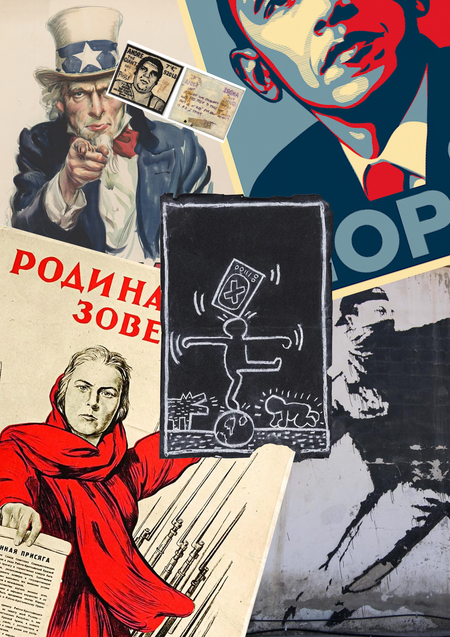
In this visual exploration, I examine how public discourse evolves from the propaganda posters of the 20th century to contemporary graffiti and poster art. Despite the vast differences in form, style, and visual techniques, they are unified by one essential element—their socio-communicative function.
In my view, what is most interesting is tracing how the dictatorial power of authority shifts in one situation or another and over time becomes the tool of the ordinary person—the «voice of the street.» [1]
Categories
1) Introduction 2) (1) Propaganda Poster: The Vertical Model of Communication 3) (2) Social Poster: The Shift from Monologue to Critique 4) (3) «Poster Goes Out to the Street» 5) (4) Street Art: The Horizontal Model of Expression 6) Conclusion 7) Bibliography
1. Promotional Poster: Vertical Communication Model
In this context, the vertical model of communication is the authority’s address to the people.
In the first half of the 20th century, the poster served as an instrument of the state. Influenced by strict political regimes and heightened military tensions in many countries, the poster’s function was to educate citizens, dictate «correct» choices, and call for various actions.
Poster «I Want YOU for U.S. Army,» James Montgomery Flagg, 1917 // Poster «Have you enlisted as a volunteer? ,» Dmitry Moor, 1920
Vivid examples of such artworks are the posters created during the First World War.
They do not inform—they assign the viewer a role, compelling them to join the ranks of soldiers, transforming them from a passive observer into an active participant in real events.
We will continue to actively use this technique of «personal contact» with the viewer in the future.
Poster «Motherland Calls!», Irakli Moiseyevich Toidze, 1941
The large figure of a person, centrally placed on the canvas with bright, contrasting colors, lends greater dramatic impact to the painting. Through this composition and the image appealing to a «worthy» citizen, the artist creates not merely a public statement—addressing the populace as a whole—but speaks directly to each viewer, emotionally compelling them to comply or at least reflect upon what is being conveyed.
This motif is also traceable in Chinese propaganda posters.
Poster «Achieve Good Harvest Every Year, ” 1964.
In the 1960s, the People’s Republic of China established an economic development plan that required the efforts of large masses of people.
2. Social Poster: Transition from Monologue to Critique
In the latter half of the 20th century, the public voice begins to «resonate» in the city streets. Personal statements from the government are no longer the sole or, therefore, the «correct» narrative; new expressions of criticism and dissent emerge from countless individuals hungry for freedom. Now, virtually anyone can declare their point of view and gather crowds in agreement.
Public discourse becomes an expression of social movements.
Social commentary became a crucial phase in the evolution of street art. Artists began utilizing the urban environment for open political and social statements, transforming street art into a form of civic discourse. Groups like the Billboard Liberation Front reimagined billboards, deploying the same communication tools as advertising—but for critique and discussion of vital issues. In the 1990s, the focus broadened: artists started addressing themes of social justice, human rights, ecology, and global concerns. Their objective was not merely to criticize institutions, but also to reclaim public space for the people. Despite the shifts in subject matter, street artists continued to operate within the city, pushing boundaries, and expressing hope for change. Their work symbolized resistance, the necessity of change, and the belief that art can influence society. [2]
Stylistic techniques in these posters are becoming increasingly diverse, as artists, driven by their personal vision, strive to convey their individual viewpoint—to explain their opinion and stance—through their own prism of perceiving the world.
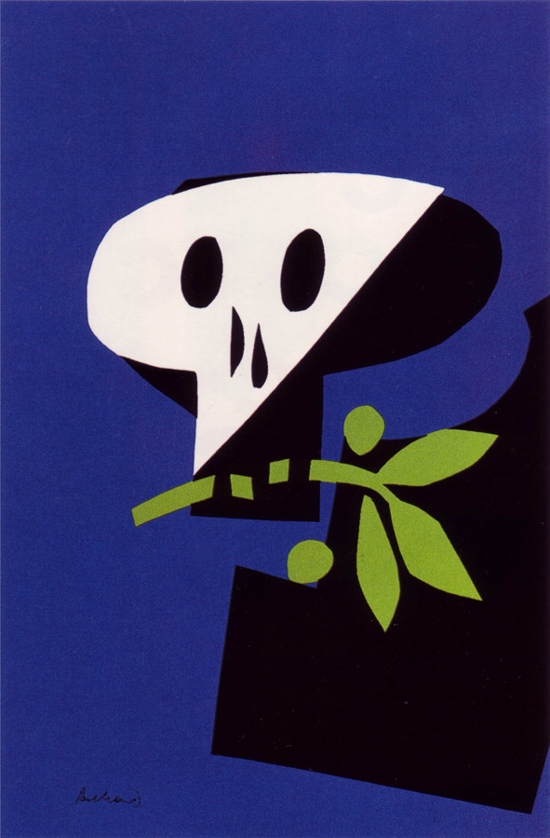
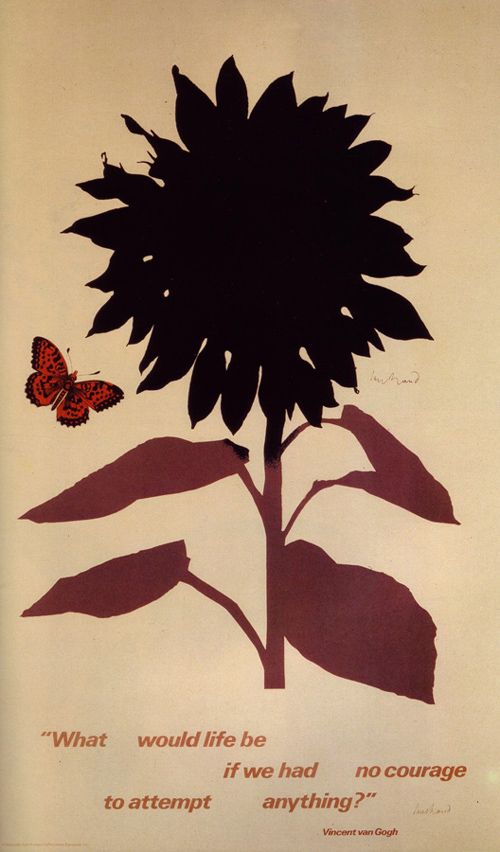
Anti-war poster, Paul Rand, 1968 // Poster for typographers, Paul Rand, 1985
In such works, we often see various objects that may not directly relate to the specific situation highlighted by the artist. However, the viewer grasps the essence of the project—its message—and independently draws parallels between the causes, which are events occurring in the world, and the consequences, which are the artist’s response to those events.
Poster «War Will Not Help, ” John Hargreaves, 1926.
This banner was created for the «Pilgrimage of Peacekeeping Women, ” which culminated in a gathering of 10,000 people in London’s Hyde Park on June 19, 1926.» [3]
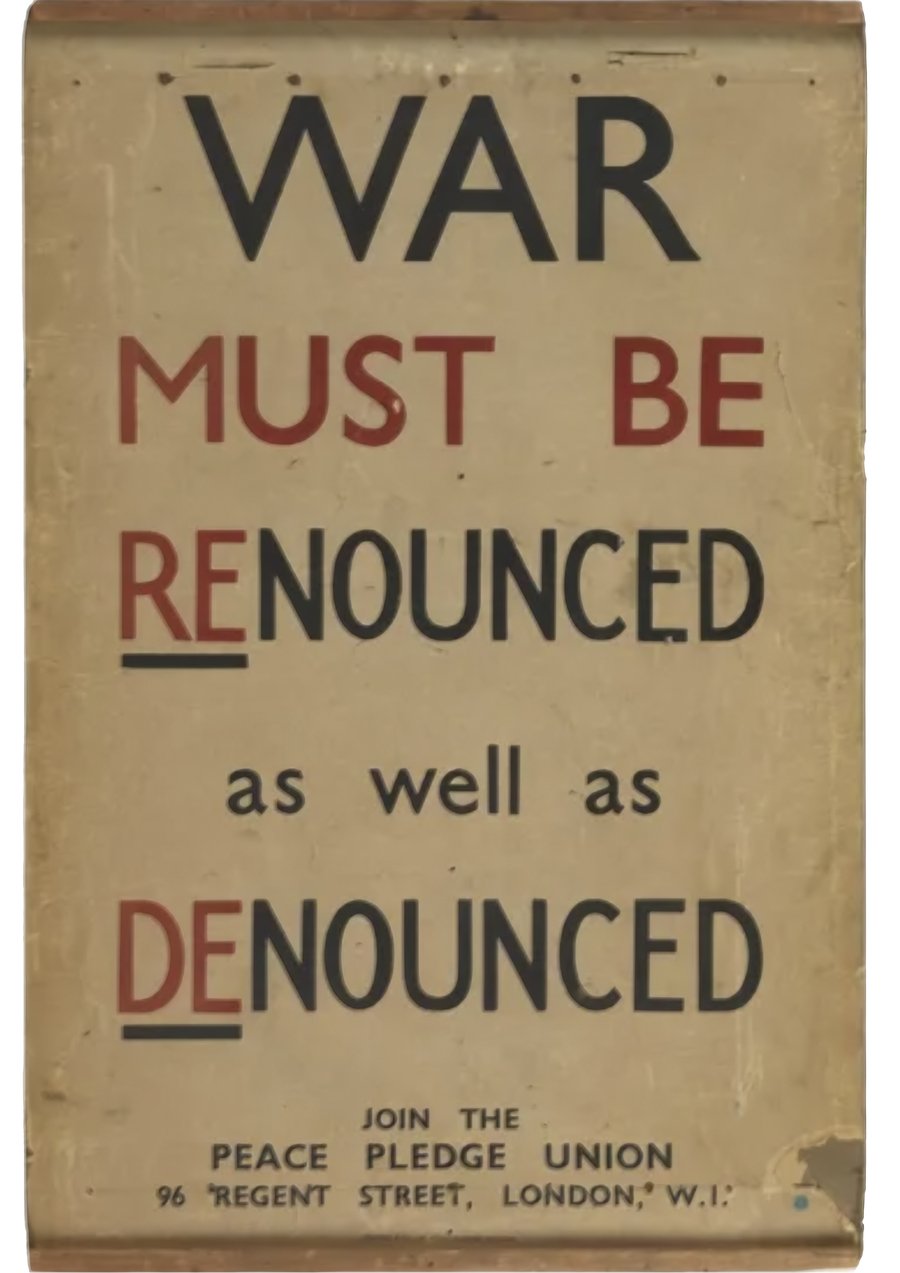
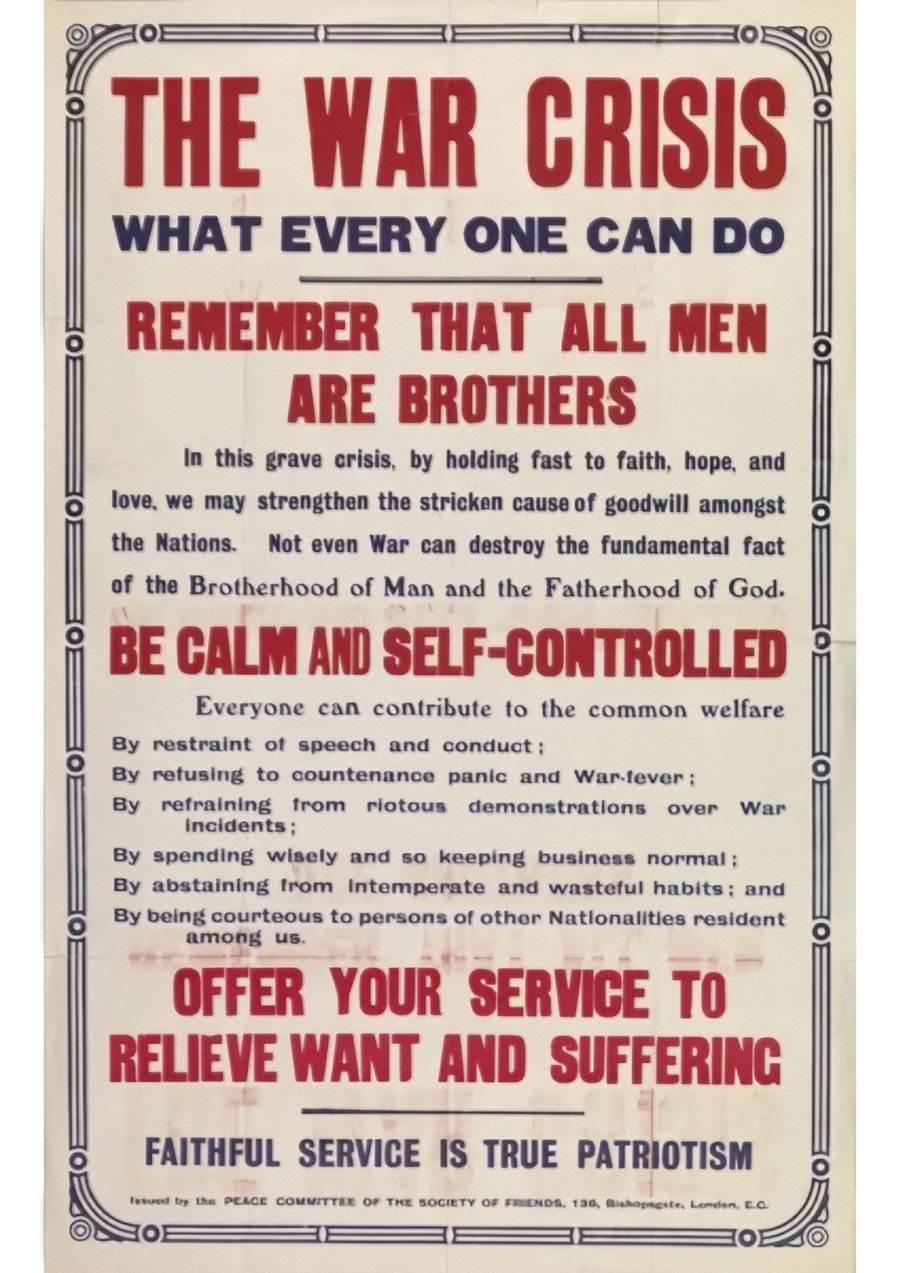
Poster, «Union of the Oath of Peace,» 1937 // Poster, Peace Committee of the Society of Friends (Quakers), 1914