Logo
Communication theory in the field of design
Communication theory studies how people create, send, receive, and understand messages. It looks at the key parts of communication: senders and receivers, verbal and nonverbal messages, channels used, feedback, context, and any barriers that can disrupt communication. This field helps us see how meaning is made and shared in many settings, from direct conversations to mass media and digital platforms. It draws from psychology, sociology, linguistics, anthropology, and media studies, focusing on how communication is dynamic, symbolic, and influenced at 0; context.
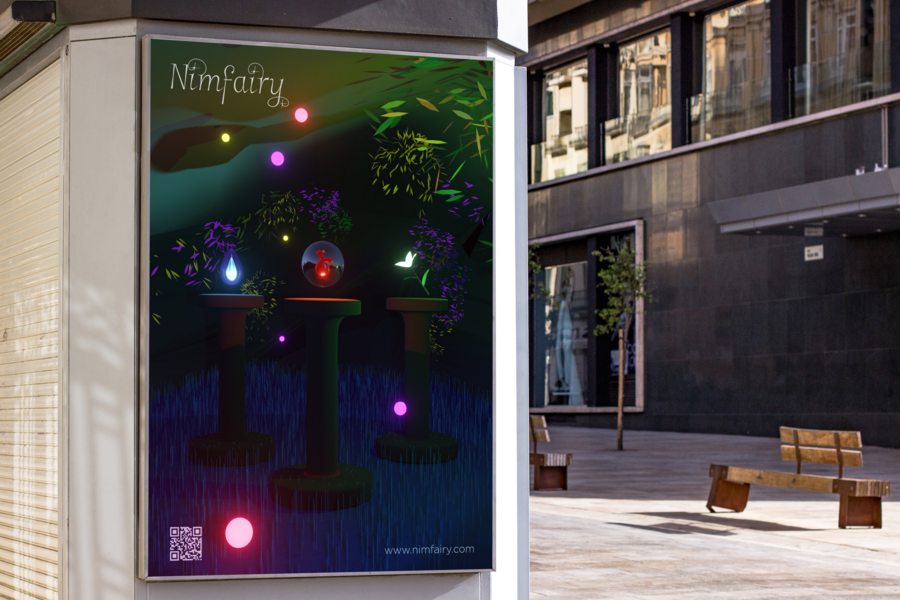
Nimfairy poster on the street
Different communication theories offer useful ways designers can improve their work or naturally encounter communication in design. Symbolic Convergence Theory shows how shared stories and symbols build group identity and community. Designers can use this to create compelling brand stories that emotionally connect and engage people. For example, brands include stories or characters that reflect common values, deepening loyalty.
Rhetoric and Persuasion focus on how communication can change beliefs, values, or behavior. Designers should make products that not only work well but also carry messages that resonate with users’ values, encouraging attitude or behavior change. This makes designs more meaningful and effective.
The box
Media Ecology, especially McLuhan’ s idea that «the medium is the message,» reminds designers that how content is delivered (print, digital, interactive) matters as much as the content itself. The choice between «hot» media (high detail, little user involvement) and „cool» media (low detail, high user participation) influences how people experience and engage with the message.
Uses and Gratifications Theory highlights that users actively choose media to satisfy needs like entertainment, relationships, identity, or information. Designers need to understand these needs using models like is 0; s hierarchy is 1; make products that truly meet is 2; motivations and compete for their attention.
Necklaces
The Narrative Paradigm shows humans as natural storytellers, so designing with clear, meaningful stories creates stronger connections and trust. Stories should be coherent and believable to feel real and valuable.
Affordances are another key idea: a product’ s design should clearly show how to use it. The shape, look, and interactive parts should guide users naturally, based on their abilities and habits. Good affordances make a product easy and intuitive so 0; use without extra instructions.
Nimfairy posters on the street
In short, these theories give designers tools to build community and brand identity through stories, craft persuasive messages, choose effective communication media, meet real user needs, tell meaningful stories, and design products that show their use clearly. Together, they help make communication in design clearer, more engaging and effective.
Presentation for a general audience
If you have kids, you know the evening struggle. Bedtime can be hard. They get scared of the dark, they want one more story, and you’re just out of energy.
What if there was a friend who could help? Meet Nimfairy. Magic that talks back.
The slogan
This isn’t just about kids not wanting to sleep. It’s about real anxiety and fears. Nightlights help a little, but they can’t talk back. As parents, we can’t always be there every single second.
Kids don’t just need light, they need comfort. They need a friend.
That’s why we made Nimfairy. It’s a speaker and a nightlight, but really, it’s your child’s personal fairy. It’s designed to be a comforting presence in their room.
It doesn’t just light up: it talks, tells stories, and sings. It’s like a character from a storybook that comes to life.
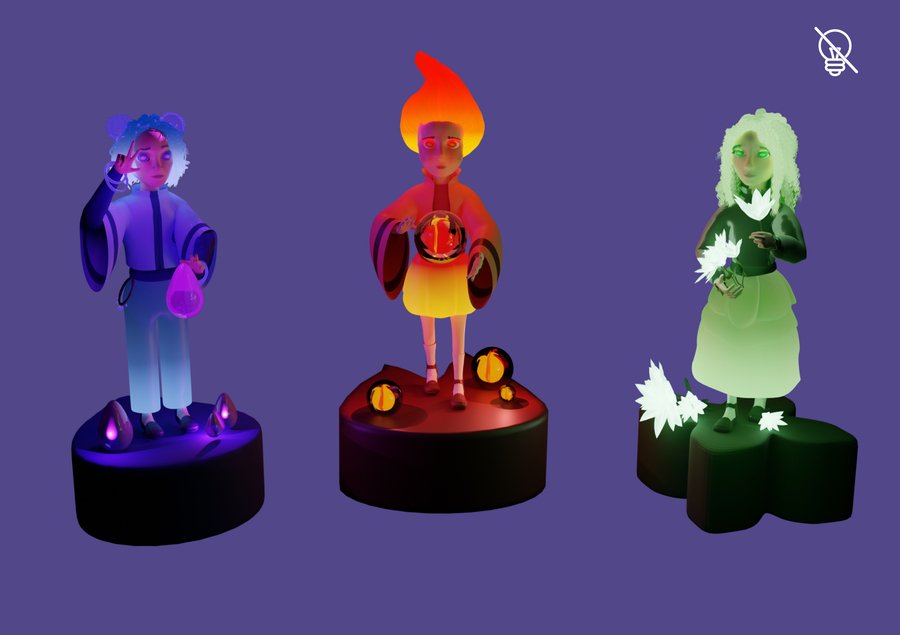
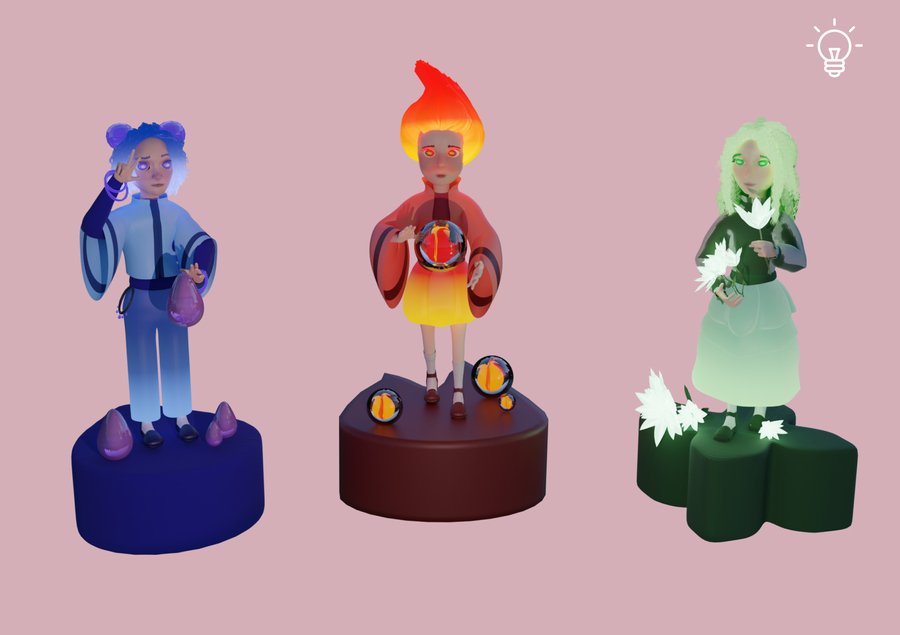
Nightlights with and without light
And because every kid is different, we made three unique fairies.
Flora, the Flower Fairy. She’s gentle and kind. Her voice is calm, and her stories about nature are perfect for winding down.
Amber, the Fire Fairy. She’s brave and full of energy. If your kid loves adventures and needs a confidence boost, Amber is their girl.
Brook, the Water Fairy. She’s wise and dreamy. Her soothing voice and flowing stories are ideal for helping kids fall asleep fast.
Your child can pick the fairy that feels like the best friend for them.
Nimfairy posters
So, what can Nimfairy actually do? It’s pretty simple.
It’s a Nightlight. It gives off a soft, warm light that makes the room feel safe.
It’s a Storyteller. Each fairy has her own collection of unique stories.
It’s a Singer. It can play lullabies or fun songs.
It’s a Companion. Your child can talk to it, and the fairy will respond, making it feel like a real conversation.
You’re in Control. With the parent’s app, you can pick the story, set a timer, or adjust the light from your phone.
Our app is as simple and magical as the fairies themselves. To keep the experience consistent, we used the same color palette from our fairy designs. And on every screen, your child’s chosen virtual fairy is there to greet and guide them.
The app is intuitively simple, making it easy for even a child to navigate. It’s divided into three main sections:
The Story Library: A growing collection of unique audio stories for your fairy to tell.
The Home Dashboard: Instantly adjust the nightlight’s brightness and the speaker’s volume.
The Shop: Find fun merchandise or add another fairy to your collection.
Key Features for Every Family:
Full Offline Access: Download stories via Wi-Fi and enjoy them anywhere without an internet connection. The app connects to the speaker via Bluetooth.
Built-in Accessibility: We include features like high-contrast text and compatibility with screen readers to ensure every child can enjoy the Nimfairy experience.
Mobile app
We made sure the magic works reliably. It has a great speaker, safe materials, and a gentle, flicker-free light. Most importantly, we respect your privacy. The conversations are just between your child and their fairy. We don’t record or store them.
We believe the magic should start the moment you receive your Nimfairy. That’s why our packaging is crafted entirely from recycled and eco-friendly materials. There’s no need for extra wrapping paper—the box is designed to be a beautiful gift right from the start. It’s our small way of caring for the planet while delivering a big moment of joy.
Product and the box
Every kid deserves to feel safe and calm at bedtime. Nimfairy is here to help make that happen.
Give your child a friend who’s always there for them, and give yourself a more peaceful evening.
Ready to try it? Check out the link below to choose your fairy. For the first 100 orders, we’re including free access to all our exclusive stories for life.
Webpage design
Presentation brand for a professional audience
Nimfairy posters on the street
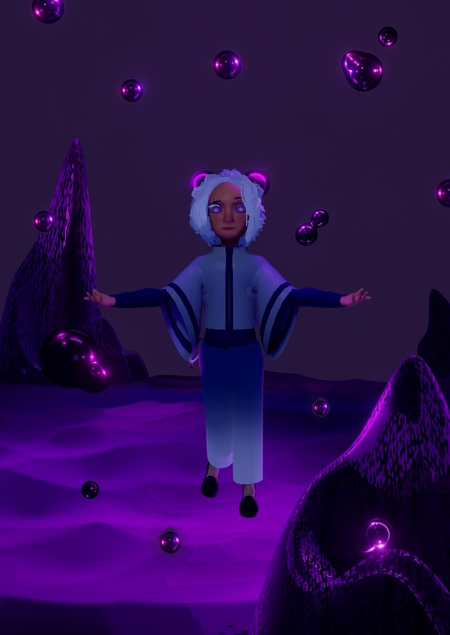
The design uses colors typical of the three elements: blue and purple for the water fairy Brook, red and orange for the fire fairy Ember, and green and white for Flora. At the same time, it was important for us to use soft, muted colors to create a sense of calm before going to bed. Each of the fairies has well-thought-out distinctive features in the design of their hairstyles, clothing, images, and stands, depending on which natural element they belong to. For example, Flora has curly hair that falls elegantly to her shoulders. It resembles the branches of a weeping willow. Ember’s hairstyle resembles the shape of a flame at a campfire or candles. Brook wears two round buns that resemble air bubbles in water.
However, initially the target audience was adults and teenagers interested in geek culture and folklore. Early concept art shows that the characters looked more like mythological creatures from legends. Night lights with this design belong to a very narrow niche that may not be successful, so it was decided to shift to a children’s audience and create fairies with cute shapes.
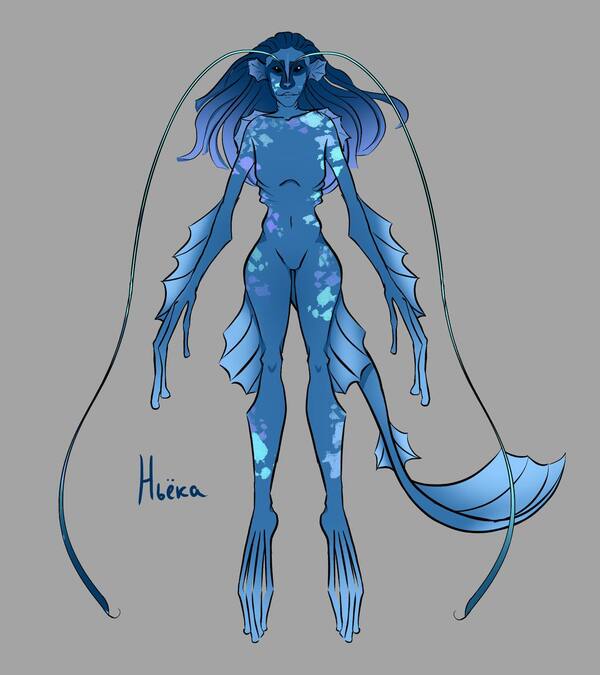
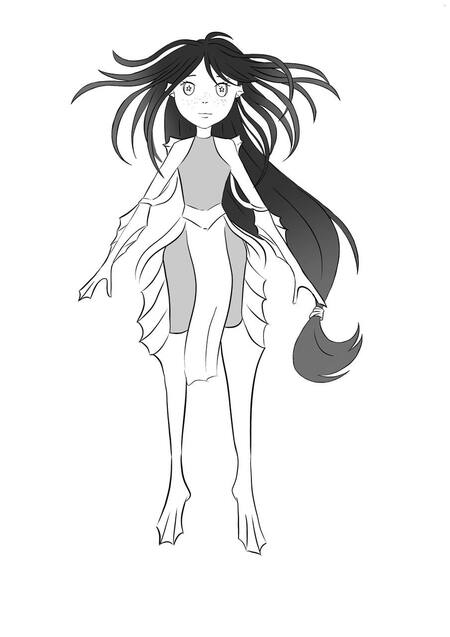
photos of early concepts
Flora, Ember, and Brook have different characters, so their story lines and dialogue responses are different. Each of the heroines speaks in her own words and phrases. For example, Brook uses the word «bubbly» to mean something cool or fun, and Ember says before going to bed: «I’ll give you a spark of courage to have a good night.»
Instead of boilerplate responses, the fairies engage in dialogue on different topics and show different intonations. For example, surprise at an unexpected question or joy at good news. This creates a sense of live communication.
For the fairies’ answers, we created our own artificial intelligence based on the characters of girls from cartoons, movies, and games. The database includes writings and video clips with heroines of three types of characters. After that, the AI analyzed the data and created its own answers for the fairies.
Each of the fairies tells the same story from a different point of view, focusing on fragments interesting for her character. Not only do they know stories about their own world, but they can also tell alternative versions of folk tales adapted to their universe.
Also, the fairies have an additional function for calling an ambulance, firefighters, and police in case of danger. To do this, the child must report the incident or accident to the fairy, and she will help and send a request to the appropriate service.
We regularly update the system, and users regularly receive updates.
Necklaces
The app’s UI/UX design is simple enough for even a child to handle. We used the same shades as when creating the fairies to preserve the aesthetics and visual code of the product. On each page, users are greeted by a virtual fairy.
The app has 3 screens:
Screen with content: a catalog of fairy tales and songs designed as a media feed. The focus is on illustrations and covers to create an emotional context.
Settings screen: a minimalistic interface for controlling light and sound, using smooth transitions and direct manipulation of elements.
Shopping screen: a visually light showcase that supports scrolling, comparing, and selecting accessories and speakers. A clear modular grid and large images help present the product range as part of the brand ecosystem.
The app has convenient functionality for people with vision and hearing problems. For example, text can be voiced, and the font size can be increased. The app can also work without the Internet.
Soft pajamas
To create branded products, our team turned to professional sleep specialists to create not just items, but things that can help children fall asleep faster and easier. Our products help parents so that their child doesn’t have to sit on the phone before going to bed, but can listen to a fairy tale or lullaby.
Pendants are not only a decoration. Children can see a similar accessory on another child and get to know each other based on common interests.
Soft pajamas, sleep masks, and pillows help with a child’s bedtime routine, so it becomes easier for parents to put their children to bed.
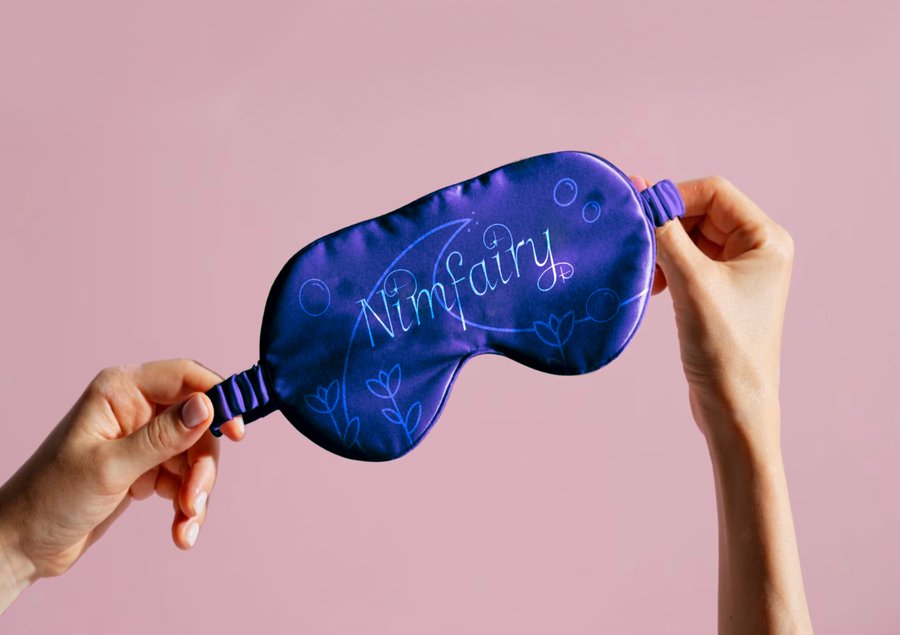
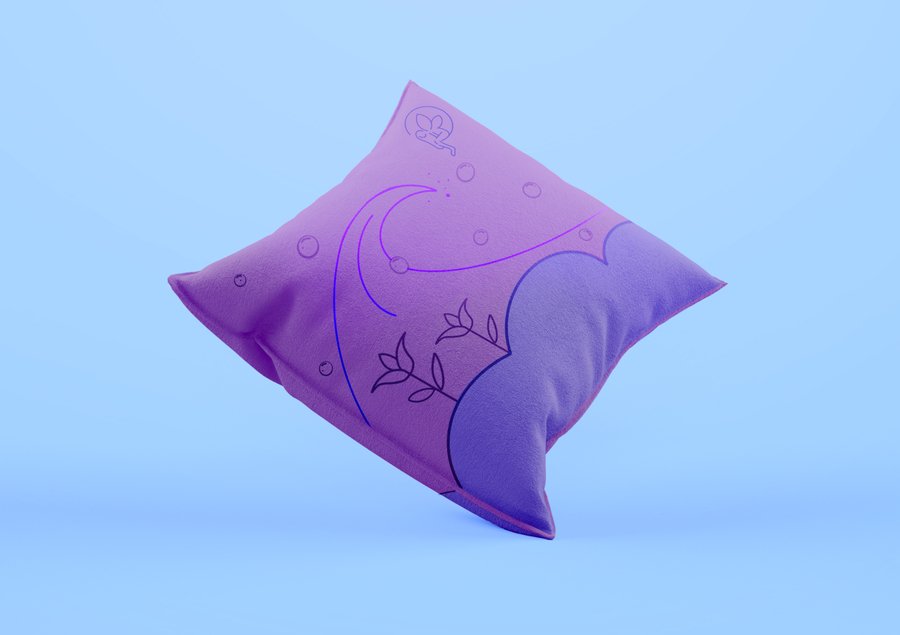
Branded products
Communication theory as basis for the presentations
In the two Nimfairy presentations, several communication theories manifest through both the narrative structure and design decisions. The parent‑focused text relies on Symbolic Convergence Theory and the Narrative Paradigm by framing bedtime as a shared story world where children choose a «personal fairy» and build emotional bonds through recurring characters and situations. Rhetoric and persuasion appear in how the „evening struggle» is defined on 0; on 1; problem and Nimfairy on 2; positioned on 3; on 4; comforting, value‑driven solution that promises safety, calmer bedtime, and alignment with eco‑friendly and privacy‑respecting values.
Nimfairy poster on the street
Media ecology is visible in the emphasis on the hybrid medium (nightlight, speaker, conversational character, and app) and in how different interaction modes — from passive listening to active dialogue — shape the child’ s experience. Uses and Gratifications Theory underlies the focus on meeting concrete needs of children (comfort, companionship, entertainment) and parents (less screen time, easier routines, safety), while also recognizing that Nimfairy competes with other entertaining media: phone, tablet, TV.
The professional presentation makes these mechanisms explicit: it details how visual language, character design, and UI/UX affordances are tuned to be intuitively readable for children, how dialogue, tone of voice, and AI behavior construct a feeling of interpersonal communication, and how the brand ecosystem (app, merch, sleep‑related products) extends the same symbolic world into multiple touchpoints. Together, these examples show how communication theories are not only analytical tools but also practical frameworks for shaping product storytelling, interaction, and visual form in design.
Logo
Craig Calhoun Communication as Social Science (and More) (дата обращения: 20.11.2025).
Robert T. Craig Communication Theory as a Field (дата обращения: 25.11.2025).
Patrícia Dias Motivations for multi-screening: An exploratory study on motivations and gratifications // European Journal of Communication. — 2016. — №Vol. 31(6). — С. 678–693. (дата обращения: 27.11.2025).
Francesca Cabiddu, Manuela De Carlo, Gabriele Piccoli Social media affordances: Enabling customer engagement // Annals of Tourism Research. — 2014. — № 48. — С. 175–192. (дата обращения: 27.11.2025).
Thomas H. Allison, Blakley C. Davis, Justin W. Webb, Jeremy C. Short Persuasion in crowdfunding: An elaboration likelihood model of crowdfunding performance // Journal of Business Venturing. — 2017. — № 32. — С. 707–725. (дата обращения: 28.11.2025).
All pictures are from Karina Demyanova’s project: https://portfolio.hse.ru/Project/179242
Pictures from Karina Demyanova’s project made with Leonardo AI assistance: https://hsedesign.ru/project/8ed9b2c8dbac445f89eb9d89aee9a536