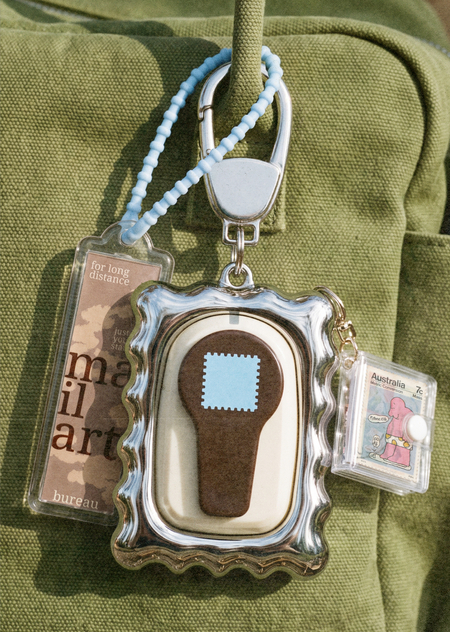
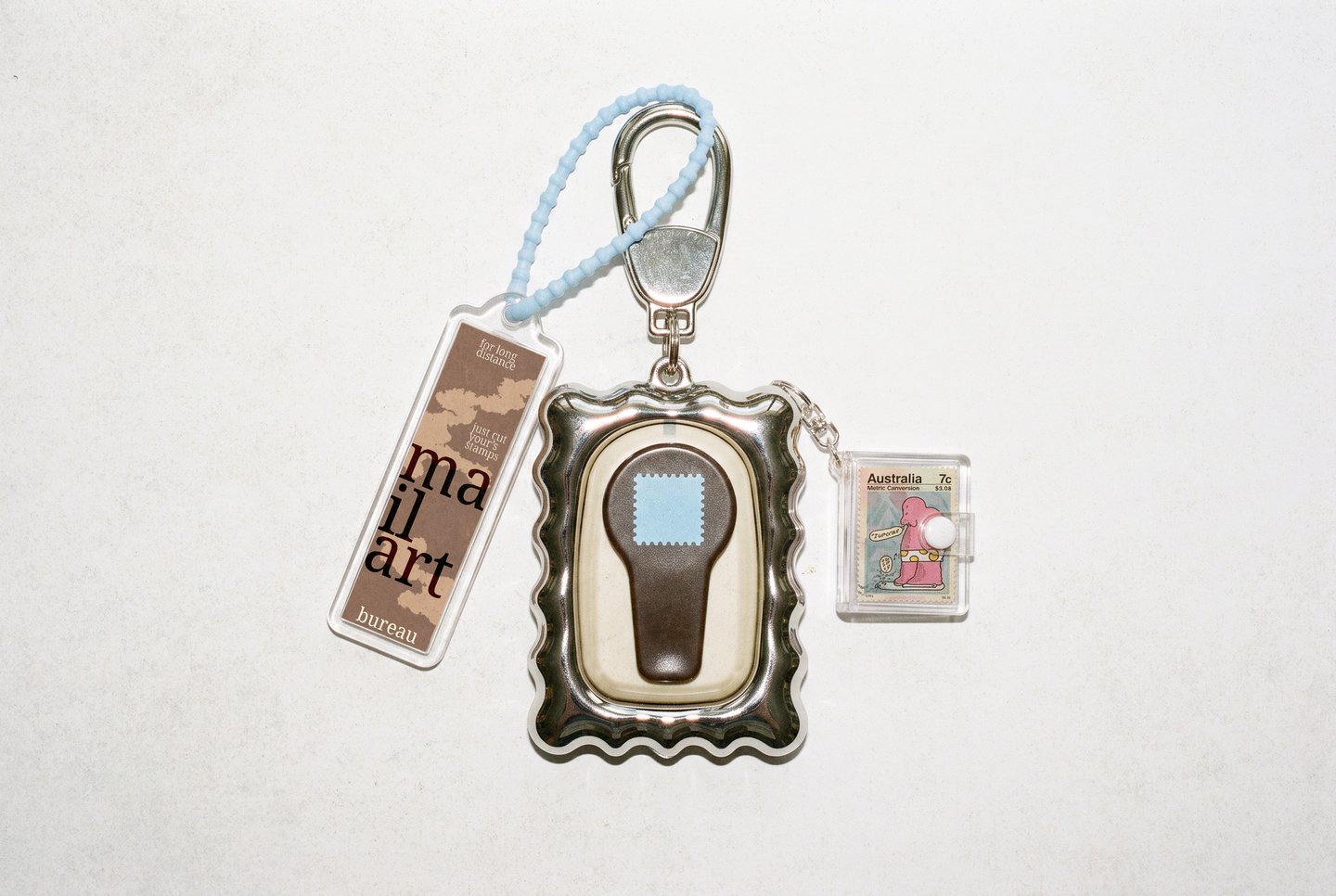
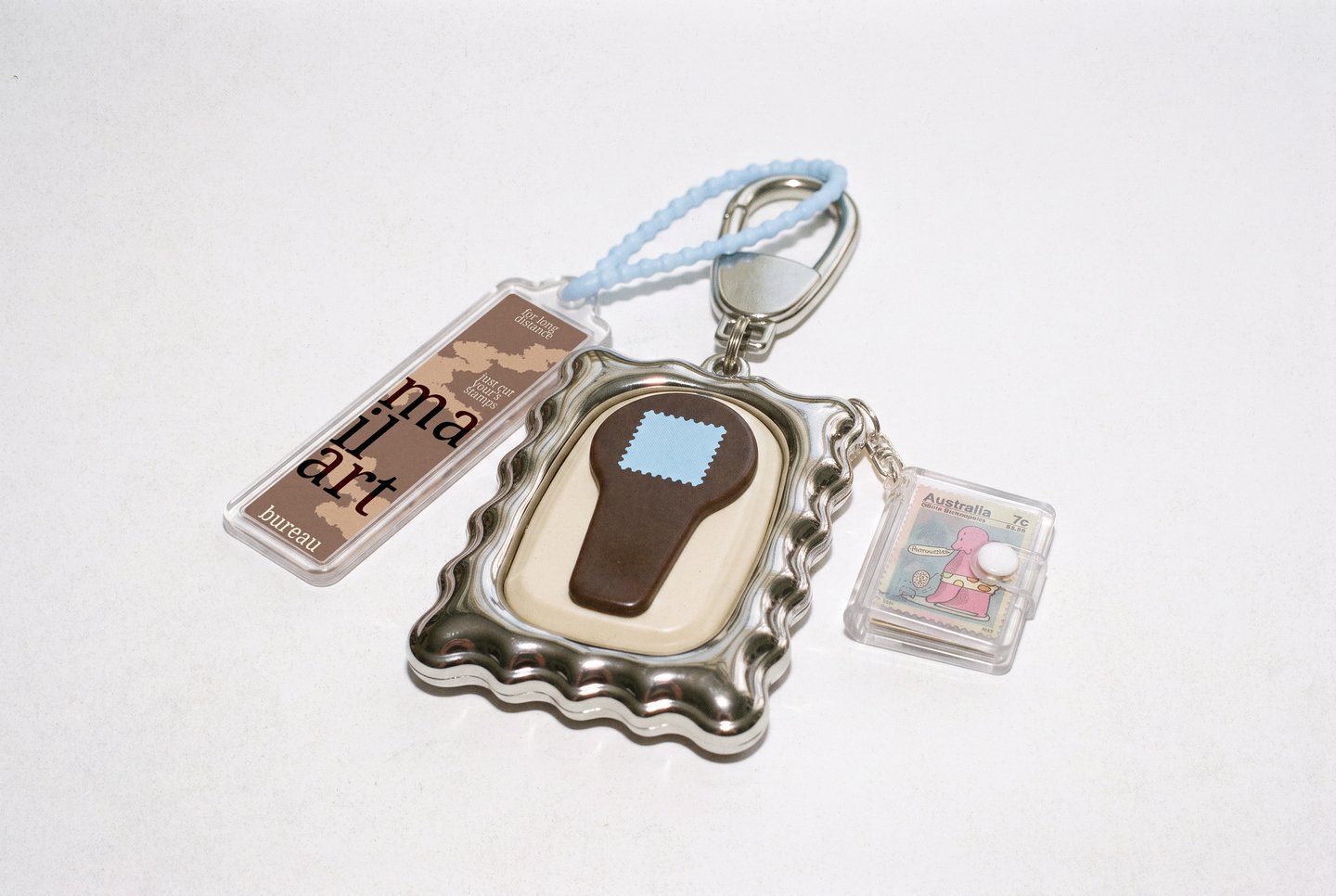
Marochnik—a portable stamp maker used to create artistamps.
Концепция:
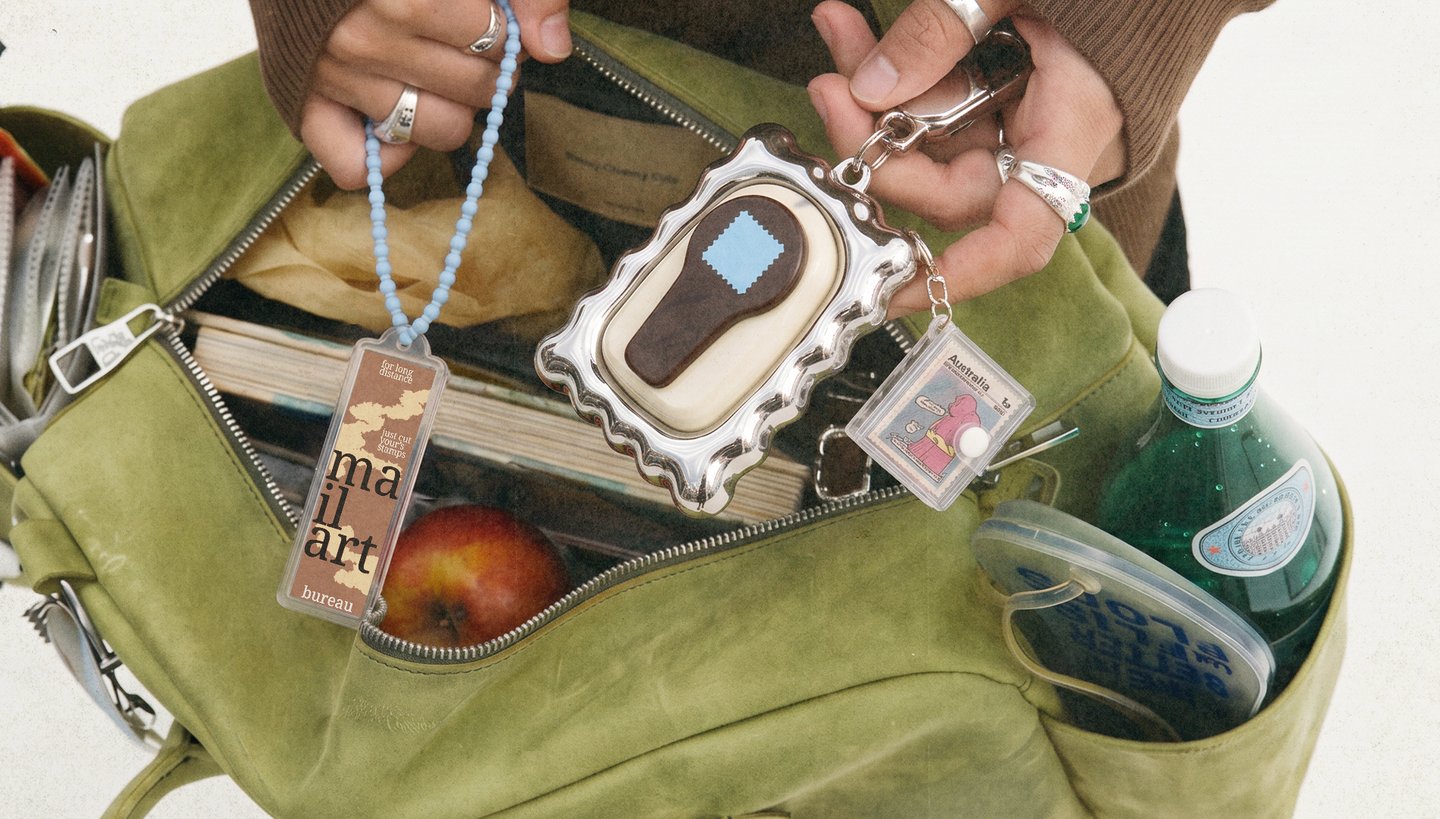
A hole punch for tags worn as an accessory on a bag. It isn’t stored in a desk drawer—it hangs on a carabiner next to other keychains.
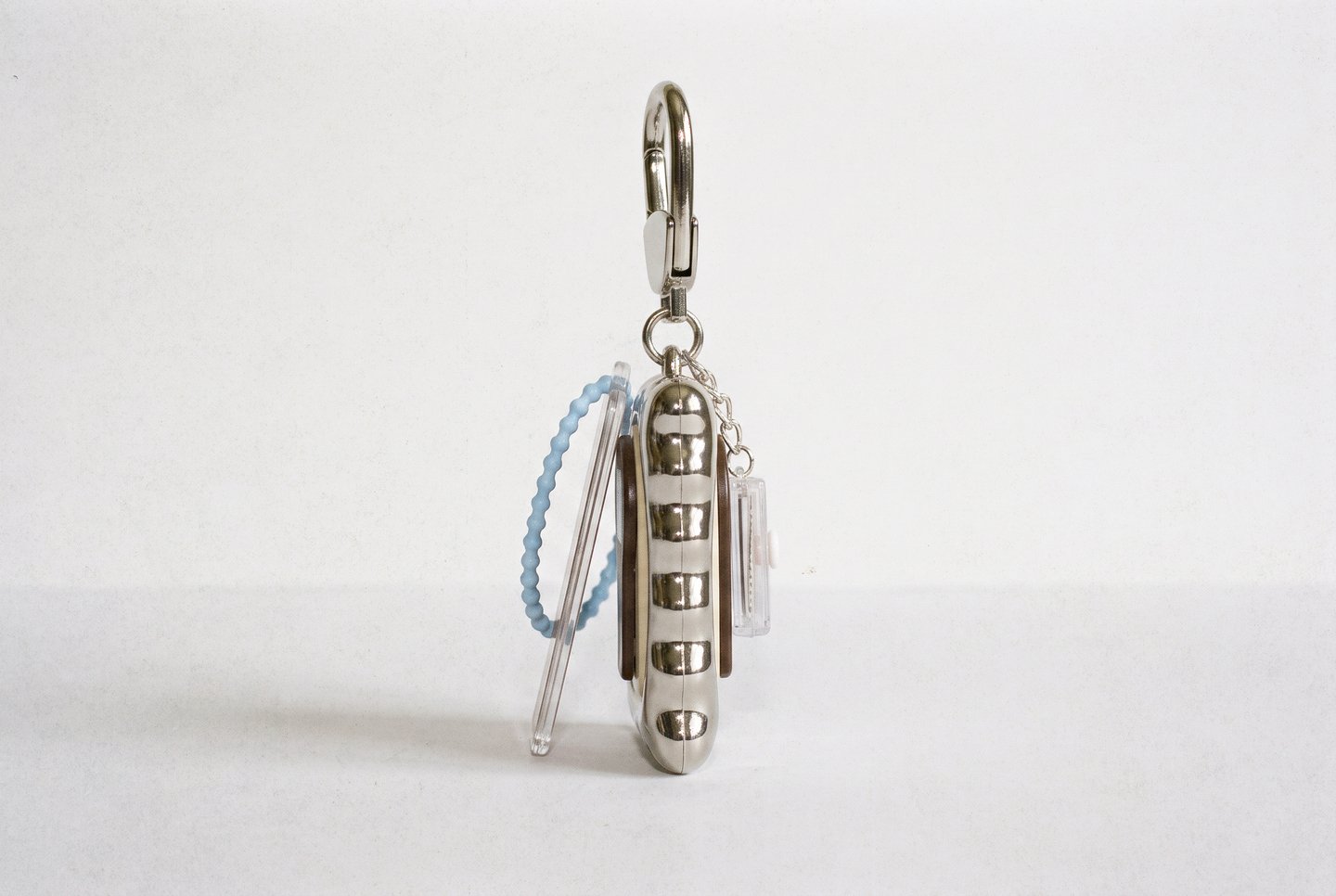
A pocket punch, measuring 54 × 34 × 18 mm, transforms any scrap of paper—whether a book page, a piece of mail, or a drawing—into a stamp with a perforated edge. Instead of an axle, spring, and long lever, it features a flexible crossbar, making it lightweight and palm-sized. The body and the stamp holder are printed without injection molding; only a cutting ring and a carabiner require metal.
Connection to Thesis: The project is linked to my visual research on mail art for my thesis: the artistamp. It makes self-made stamps accessible: any drawing, scrap, or fragment of a postcard can be turned into a perforated stamp on the go—whether you’re traveling or at a café. The numbering and collection mirror the logic of series and print runs, and giving the cut-out stamp to another person becomes part of the narrative. The hole punch here establishes a ritual of exchange, similar to that found in the network of postal art.
Marochnik connects three things that usually exist separately: the function of a tool, the aesthetics of an accessory, and the logic of philatelic art. It isn’t merely for making stamps; it is about reclaiming the gesture from which they originated.
Niche: Curved scrap punches already exist, but they are bulky, heavy, and designed like office supplies, so people don’t carry them with them.
Сценарий пользователя
1. Remove the stamp from the cartridge holder
2. Insert the paper into the side slot
3. Press the brown tab. The flexible linkage bends, the cutting ring slices the stamp, and it drops into the chamber beneath the die.
4. Remove the stamp, affix it to an envelope, or place it in the mini-album on the keychain.
The Maroch device is assembled from seven parts and several ready-made components. Its design lacks the axle, spring, and long lever typically found in hole punches. A single flexible part replaces all the mechanical components.
How it works: The upper part of the housing simultaneously functions as a lever and a spring. A brown tongue, measuring 40 × 24 mm, is connected to the housing by a thin, flexible neck. When pressure is applied to the tongue, the neck bends, and when released, it returns the tongue to its original position. A thin steel cutting ring is fixed to the tip of the tongue, and a steel die lies beneath it. Paper is fed into the 30 × 1.2 mm slot on the housing’s edge, and a blue window measuring 18 × 18 mm on the tongue indicates which section will be cut. After pressing, the cut stamp falls into the chamber beneath the die and is retrieved through a sliding cover.
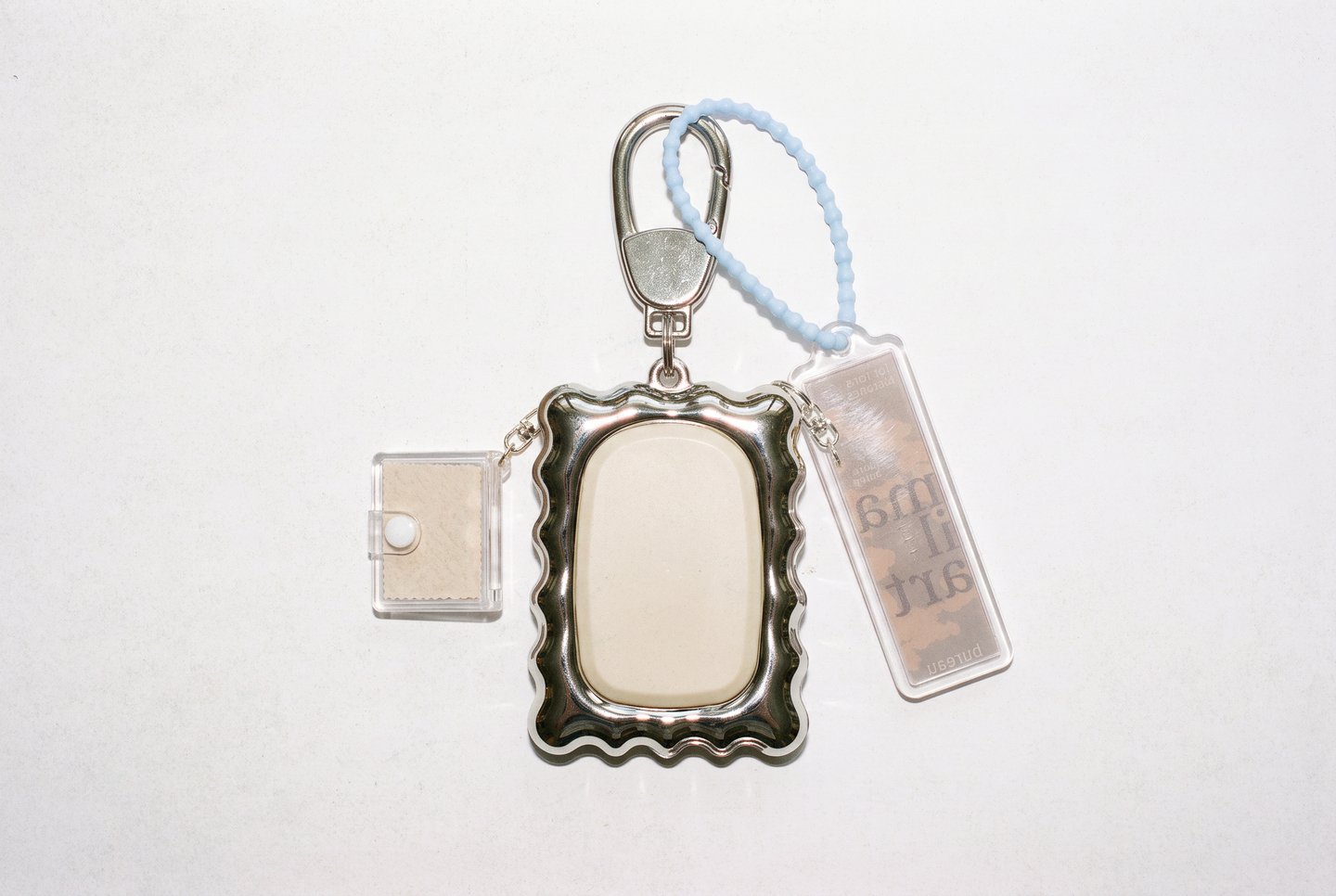
Деталь | Параметр
(1) Housing — 54 × 34 × 18 mm, corner radius 7 mm
(2) Lever — 38 × 22 mm, thickness 3 mm
(3) Flexible Link Collar — 0,8 × 12 mm
(4) Indicator Window — 20 × 20 mm, toothed edge
(5) Paper Slot — 1,2 × 30 mm, insert depth up to 24 mm
(6) Cutting Ring — 0.4 mm steel, tooth pitch 2.0 mm
(7) Maximum Stamp Size — 26 × 26 mm
(8) Holder — 72 × 52 × 24 mm, wall 3 mm, pocket 56 × 36 × 19 mm
(9) Weight — ≈ 30 g without carabiner
Проектные значения для CAD-модели
Порядок сборки
1. Sand and paint the printed parts. 2. Glue the steel matrix into the base groove. 3. Glue the cutting ring beneath the tip of the tongue, aligning it with the matrix using two 1.5 mm pins. 4. Insert the blue window into the recess on the tongue. 5. Join the upper shell and the base. 6. Insert the retractable camera cover. 7. Press the housing into the holder until it clicks and clip the carabiner to the loop.
Hardware and assembled components: Rifle sling (55–60 mm) with a swivel, 12 mm ring, 2–3 chain links, silicone chain with beads, transparent button mini-album, acrylic tag, 1.5 mm pins (2 pcs.), epoxy glue.
Manufacturing Process:Prototype: SLS printing (PA12), sandblasting, and painting. The holder is printed using SLA, then sanded, primed, and coated with mirror chrome (plating). The steel is laser-cut, and assembly is done manually. Small Batch: MJF/SLS printing with coloration integrated into the material, and metalizing the holders by a contractor. Scaling Up: PP (bridge) and ABS casting with chroming (holder) would be possible, but this requires tooling. Therefore, the premise «without casting tooling» is only valid for the small batch.
Detail | Material
(1) Body and Lever — Polyamide PA12 (SLS), dye or matte paint: cream and chocolate(2) Flexible Bar — PA12 on prototype, TPU 95A as a backup option
(3) Indicator Window — blue acrylic or resin, 1.5 mm
(4) Cutting Ring and Matrix — stainless steel 0.4–0.5 mm, laser cutting or photoetching
(5) Holder — printed part (SLA resin or PA12) with mirror metallization
(6) Carabiner and Ring — zinc alloy, chrome-plated, finished hardware
(7) Chain — blue silicone beads
(8) Tag — 3 mm acrylic with a paper insert
(9) Mini Album — finished clear button album