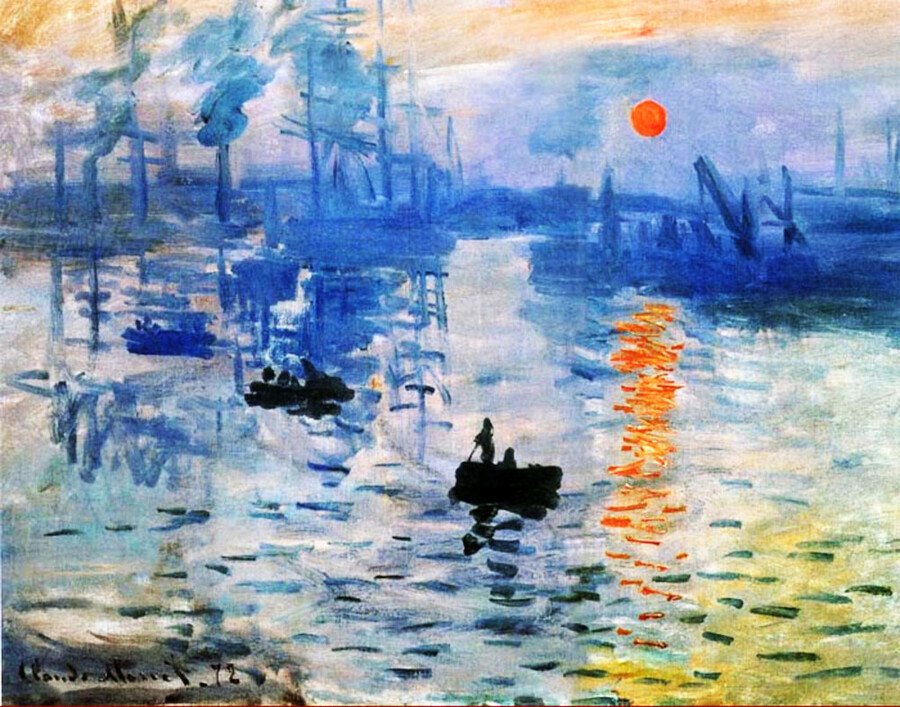
«Impression, Sunrise» Claude Monet 1872
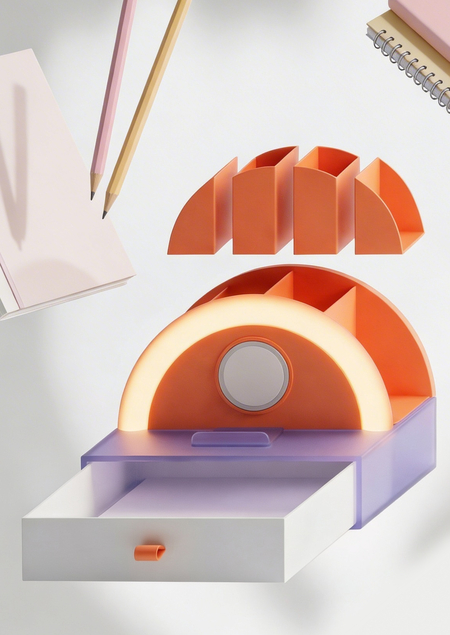
Impression is a modular system for organizing tabletop space, inspired by Claude Monet’s painting «Impression, Sunrise,» which pioneered Impressionism.
Visual references to art create an atmosphere of coziness and individuality, even in the most standard office or home study.
Target Audience
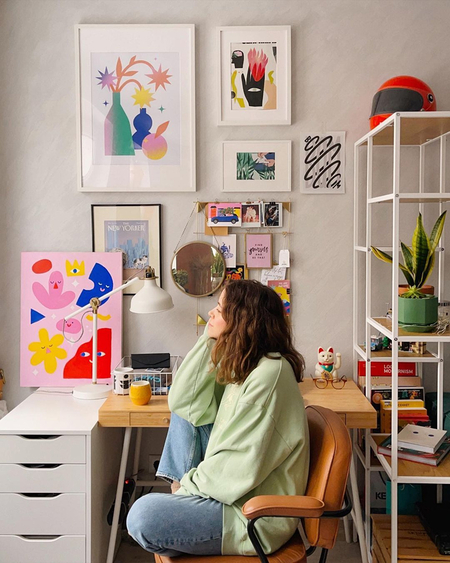
Office employees, managers, and specialists who work remotely or in a hybrid format;Students and creative professionals who value order and aesthetics;Freelancers and entrepreneurs for whom the workspace is a calling card (vibrant design is beneficial for influencer reach).
Key User Issues
There is no convenient space for storing stationery and small items.It is uncomfortable to hold a phone during calls.Poor lighting for video conferences.The workspace looks boring and uninviting.
Solution
The system consists of a base platform with drawers and modules that the user can combine to their preference.
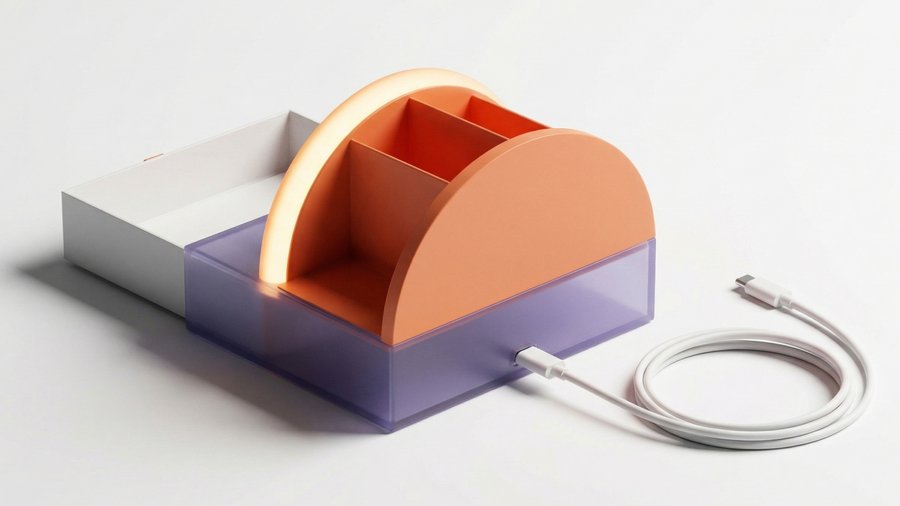
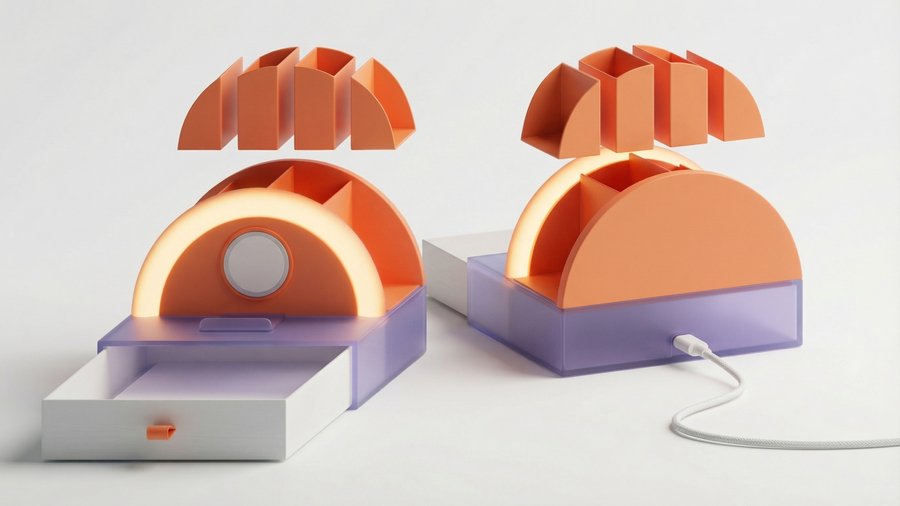
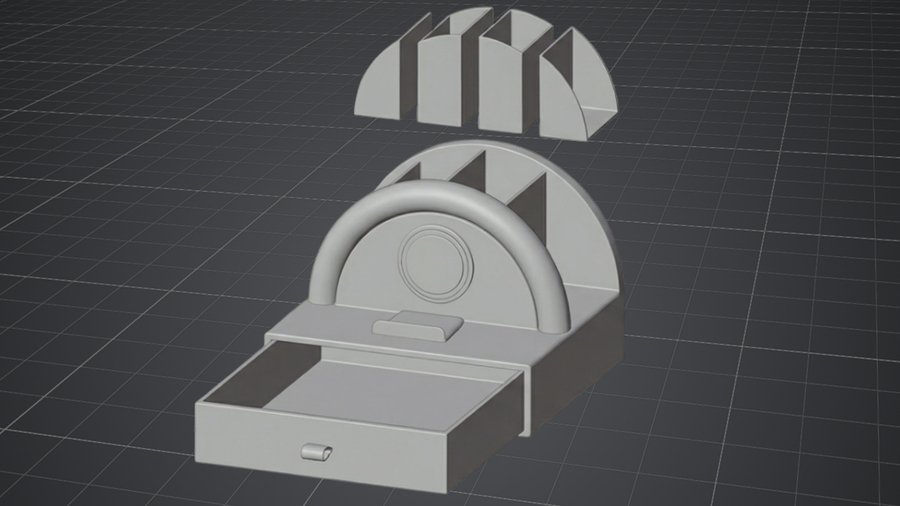
Visualizing the organizer model
Sliding Compartments: Sturdy plastic for pens and pencils; a roomy, matte lilac drawer for notebooks and small items.
Phone Stand: Keeps your hands free during calls, and the ring light with warm illumination provides soft lighting for video calls.
Magnetic Charger: Solves the problem of a dying device right in the middle of a call.
Design inspired by Impressionist motifs adds individuality to the workspace.
Structure
Sketches and Model
Cups (4 pcs.): assorted sizes for convenient storage of pens, pencils, markers, and other small stationery items.
Warm light ring lamp: provides soft illumination for video calls and computer work. Inspired by the rising sun in Monet’s painting, «Impression, Sunrise.»
Phone stand with integrated MagSafe charger: keeps your hands free during calls.
Translucent paper case: mimics water with reflections, gently diffusing the lamp’s light and creating a visual reference to the painting that birthed Impressionism.
Production
3D printing has been selected as the primary production technology, allowing for the creation of complex-shaped parts with high precision and minimal material waste. PLA plastics of various colors with a matte finish were used for manufacturing.
Packaging
A cardboard box, approximately 380×280×780 mm, designed to house all components.
Biodegradable cornstarch packing material is used to secure the parts.
Tuition
The estimated cost for one set ranges from 2,500–4,000 RUB. This cost includes:
Plastic consumption for primary components; Material for supports; Potential print failure when forming complex shapes; Assembly of modules with internal inserts.
The minimum technical run is one unit; however, for economic viability, we recommend producing a small series of 10 units or more.



















