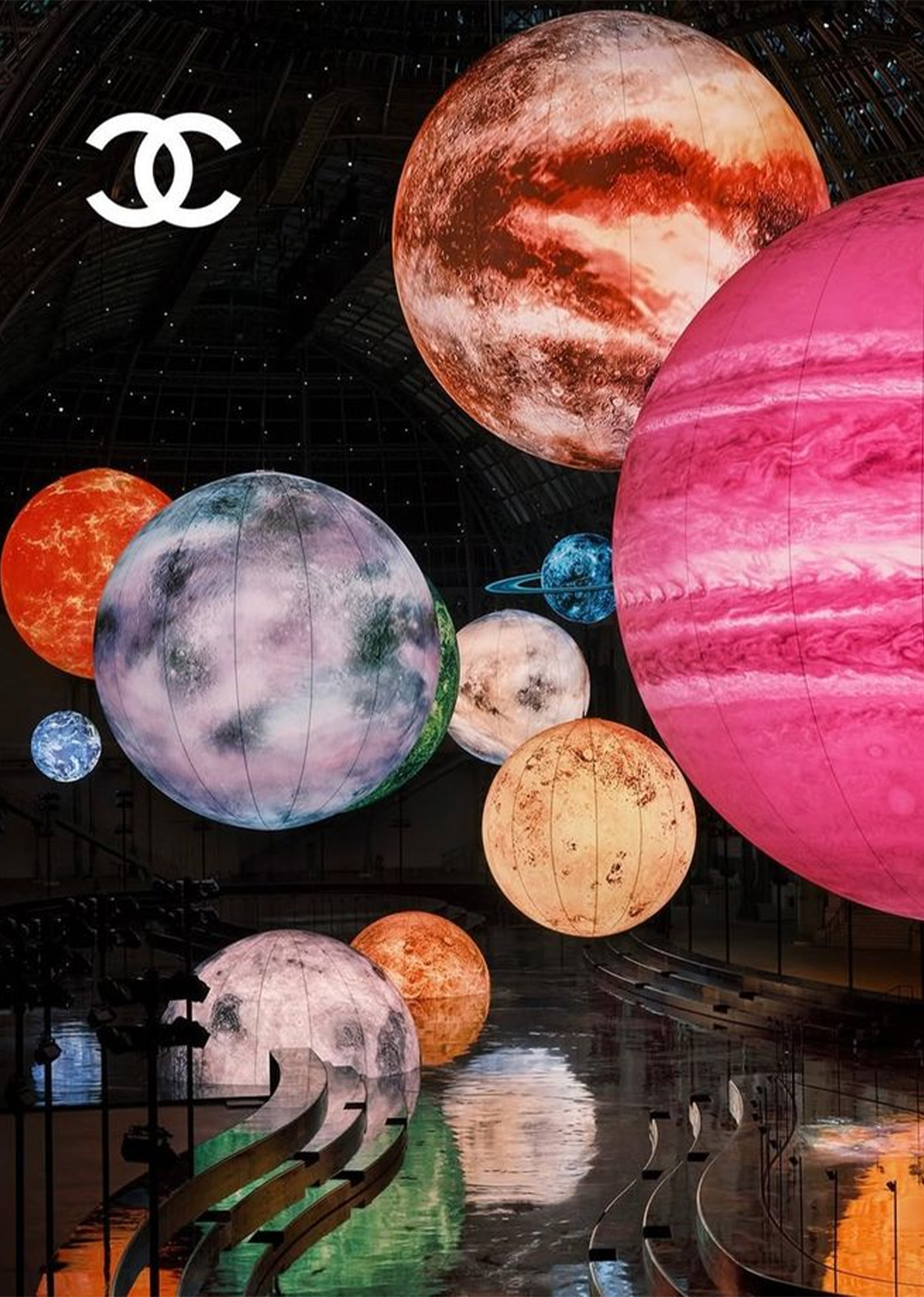
The set design for Chanel shows reflects the brand’s evolution through the transformation of the runway and its role in the presentations. This research examines the influence of creative directors on visual aesthetics, tracing changes from the Coco Chanel era to the contemporary landscape.
TABLE OF CONTENTS
CONCEPT CHAPTER 1. COCO CHANEL (1910–1971) CHAPTER 2. KARL LAGERFELD (1983–2019) CHAPTER 3. VIRGINIA VIAR (2019–2024) CHAPTER 4. MATTE BLASSI (2025–…) CONCLUSION LIST OF SOURCES
CONCEPT
A fashion show in the fashion industry is not merely a display of collections—it is an entire spectacle whose visual composition shapes brand identity, sets global trends, and forges an emotional connection between the fashion house and its audience. For Chanel, the runway transforms into an architectural space that amplifies the clothing’s narrative, reflecting the aesthetic evolution from the ascetic ateliers of the early 20th century to the hypertrophied, immersive presentations of the 21st century. This study visually reconstructs the evolution of Chanel’s runway set design through the lens of creative director influence, demonstrating how the change in leadership transformed the runway from a functional element into an autonomous work of art.
In this visual research, I analyze how the succession of creative directors at Chanel defined the aesthetic of the runways, mirroring the brand’s philosophy. Chanel’s set design has evolved by adapting to the demands of each era: from the elegance of Coco Chanel to the provocative spectacles of Karl Lagerfeld, the organic installations of Virginie Viard, and the contemporary shows of Matthieu Blazy.
The core question of this research is: How did the succession of Chanel’s creative directors influence the transformation of runway set design—from a functional platform to an immersive space? The hypothesis posits that each director not only maintained the brand’s signature aesthetic but also radically reinterpreted the runway as a piece of art, reflecting the cultural shifts of the time and enhancing the emotional impact on the audience through architecture, lighting, and installations.
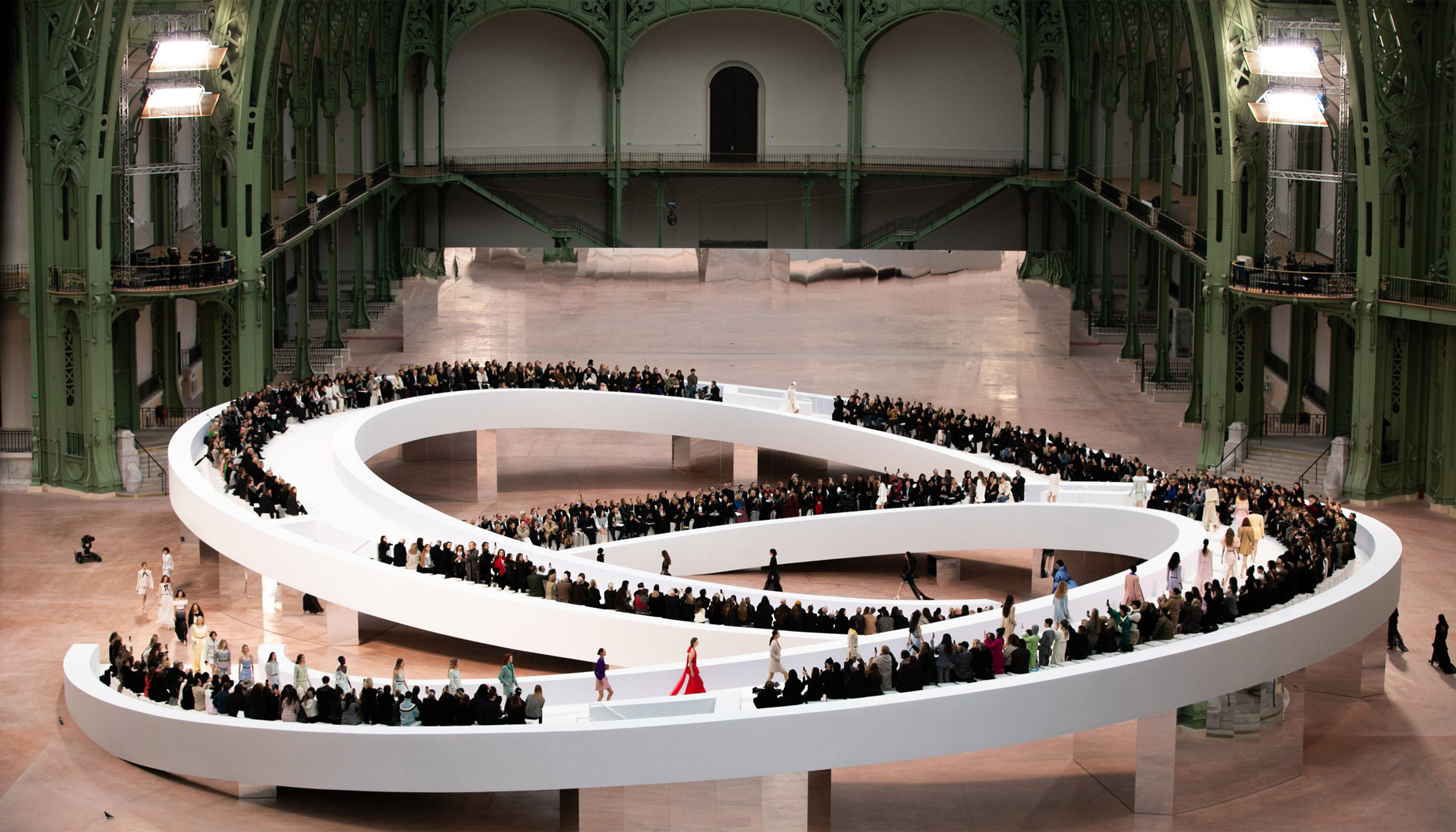
NET DESIGN OF THE CHANEL HAUTE COUTURE SPRING/SUMMER 2025–26 SHOW
For the visual analysis of materials, the principle of selection from verified sources focused on authenticity and data completeness was applied. The core consists of online journals that publish detailed runway reviews complete with photographs and video. These resources provide systematized archives, allowing for the comparison of visual elements across seasons and years. Additionally, official Chanel brand archives are utilized, containing historical materials, including rare shots from early shows and set design descriptions. The second key source is recordings of fashion shows. Complete videos of key runway presentations are selected to analyze the dynamics of the space, lighting, and model interaction with the catwalk. Selection criteria include relevance to each creative director’s tenure, visualization quality, and the presence of multiple camera angles. In my visual research, I examine three to four shows from each creative director.
The research is structured chronologically by creative director—the key figures who define the brand’s visual code. Each section covers their years of leadership, key shows, visual analysis, and comparison: Coco Chanel (1910–1971), Karl Lagerfeld (1983–2019), Virginie Viard (2019–2024), and Matthieu Blazy (starting April 2025). This categorization allows for the tracing of continuity and divergence between trends in fashion show set design.
CHAPTER 1. COCO CHANEL (1910–1971)
Fall / Winter 1956–57
CHANEL FALL/WINTER 1956–57 SHOW
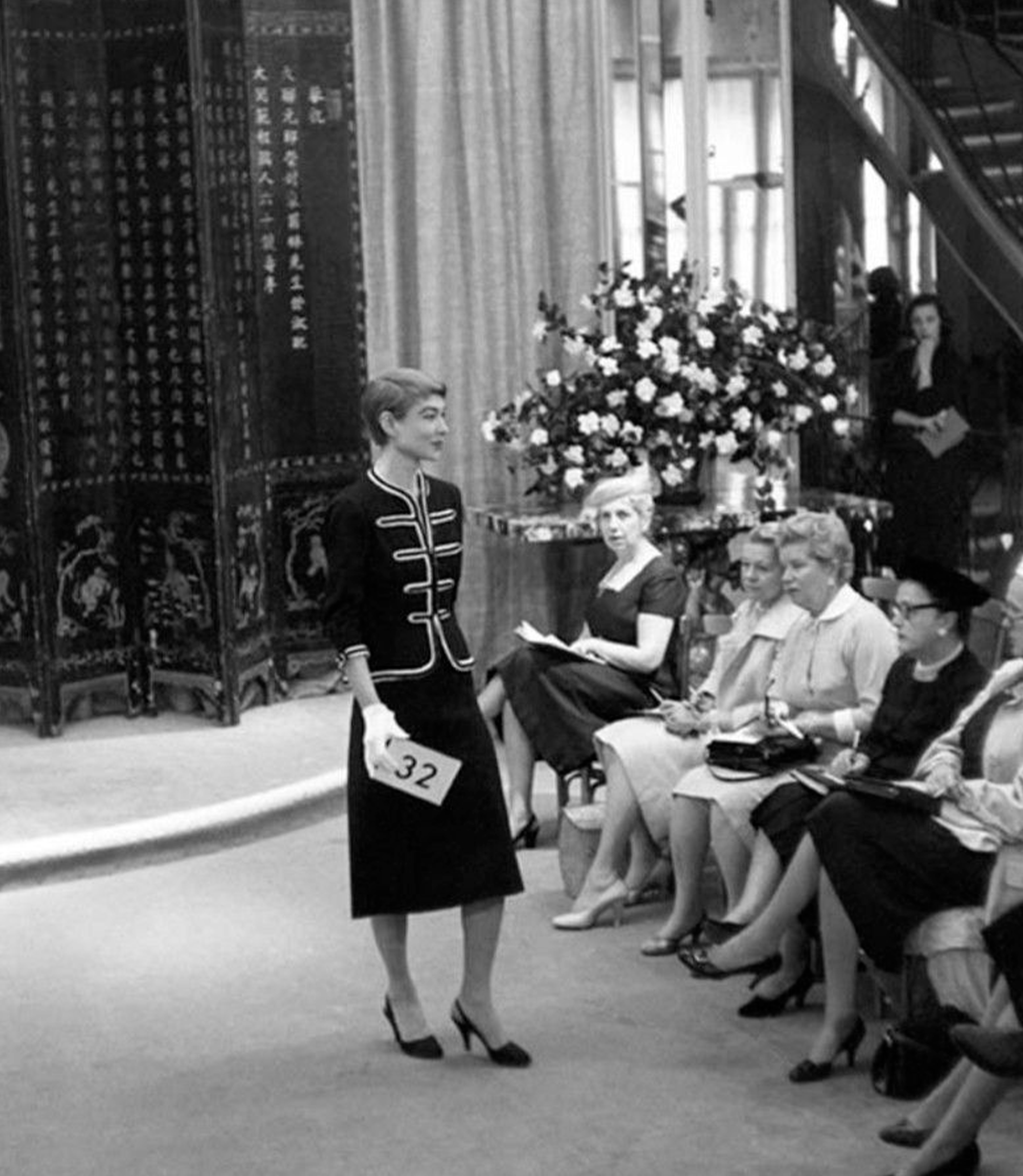
The set design for the Chanel Fall/Winter 1956–57 show was a minimalist atelier space. The runway was a spacious hall with understated decor, highlighting the collection’s elegance. The lighting was soft and even, focusing attention on the models and fabrics. The space reflects Coco Chanel’s ascetic aesthetic.
CHANEL FALL / WINTER 1956–57
Haute Couture Fall/Winter 1961–62
CHANEL HAUTE COUTURE FALL/WINTER 1961–62 SHOW
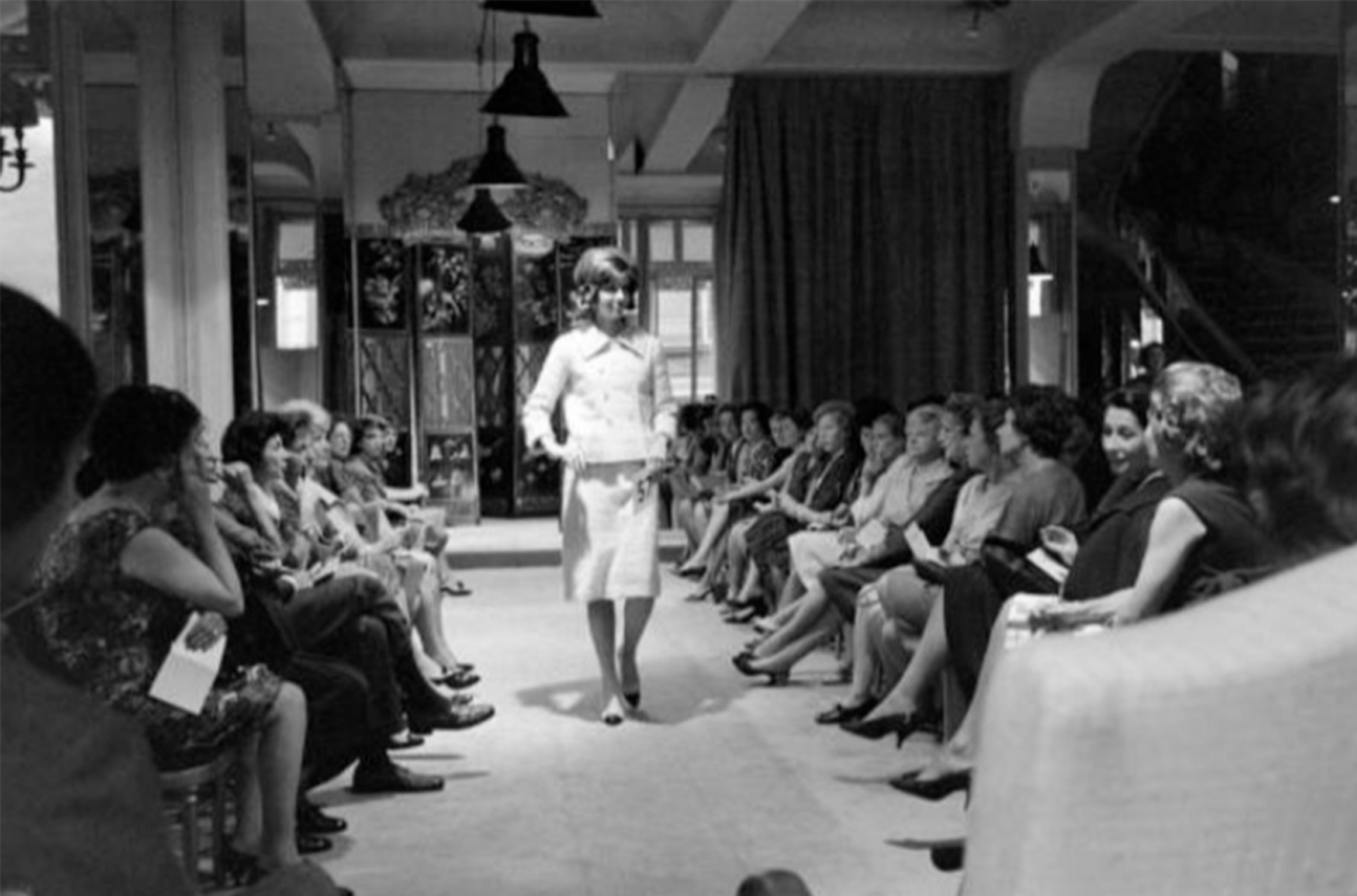
Set design utilizes a classic runway with symmetrical rows of seating. Minimal decorative elements accentuate the silhouettes. The directed lighting creates an intimate atmosphere.
CHANEL HAUTE COUTURE FALL/WINTER 1961–62
Fall / Winter 1963–64
CHANEL FALL / WINTER 1963-64 SHOW
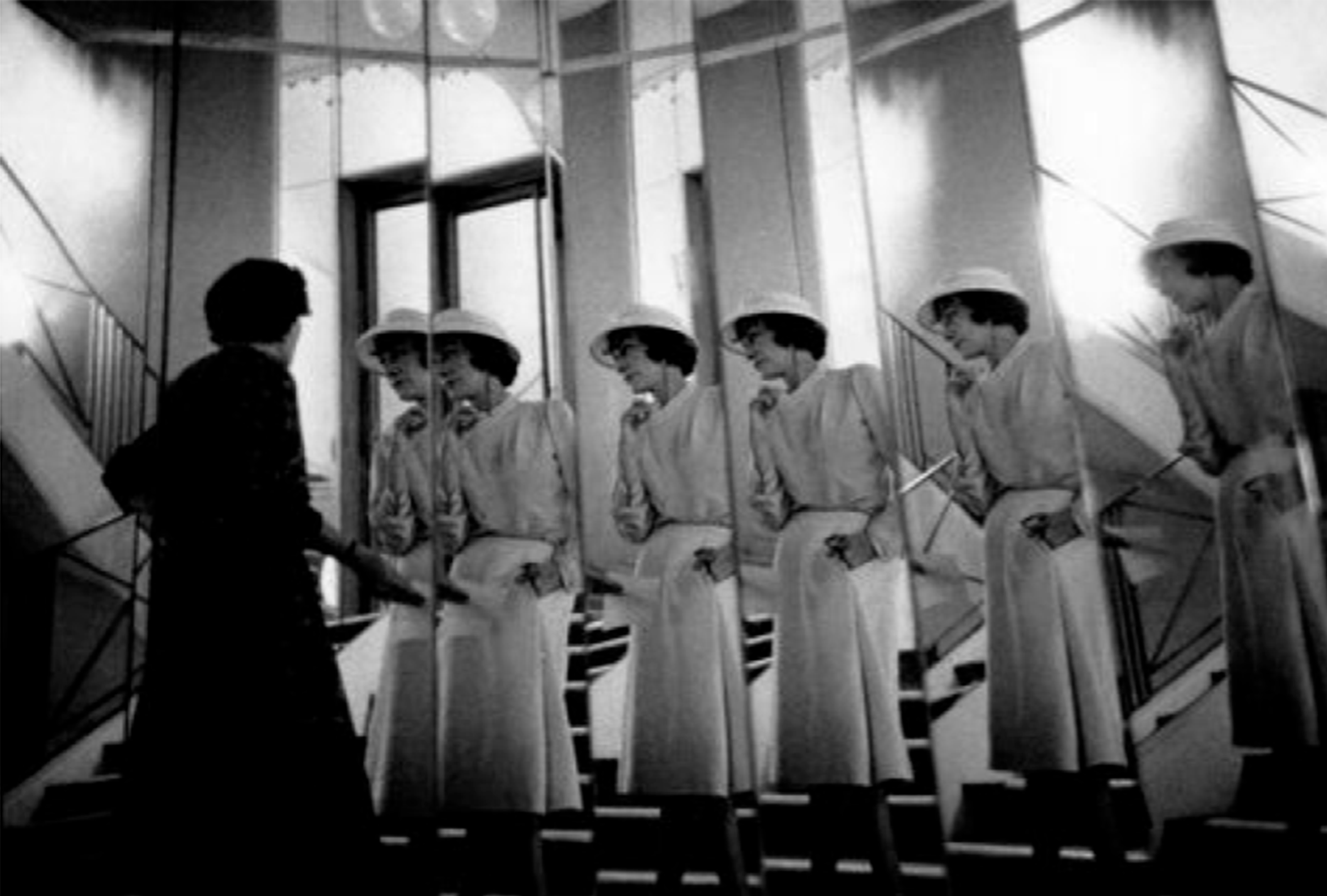
A workshop space styled after the early century, featuring a wooden staircase and mirrors. The runway is narrow, functional, and unfussy.
CHANEL FALL / WINTER 1963–64
TREND
The set design for Chanel shows during the era of Coco Chanel was characterized by minimalism and functionality. Ateliers and simple runways emphasized the purity of the silhouettes without decorative elements. The space remained a neutral backdrop to showcase the elegance of the fabrics and tailoring. This ascetic aesthetic reflected a philosophy of practical luxury.
CHAPTER 2. KARL LAGERFELD (1983–2019)
Fall / Winter 2010–11
CHANEL FALL/WINTER 2010–11 SHOW
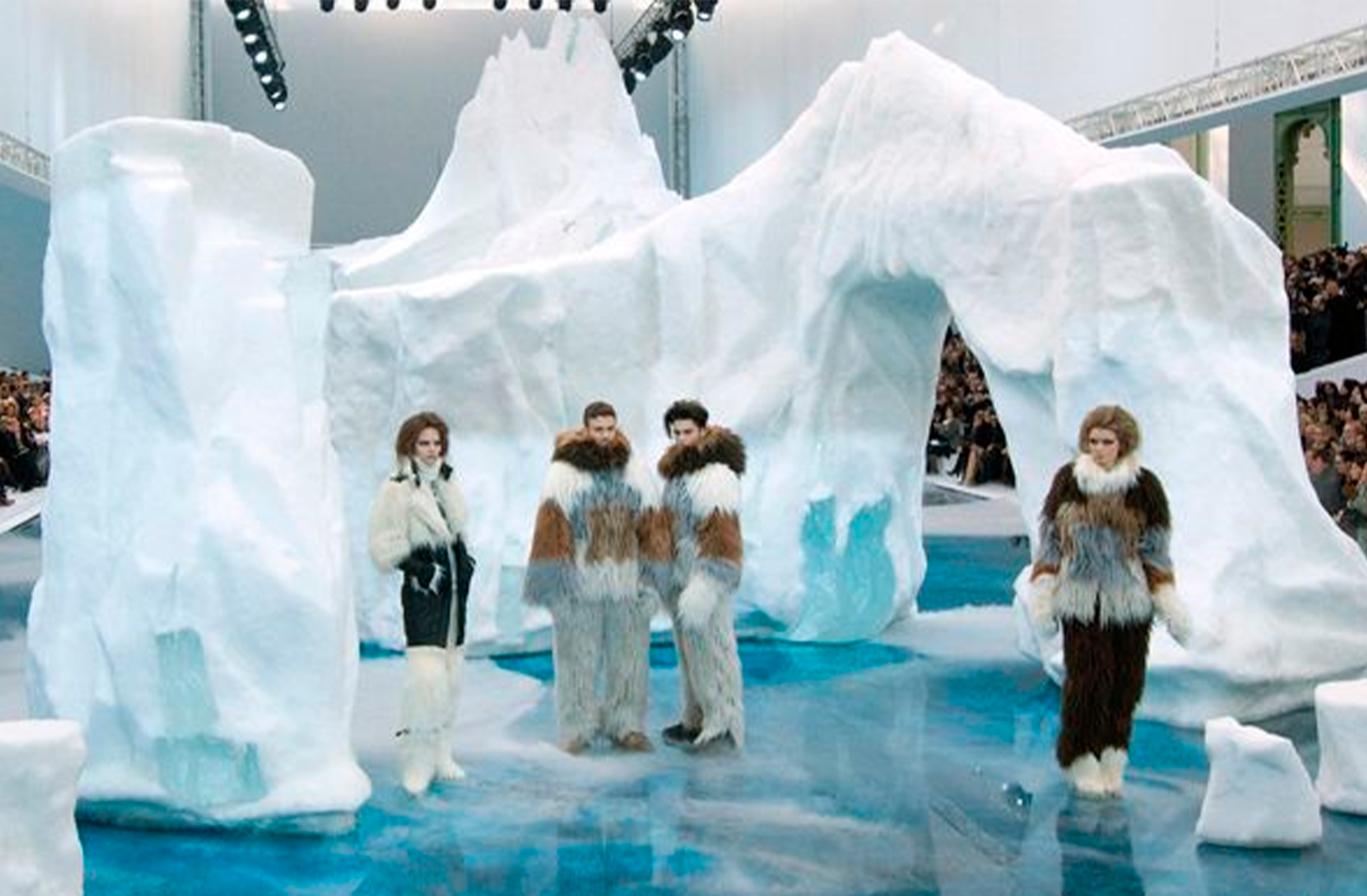
Karl Lagerfeld gradually increases the scale of the set design for the show. One of his first experiments was the set design for the Fall/Winter 2010–11 show, where a real block of ice was placed in the center of the runway, melting before the audience’s eyes. Models walked across the wet surface, which also featured smoke. The ice chunk demarcated the runway, creating a kind of labyrinth.
CHANEL FALL/WINTER 2010–11
CHANEL Fall / Winter 2010–11 SHOW
Fall / Winter 2014–15
CHANEL Fall/Winter 2014-15 Show
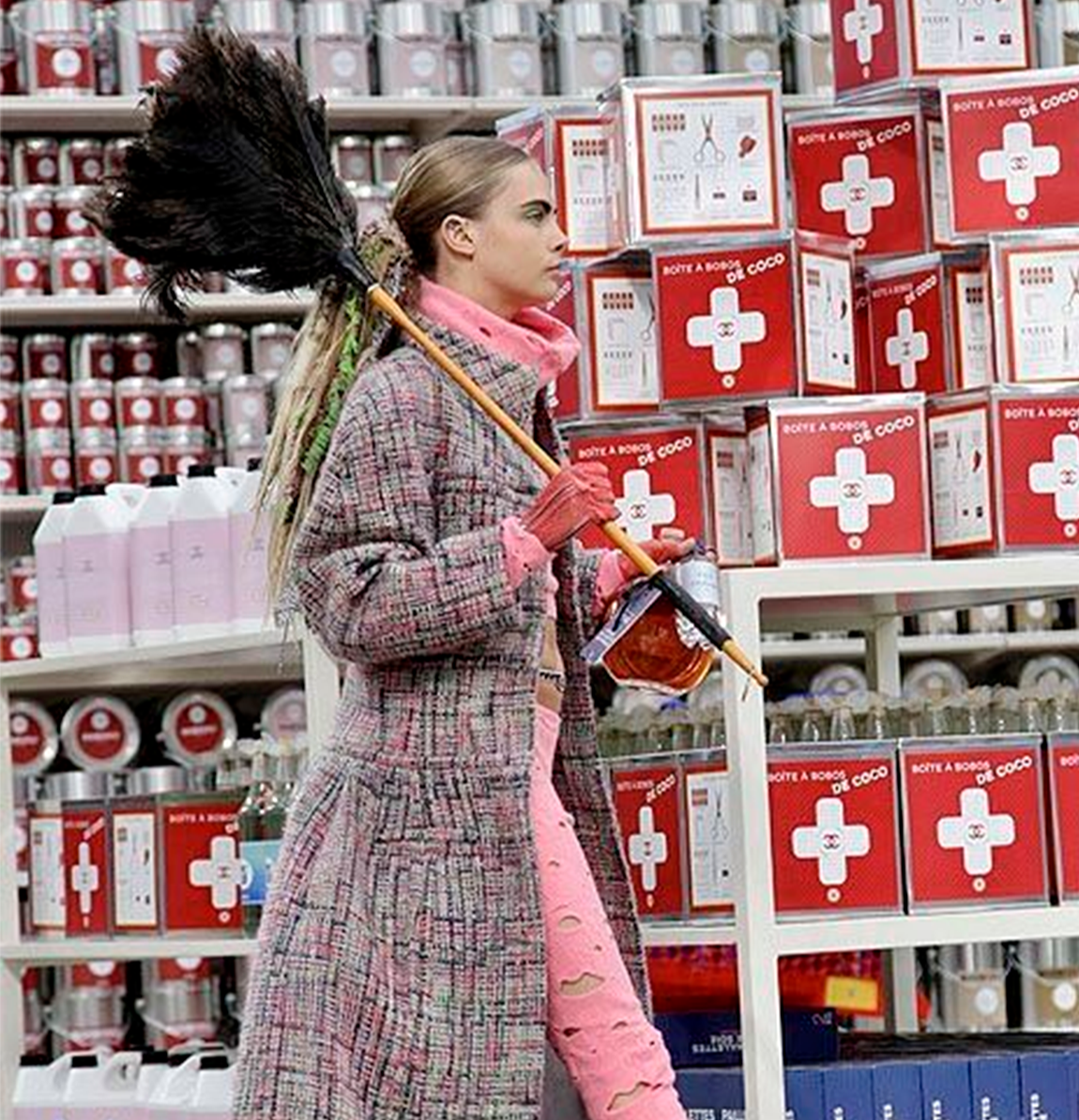
Set design is a reconstruction of a supermarket complete with shelves, products, and cashiers. The podium simulates a retail floor, and the models interact with the scenery and with each other. The concept merges the everyday with the world of high fashion.