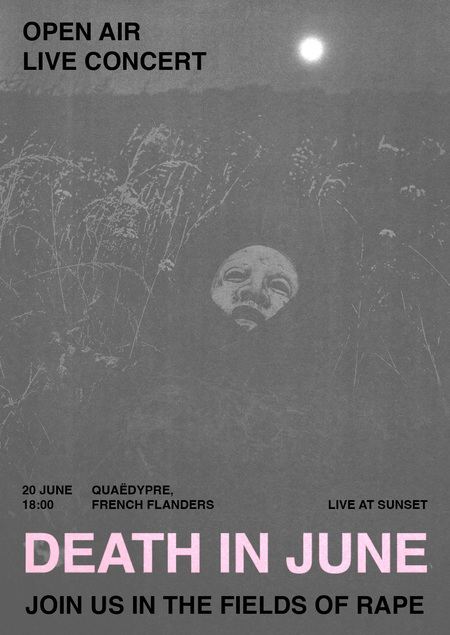
Death in June—a British musical project by Douglas Pirse that transmutes the imagery of war, death, and totalitarian aesthetics into a somber, yet poetic folk sound. His acoustic ballads stand alongside militaristic symbolism and images of violence. The study traces the formation of this contradictory poetics of catastrophe and its relationship to historical memory and place, offering a curatorial proposal for the group’s performance.
Contents:
1. Musical Project: Death in June 1.1 History and Sonic Evolution 1.2 Visual Language 2. Setting: Flanders and the «Fields of Violence» 3. Performance Concept 4. Bibliography 5. Image Sources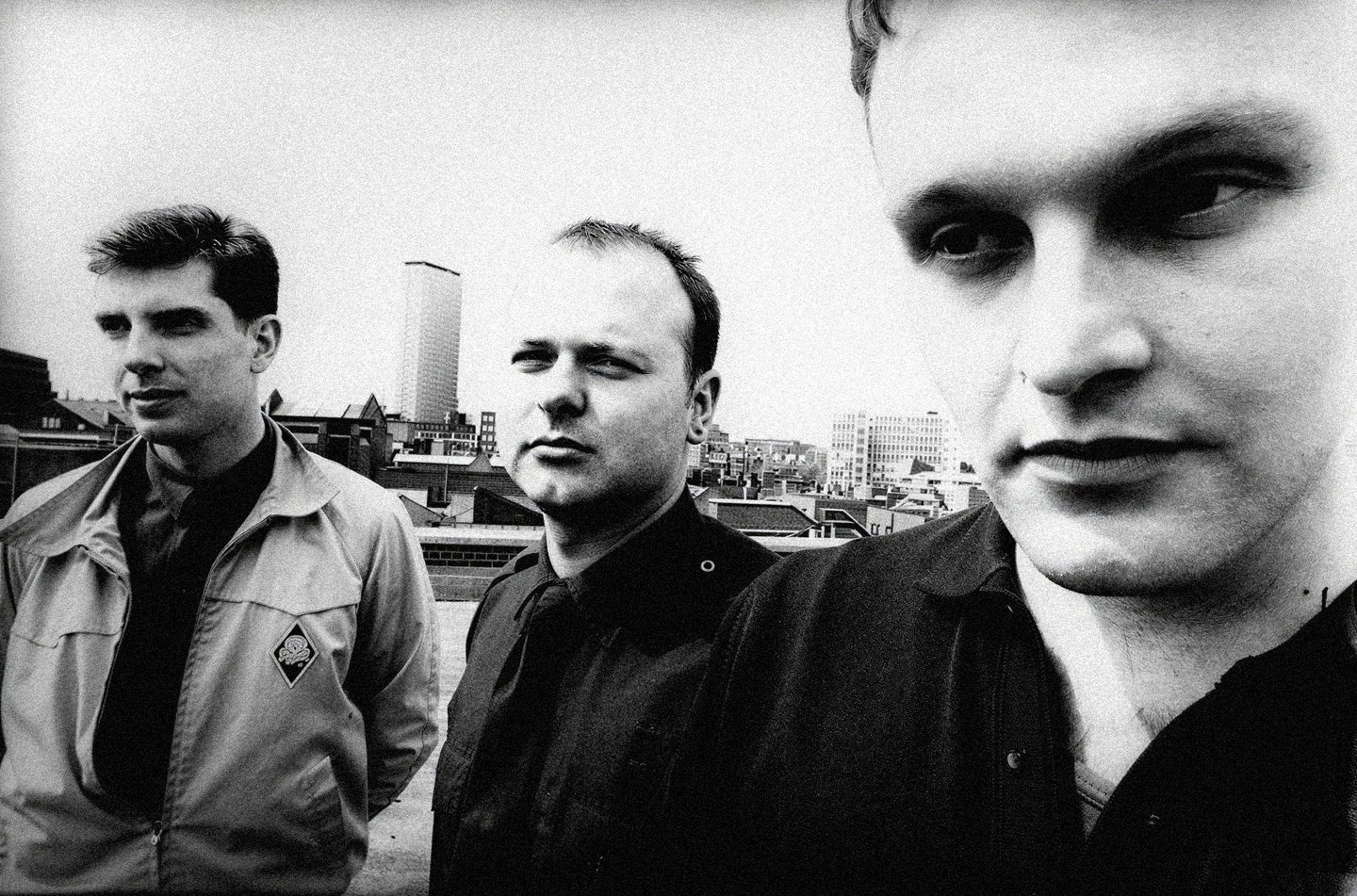
Death in June. Douglas Pierce, Tony Wakeford, and Patrick Ligges. London, early 1980s
1. Music Project: Death in June
They’re making the last film
they say it’s the best
And we all helped make it
It’s called The Death of the West
THE DEATH OF THE WEST · BURIAL (1984)
1.1 History and Evolution of Sound
1977–1980. Crisis: Political Punk
The history of Death in June begins even before the band itself was formed—within the British punk scene of the late 1970s. In 1977, Douglas Pearce and Tony Wakefield created Crisis, a musical punk collective with an overtly political character. The group performed at events organized by the Rock Against Racism and Anti-Nazi League movements, and its songs addressed the social conflicts, violence, and political contradictions of British society.
Crisis’s music is built upon sharp guitar riffs, an energetic rhythm section, and tense vocals. Unlike Pearce’s later work, the political statements here are predominantly direct: the group focused less on creating complex historical imagery and more on reacting to the contemporary reality around them.
Crisis disbanded in 1980. However, the interest in violence, power, and European history does not disappear from Pearce’s work; instead, it takes on a completely different artistic form.
1981–1984. Death in June: Post-Punk and Military Rhythm
In 1981, Douglas Pirse and Tony Wakeford, along with Patrick Ligas, founded Death in June. This new project retains some musical techniques from punk but rejects its straightforwardness.
The debut album, The Guilty Have No Pride (1983), features bass lines, repetitive drum rhythms, and restrained vocals that create a cold, tense sound. Instead of punk expression, a sense of discipline and ritualistic repetition emerges. This aesthetic becomes even more pronounced on Burial (1984). Marching rhythms, monotonous instrumental structures, and a somber atmosphere gradually coalesce into Death in June’s recognizable musical language.
Even in their early recordings, a characteristic contradiction for the band appears: the music simultaneously evokes a military march and a funeral ceremony.
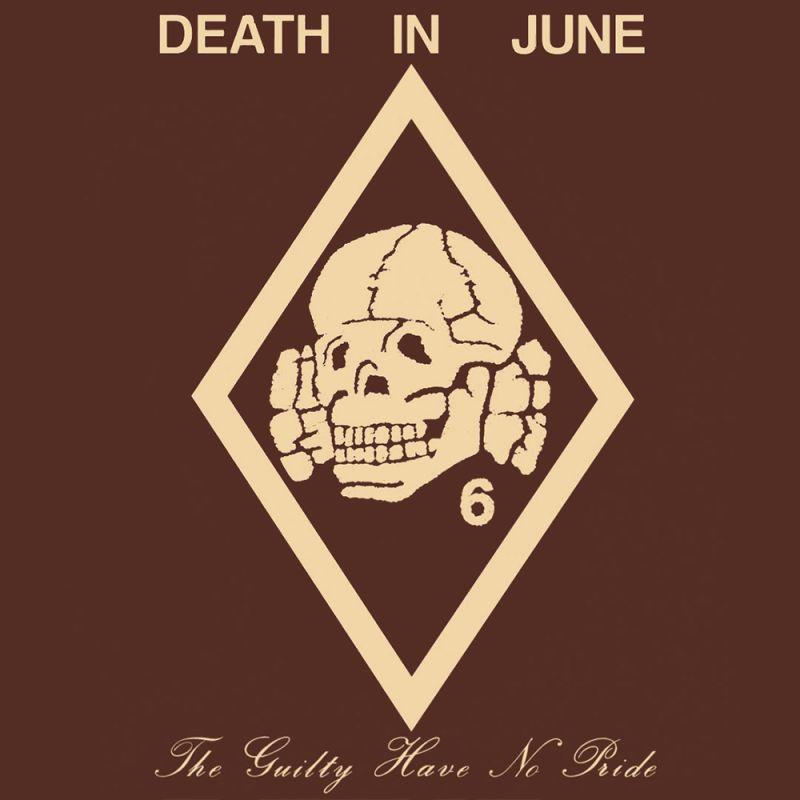
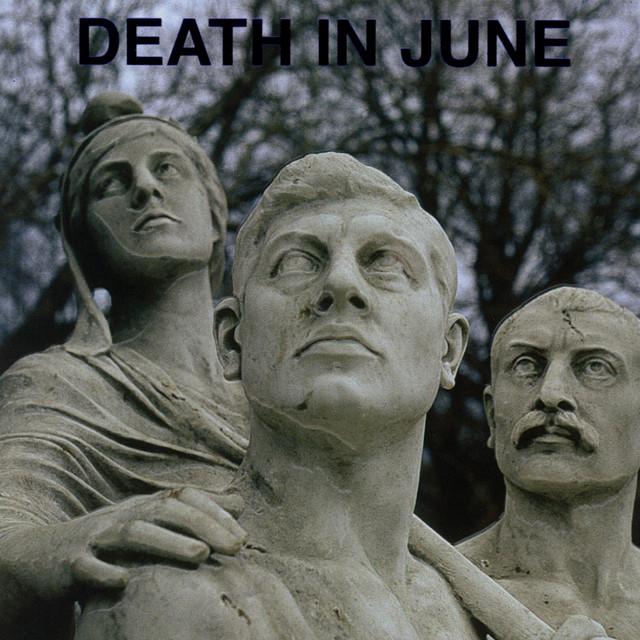
The Guilty Have No Pride Album, 1983 // Burial Album, 1984
1985–1987. Nada! , The World That Summer, and Brown Book
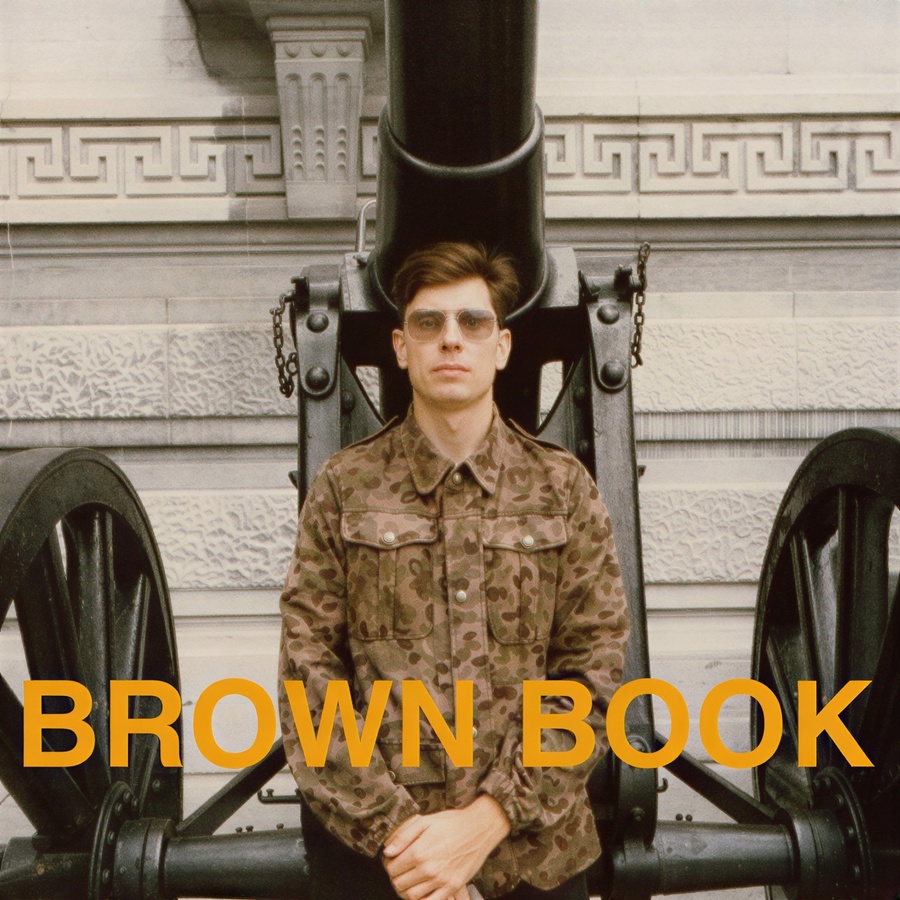
The mid-1980s mark a period of profound change in Death in June’s music. On *Nada! * (1985), electronic rhythms and synthesizer textures still coexist with post-punk elements, yet a more intimate, melodic sound begins to emerge alongside them. On The World That Summer (1986), the contrast between acoustic and electronic sounds becomes an integral part of the group’s artistic expression. Instead of adhering to a singular musical style, Pierce employs various methods for building atmosphere—from cold, almost mechanical repetition to intimate acoustic ballads. Brown Book (1987) continues this trajectory, merging minimalist compositions, folk inflections, and experimental sonic choices. The shift toward neo-folk is not a rejection of their past music, but rather a gradual transformation of its elements.
Nada! Album, 1985 // The World That Summer Album, 1986 // Brown Book Album, 1987
1989–1995. Acoustic Melancholy and Mature Neo-Folk
At the cusp of the 1980s and 1990s, Death in June increasingly assumes the character of Douglas Pirse’s personal project. Acoustic guitar, subdued vocals, and repeating melodic structures become the foundation of many compositions.
Meanwhile, The Wall of Sacrifice (1989) retains an experimental nature: acoustic songs coexist alongside sound collages and ritualistic elements. In *But, What Ends When the Symbols Shatter? * (1992) and Rose Clouds of Holocaust (1995), the ballad form takes a more prominent place.
The music becomes externally calmer and more intimate, yet its symbolic world remains unsettling. Death, loss, violence, and historical symbols now often appear not against a backdrop of harsh rhythms, but within nearly fragile melodies.
Thus, the characteristic tension of Death in June emerges—a dynamic between sonic beauty and the weight of the associations it evokes.
Album The Wall of Sacrifice, 1989 // Album But, What Ends When the Symbols Shatter? , 1992 // Album Rose Clouds of Holocaust, 1995
1998–2001. The Return of Electronics and Industrial Rhythms
By the late 1990s, Death in June begins revisiting electronic sound. On Take Care & Control (1998) and Operation Hummingbird (2000)—both created with the participation of Albin Julius of Der Blutharsch—mechanical rhythms and industrial textures pull the music back toward the harshness of its early period.
However, this is not a repetition of the first albums. Now, electronic structures are combined with the already established poeticism of Pierce, and the martial rhythms take on a more distinctly ceremonial character.
All Pigs Must Die (2001) once again demonstrates the duality of Death in June: acoustic songs exist alongside noisier, more experimental compositions. The band’s musical language develops not in a straight line, but through a constant return to its own origins.
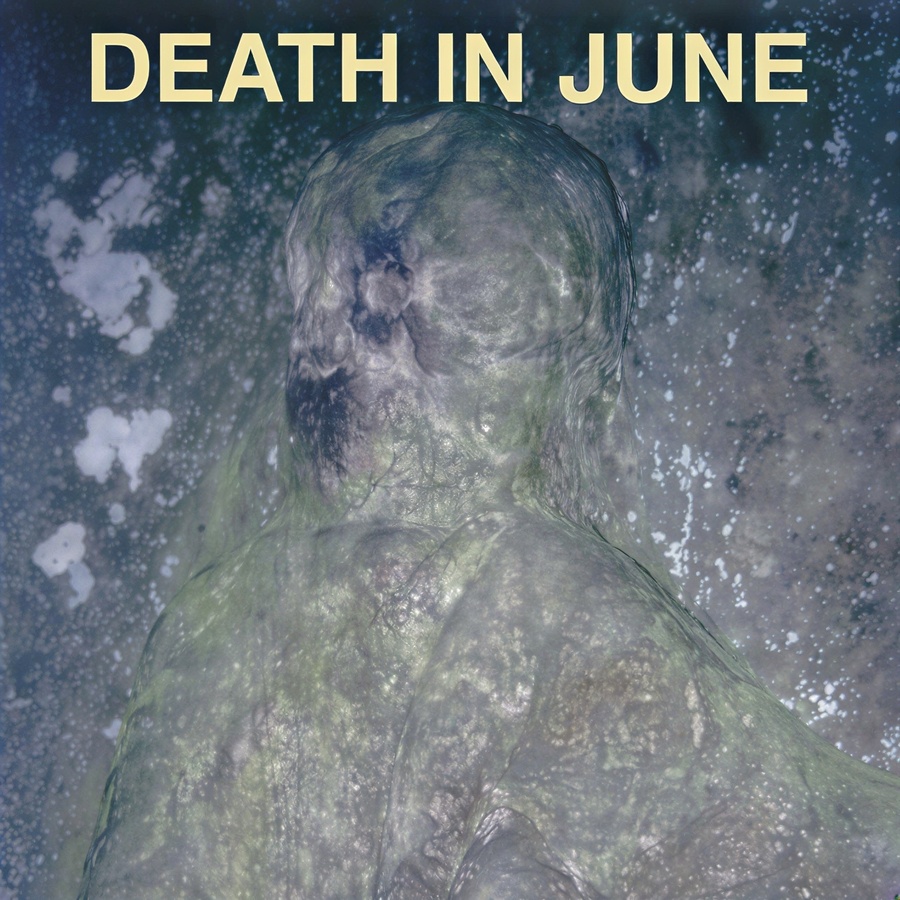
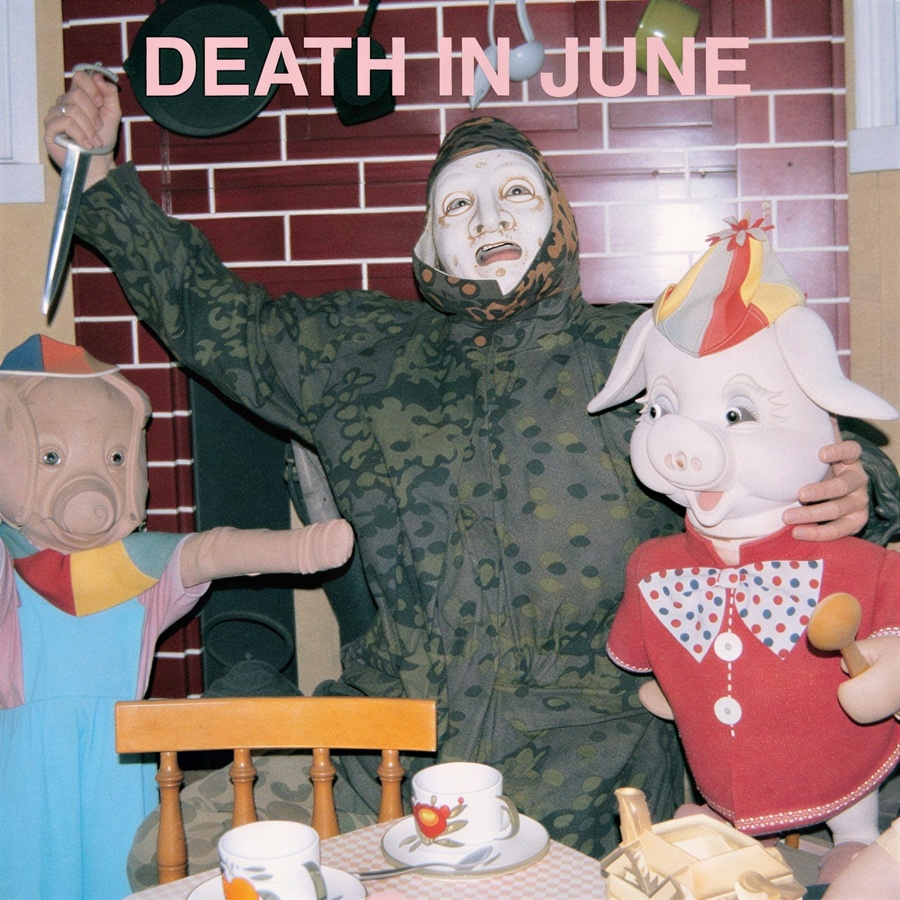
Album Take Care & Control, 1998 // Album All Pigs Must Die, 2001
2008–2013. Minimalism and the Reimagining of His Own Music
In his later work, Pierce increasingly turns toward minimalist arrangements. On The Rule of Thirds (2008), the acoustic guitar, vocals, and restrained melodic structure take on special significance.
Peaceful Snow (2010) presents a different approach: the piano occupies a noticeable space in the soundscape. In The Snow Bunker Tapes (2013), material from the previous album receives a new, more intimate interpretation.
Comparing these recordings allows for an exploration of how the perception of the same song changes depending on the instruments and arrangements. Even when the familiar acoustic guitar gives way to another instrument, the recognizable intonation of «Death in June» remains.
2018–2020s. Later Work and a Return to the Archives
The album *Essence! * (2018) continues the late phase of Death in June’s creative output. Pierce retains the familiar melancholic tone, drawing on established musical techniques.
Alongside new recordings, reissues and reinterpretations of past material hold an important place in the project’s activity. For example, *NADA-IZED! * brings the listener back to compositions from the mid-1980s.
The Rule of Thirds Album, 2008 // Peaceful Snow Album, 2010 // Essence! Album, 2018
A star is rising in our northern sky
And on it we are crucified
A chain of gold is wrapped around this world
We are ruled by those who lie
THE DEATH OF THE WEST · BURIAL (1984)
1.2 Visual Language
Death in June Emblem — Totenkopf-6
The Death Emblem
One of the most recognizable elements of the visual language of Death in June is the Totenkopf-6—a skull with crossed bones and the number 6. The emblem is a graphic embodiment of the project’s name: the skull signifies death, and the six represents June, the sixth month of the year. The symbol has become a permanent element of Death in June’s visual identity.The image of a skull with crossed bones existed in European culture long before Death in June. In the 20th century, the Totenkopf gained particularly grim associations due to its use by the Nazi SS, including units associated with the concentration camp system.The skull simultaneously evokes mortality, military history, and the political violence of the 20th century. By using this sign as its own emblem, Death in June transfers this historically charged image into the space of its own musical culture.Militaristic ImageryCamouflage
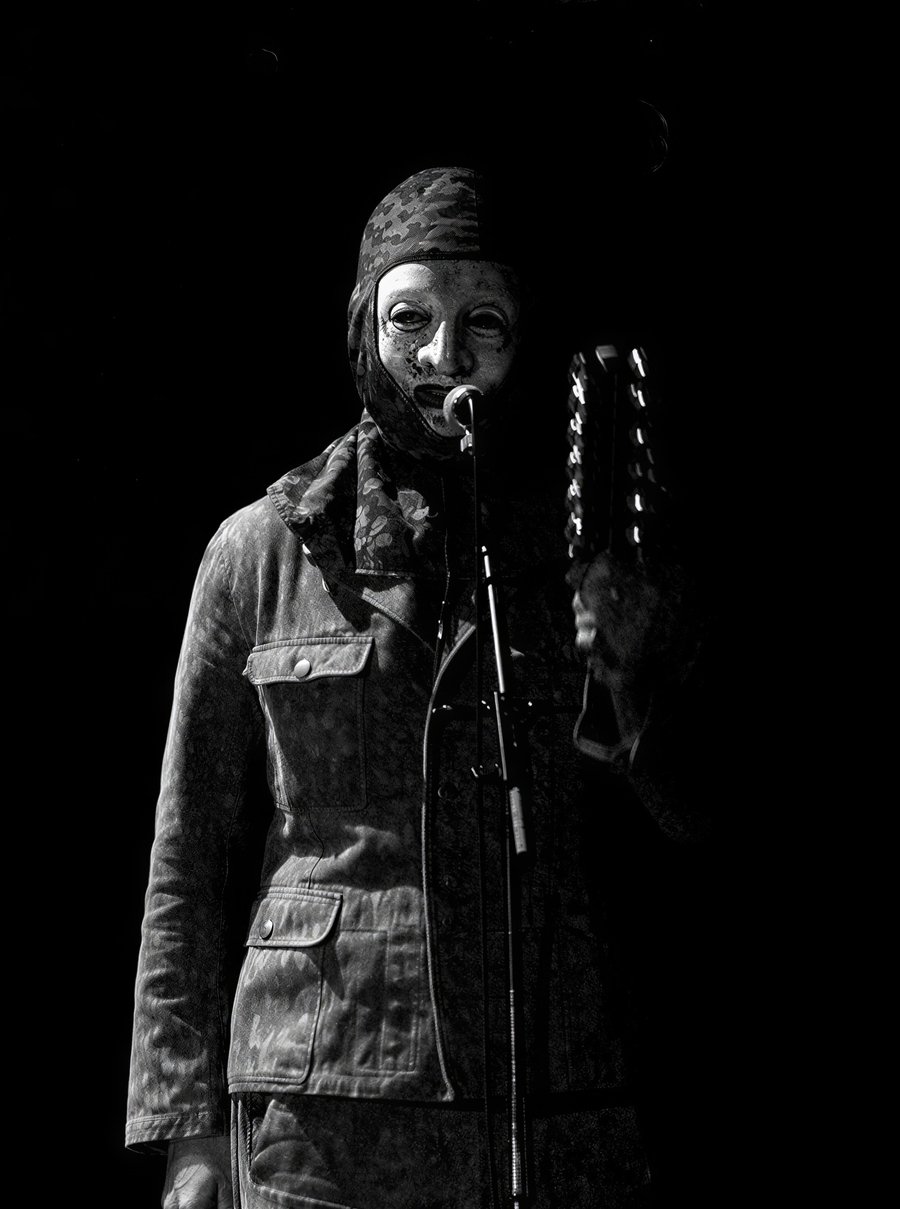
Military attire has become one of the recognizable elements of the Death in June stage persona. Camouflage brings the army’s visual language—discipline, stealth, and readiness for confrontation—into the concert space.However, this imagery conflicts with the music. Instead of an aggressive soundscape, the audience often hears quiet acoustic ballads. A figure that outwardly resembles a soldier performs songs about loss, memory, and death. This creates the signature tension in Death in June between what the audience sees and what they hear.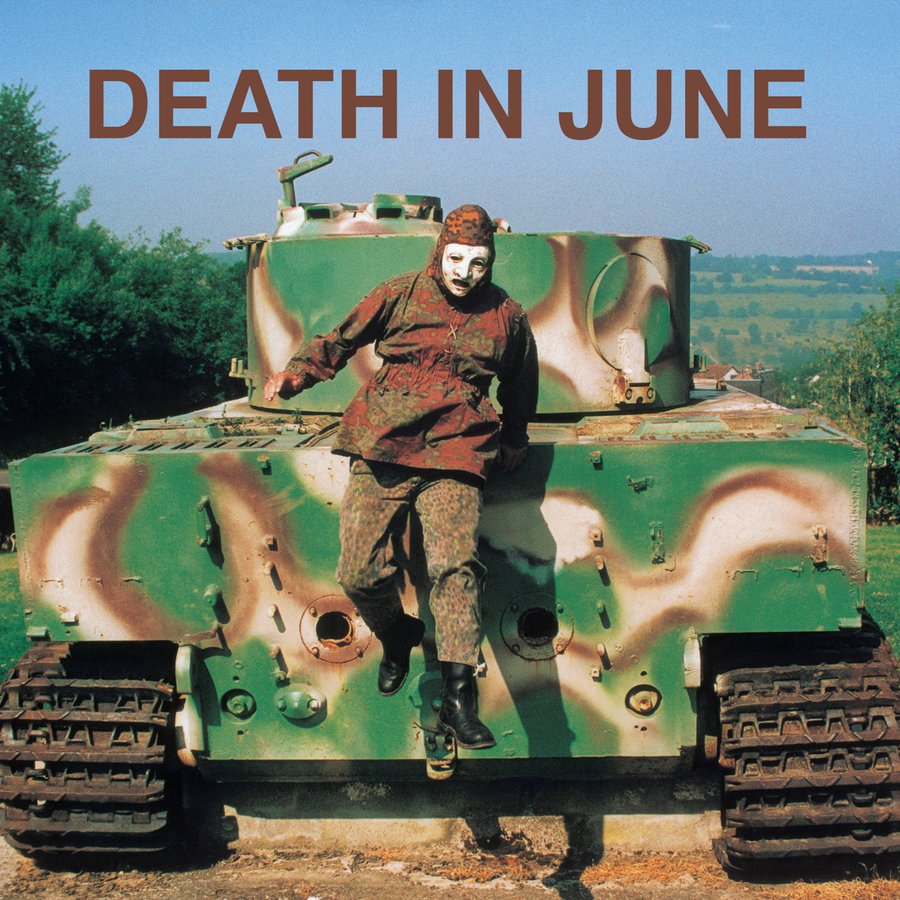
Mask
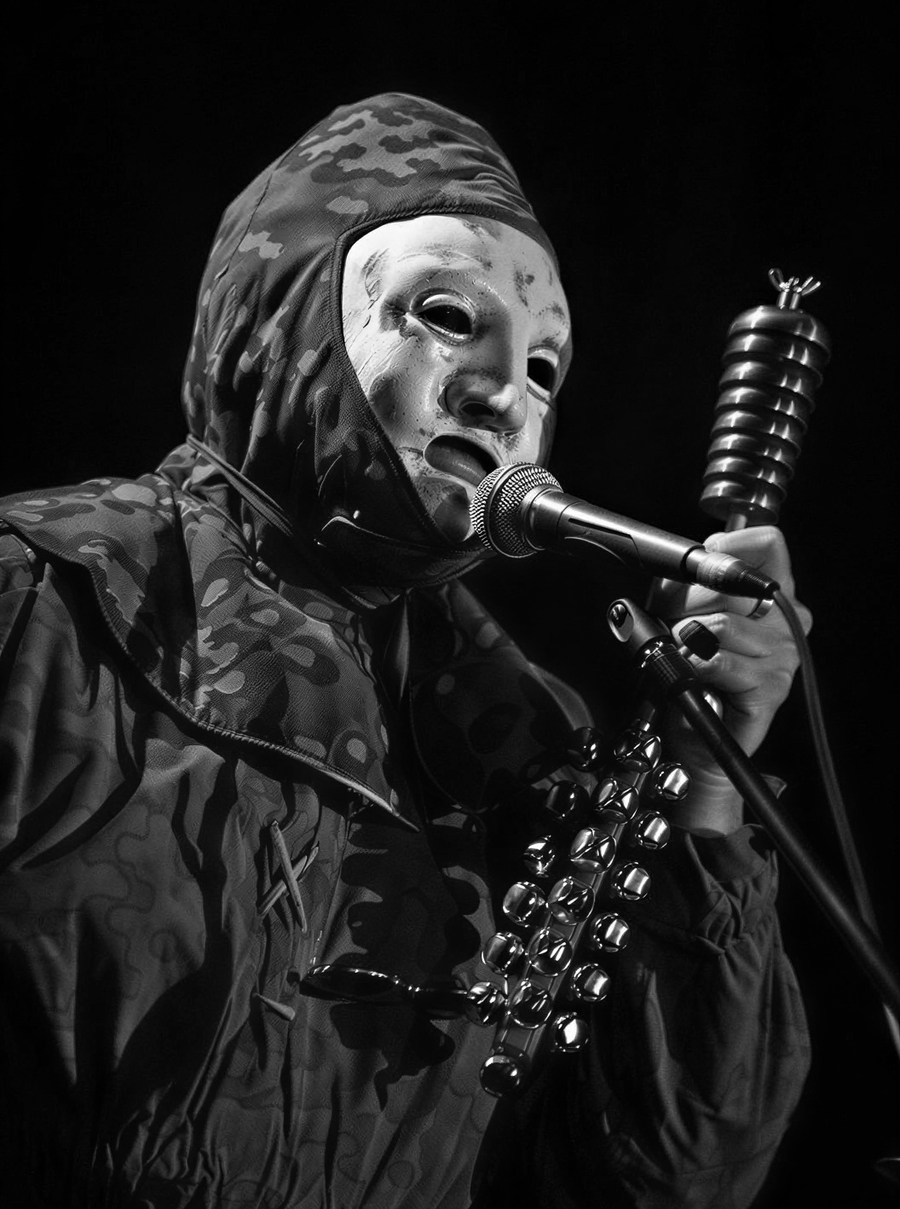
The mask continues the theme of depersonalization. It conceals the performer’s face—the primary source of individuality and emotional connection with the viewer.
Instead of the familiar image of a musician, an anonymous figure emerges. Camouflage and the covered face make it resemble a participant in a military action or a ritual whose meaning remains unclear. Yet, the voice retains a personal, almost confessional intonation.
Weaponry
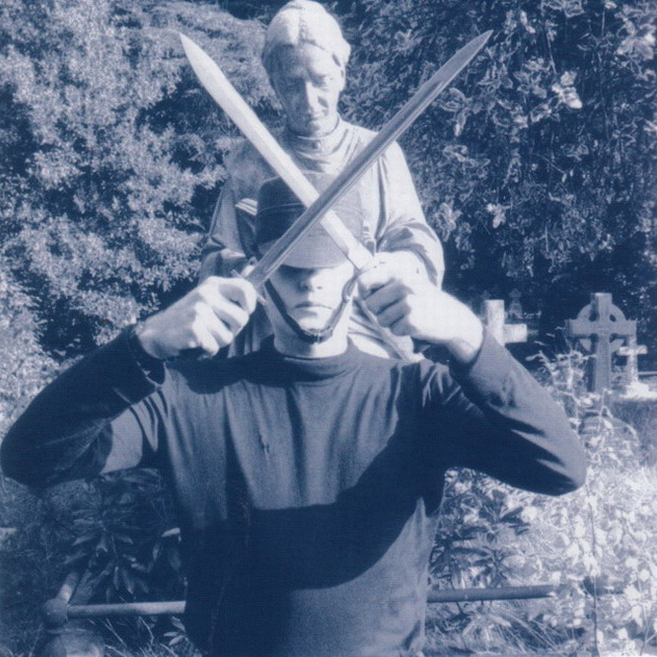
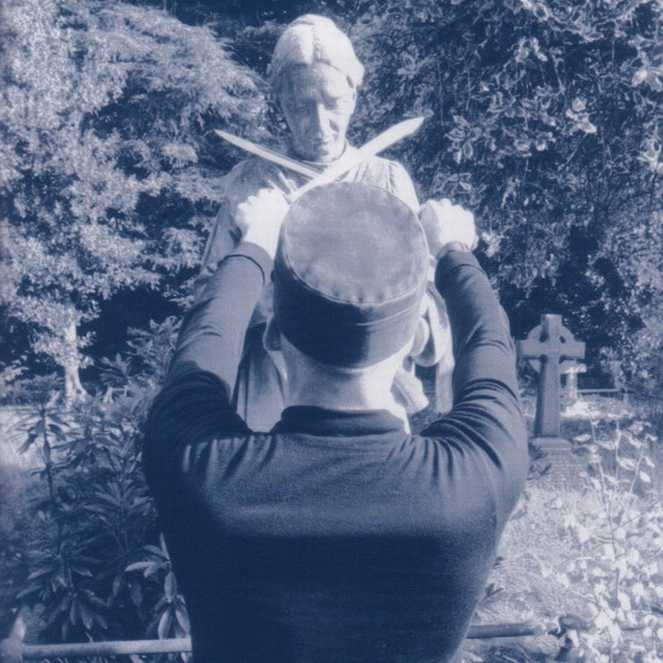
Weaponry introduces the theme of physical violence into the visual language of Death in June. Even outside of battle imagery, it denotes a threat—the potential to inflict pain or establish dominance over another person.