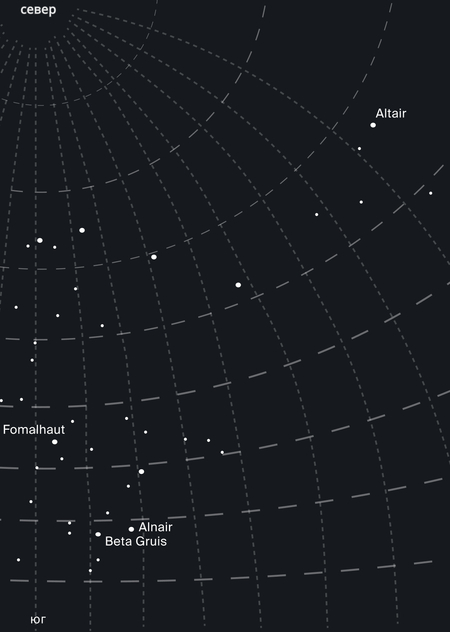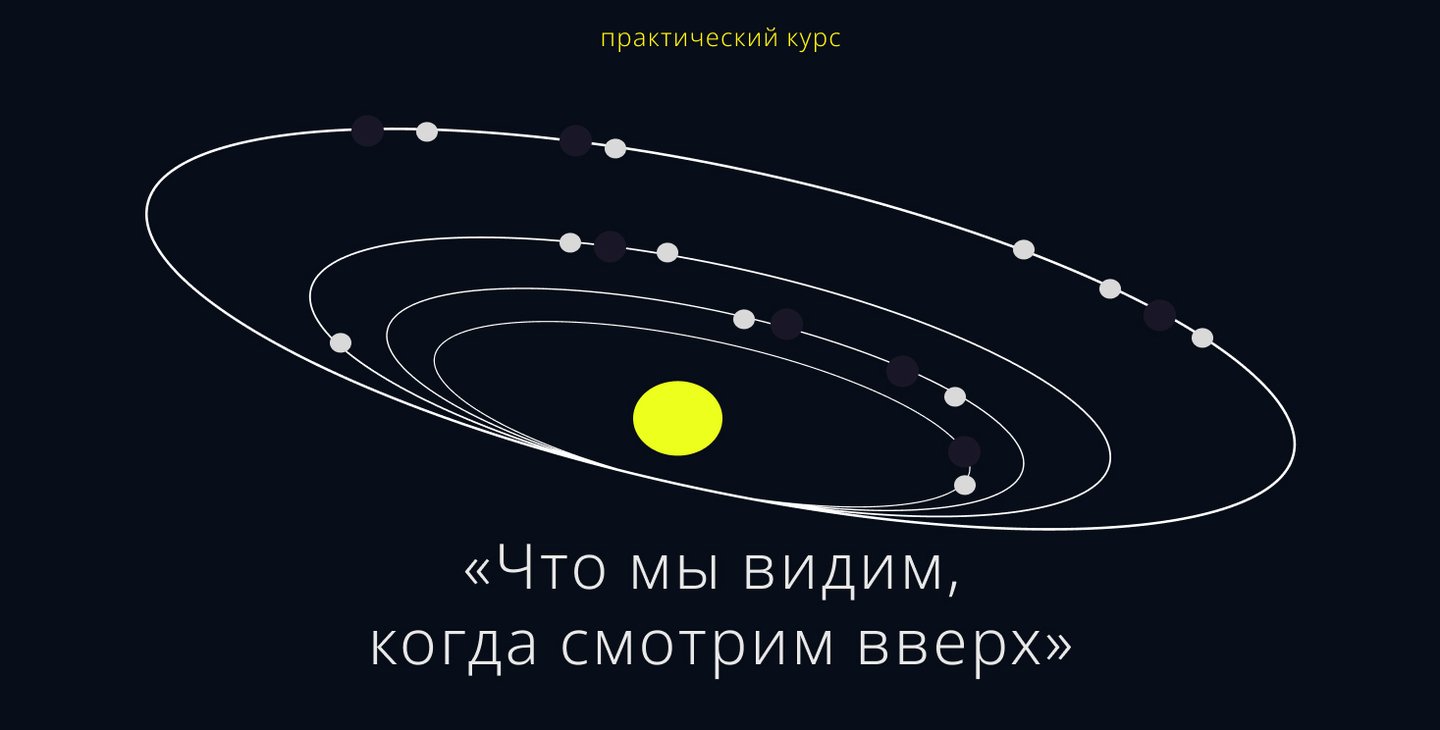
A practical course on how to read the night sky: navigating among the stars, understanding what we are truly seeing, grasping the real scale of the cosmos, and literally looking into the Universe’s past.
What is the course about?
Participants begin with simple, unaided observation and gradually learn to navigate the night sky, locate stars and constellations, distinguish between types of celestial objects, understand their apparent motion, distances, and the relationship between distance and time.
The course is founded on the idea that the night sky can be perceived as a map of space and of the past simultaneously. Light from different objects reaches Earth at different times: we see the Moon with a delay of about one second, the Sun after about eight minutes, the nearest stars after several years, and other galaxies after millions of years.
The main focus of the course is to learn how to observe and understand the night sky independently, rather than merely memorizing individual facts about astronomy.
Who is this for?
This course is designed for beginners and requires no prior knowledge of astronomy.
- People interested in space and science popularization, but who want to move from passively watching others explain things to observing independently.2. Those who love travel and nature and want to navigate the night sky more effectively.3. People interested in the scales of the universe, cosmic distances, and the structure of the world around us.4. Those for whom academic astronomy seems too complex, but who still want a systematic and understandable overview of what is above us.
Unlike most introductory astronomy materials, this course does not simply describe the cosmos; participants learn how to independently apply knowledge to the sky they observe above them.
Format of Delivery
Class Size: designed for a group of 10–12 people.Duration: 6 weeks. 6 main sessions of 90 minutes + 2 practical reviews of 60 minutes — 11 contact hours. 6 independent observations + work on the final atlas — 6–8 hours. Total workload — 17–19 hours.Format: blended online learning + independent field practice.Synchronous sessions: theory, working with star charts, exercises, and observation analysis. Asynchronous work: observing the real sky, maintaining a logbook, research assignments, and working on the final project.Tools: Stellarium, compass, star chart, observation logbook, smartphone/computer. Telescope is not required.Methods: field observation, map work, modeling, research assignments, error analysis, data visualization, and project-based learning.
Prerequisites
To take the course, students do not need specialized knowledge of astronomy or physics. The course is designed for beginners, so all necessary concepts are introduced throughout the learning process.
Required:
- The ability to regularly observe the night sky—from a street, balcony, or other open area; —ideally, having a view of at least part of the horizon.
- Basic digital tools—a smartphone or computer; —a planetarium app, such as Stellarium; —a standard compass or compass app.
- Be prepared to keep an observation journal—to record the date and time; —to sketch the position of objects; —to write down your observations and hypotheses.
Optional, but not required: — Binoculars;
What will you learn?
Thematic Plan
1.1 What Do We See When We Look Up? What is visible to the naked eye: stars, planets, satellites, meteors. How observation conditions influence what we see.The big question: how much of the Universe are we actually capable of seeing?Practical Exercise: First observation and sketching a section of the sky.1.2 The Sky as a Map Cardinal directions, the horizon, Polaris, constellations, and how a star chart works.The big question: how do we turn thousands of points above our heads into a navigable space?Practical Exercise: Finding north and charting the first route across the sky.1.3 Workshop I. Finding Yourself in the Sky The first practical analysis of observations. Working with errors, journals, maps, and Stellarium.Block Outcome: The participant will be able to go outside, determine direction, and locate initial celestial landmarks.
2.1 Why Does the Sky Seem to Move? The rotation of the Earth, the apparent motion of the stars, and the changing appearance of the sky throughout the night and year.The big question: If the Earth is moving at such a high speed, why don’t we feel it?Activity: Observe a specific section of the sky at different times.2.2 What is That Object? How to distinguish between a star, a planet, a satellite, a meteor, and an airplane based on movement and external characteristics.The big question: Is everything that appears to us as a star truly a star?Activity: Independent identification of several celestial objects.Block Outcome: The participant not only learns what they are looking at but begins to understand precisely what they are seeing and why it behaves in that specific manner.
3.1 The Sky Stops Being Flat The Moon, the Sun, stars, the Milky Way, other galaxies. The light-second, the light-minute, and the light-year.The big question: how much larger is space than the human mind can conceive?3.2 Looking Up Means Looking Back in Time The speed of light, light-time, and the relationship between distance and observation time.The big question: can we see the past with our own eyes?3.3 Practicum II. How to Represent the Unrepresentable Working with the scales of the Solar System, the Galaxy, and the observable Universe. Translating enormous numbers into understandable comparisons and visual models.Block outcome: The participant perceives the sky simultaneously as a map of space and a map of time.
4.1 Where Does the Universe End?We examine what the observable universe is, why its boundary does not signify a physical edge of space, and how small the portion of the cosmos we are actually capable of seeing is.The big question: Does the universe have an edge?4.2 Worlds Around Other StarsWe learn about exoplanets and discover how astronomers find distant planets that cannot be seen directly. We analyze the transit method and learn how an invisible object can be detected by observing changes in starlight.The big question: How can we find a planet that we cannot see?4.3 Are We Alone?The final lesson is dedicated to one of the foremost unanswered questions in modern science. We discuss what is currently known about the search for life, what signs scientists are looking for, and why the scientifically accurate answer remains «we don’t know.»The big question: If there are so many planets, why haven’t we found other life yet?
Final Project
«Personal Star Atlas» is a series of four observations of one section of the night sky, taken from a single point over the course of a week.01 — Observation Record the most discernible points that the participant can actually see themselves.02 — Orientation Connect the identified stars into constellations, determine their names, and label the most prominent stars.03 — Change Return to the same point on a different day or at a different time and record how the objects' positions have changed.04 — Map Expansion Using the skill acquired, find additional constellations and objects and supplement your personal atlas with them.The participant is given 7 days to complete the task, allowing them to choose several evenings with suitable weather and avoid dependence on cloud cover.The student selects one fixed observation point and returns to it throughout the week, gradually completing their map.
Project