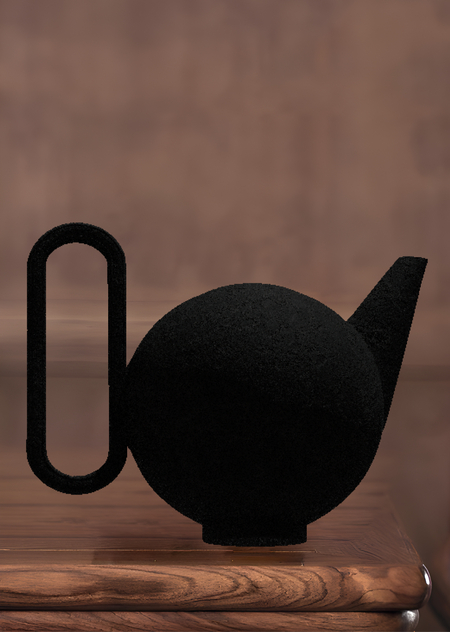
A kettle that transforms the routine act of boiling water into an act of mindfulness and aesthetic pleasure. It challenges mass production and disposable culture, offering an object with soul—one that doesn’t strive for perfection but becomes unique through its imperfections. This is not merely a kettle; it is a personal art object for daily meditation.
Target Audience
Target Audience: Individuals who live in contemporary apartments, value aesthetics, and invest in high-quality home goods. For them, the items that surround them must be beautiful. They follow design trends and attend exhibitions. Interior objects are a way for them to express their taste, status, and lifestyle.
Issues
The plastic housing can yellow with heat over time, get scratched, or lose its luster. For them, the tea-making process lacks any ritual or pleasure—it’s just a routine. Tired of boring kettles that spoil kitchen aesthetics.
Solution
A kettle that appears handcrafted—its signs of use do not detract from its value; rather, they enhance it, forging a deep personal connection with its owner.
Use Case Scenario
The owner grips the kettle handle, sensing the texture of the surface. They brew tea, transforming the process into a mindful ritual. Over time, they notice how the signs of use enhance the object’s individuality.
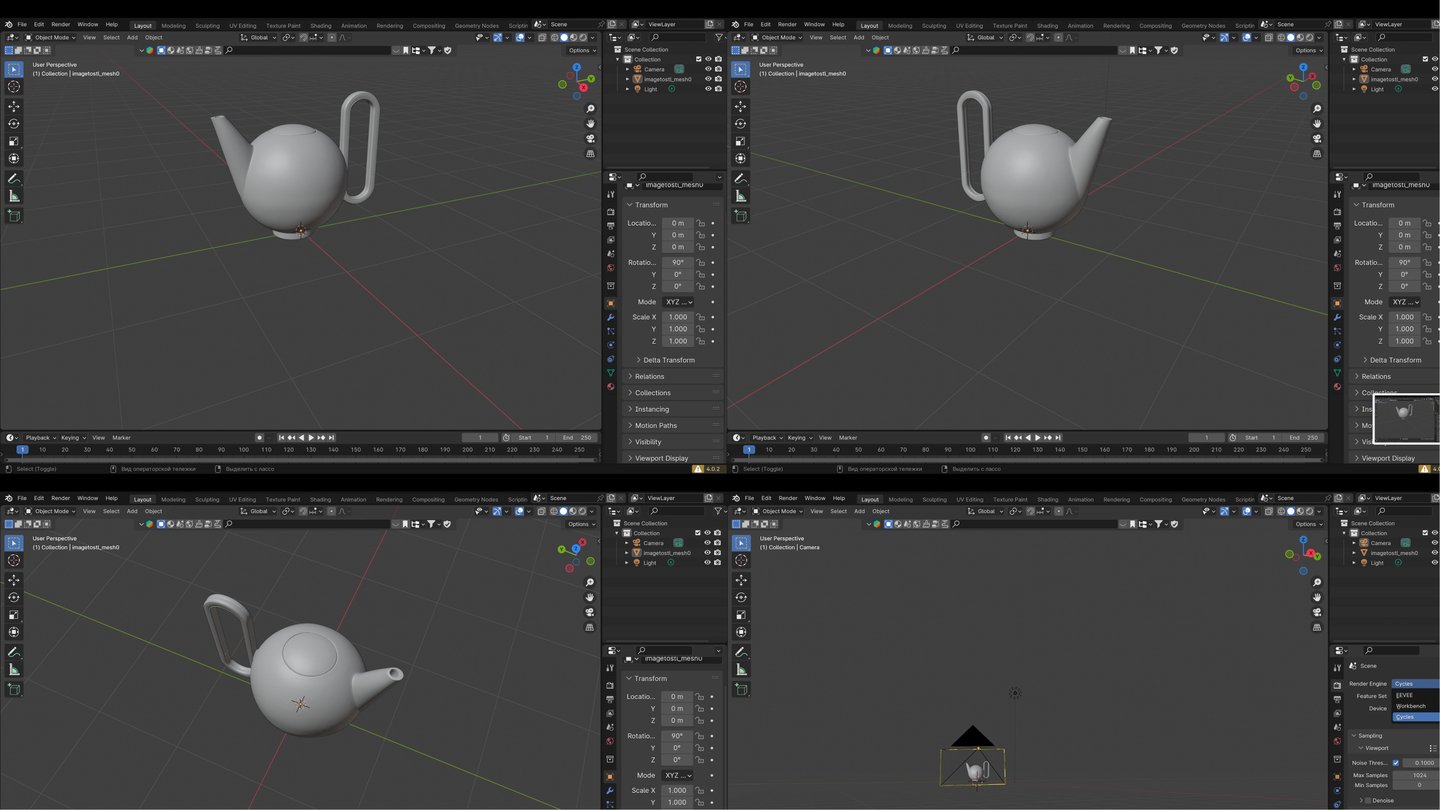
Dimensions
Height: 215 mm; body diameter: 140 mm; width (including spout and handle): 235 mm; volume: 1100 ml; spout length: 55 mm; spout height from base: 160 mm; loop handle dimensions: 130×40 mm; wall thickness: 5 mm. Lid diameter: 85 mm, thickness: 3 mm.
Materials
Body, nib, loop handle, and lid are made from ceramic based on grog clay, featuring a matte, textured black surface, and a silicone seal for the lid.
Construction and Assembly Method
The body, nosepiece, and loop handle are cast as a single, monolithic piece from refractory clay. There are no visible joints—the structure is seamless. The lid is cast separately.
Information about hardware and ready-made components
Since the body, spout, and handle are monolithic ceramic, the hardware is minimal: a ceramic lid and a food-grade heat-resistant silicone gasket, with an inner diameter of 85 mm and a thickness of 3 mm.
Production Technology Description
Based on the 3D model, plaster molds are prepared for the body and lid, and slurry casting is performed using grog clay with a 30–40 minute holding time and excess draining. After drying for 3–5 days at 35–45°C, a bisque firing (900–950°C) and matte black, lead-free glazing are conducted, followed by a glaze firing (1180–1220°C) with slow cooling. The process concludes with bevel sanding, silicone gasket installation, and airtightness testing.
Print Run
Run of 50–100 units: 8,500–12,500 ₽ per unit