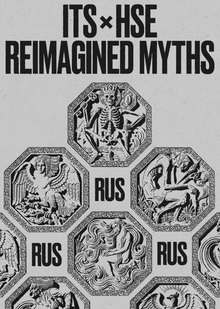
Please upload your projects using this nomination page, and make sure to review the competition guidelines on the main page as well.
Themes
Russian epic characters and creatures from Slavic mythology. The series may follow a narrative storyline, if desired, or present individual visual interpretations of the characters.
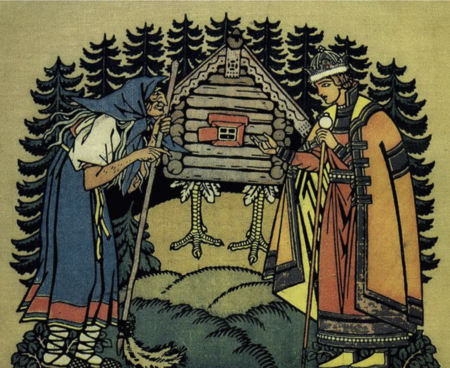
Baba Yaga
A witch from Slavic folklore, Baba Yaga is usually portrayed as a frightening old woman with iron teeth and a bony leg. She is an ambiguous figure: at times a cannibalistic villain, and at others an unexpected helper who offers the hero magical aid or essential knowledge.
She lives deep in the forest in a sentient hut standing on chicken legs, which can be entered only after being commanded to turn around. Baba Yaga travels through the air in a mortar, steering with a pestle and sweeping away her tracks with a broom. She is also often accompanied by animal familiars, such as a black cat. The origin of her name remains uncertain, though it may derive from Turkic languages or from an old Slavic word associated with illness.
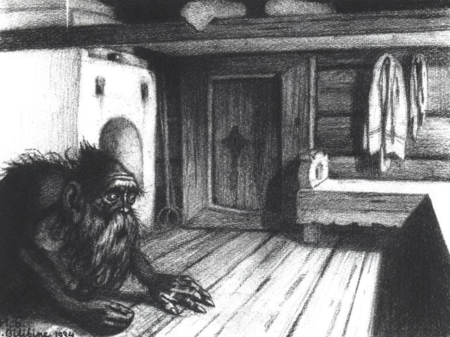
Domovoy (House Spirit)
The Domovoy is the guardian spirit of the home in Slavic folklore, traditionally depicted as a small bearded old man, sometimes covered in fur. Each household was believed to have its own Domovoy, often affectionately referred to as «grandfather.»
When treated with respect, offered food such as milk and bread, and regarded as part of the family, he would help with small household tasks, watch over livestock, protect the home, and warn its inhabitants of danger.
If offended or neglected, however, the Domovoy could turn into a troublesome and even dangerous presence, behaving like a poltergeist: pinching people, strangling sleepers, disturbing livestock, making noise, breaking dishes, or even causing fires. He was believed to live behind the stove or in the stable.
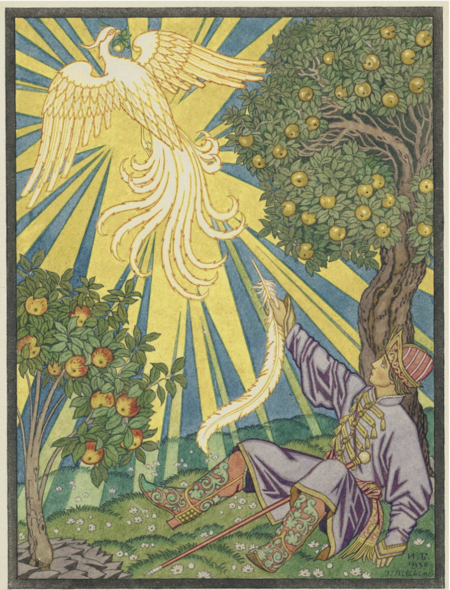
Zhar-ptitsa (The Firebird)
A radiant bird from Slavic folklore, the Firebird is famed for its feathers, which shine with a dazzling, fiery light. In many fairy tales, heroes set out on a quest to obtain a single feather from its tail.
For the Slavs, the Firebird was not only a magical creature but also a powerful symbol, associated with fire, light, the sun, and perhaps hidden or esoteric knowledge. Its closest counterpart is the legendary Phoenix, known in both Western tradition and ancient Rus’. It is also related to another mythic fiery being, Rarog, whose name may be linked to the smith god Svarog. Rarog was often imagined as a blazing falcon or even as a whirlwind of fire.
Kikimora
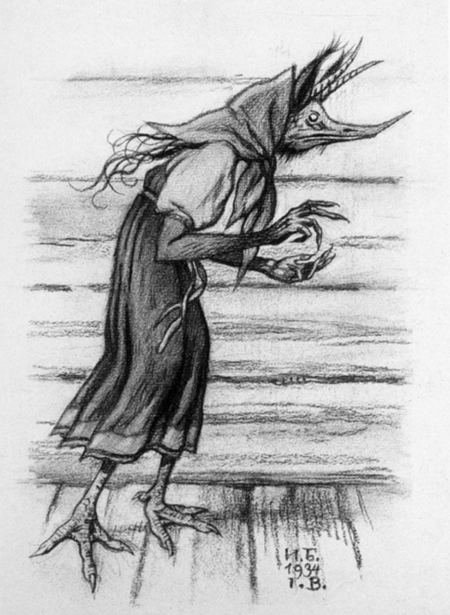
A malevolent spirit in Slavic folklore, the Kikimora is sometimes described as the wife of the Domovoy, the house spirit. She is usually depicted as a small, ugly old woman.
If she takes up residence in a house, typically behind the stove or in the attic, she torments its inhabitants by making noise, knocking on the walls, disturbing sleep, tangling or tearing yarn, breaking dishes, and harming livestock. In some traditions, kikimoras were believed to be the souls of unbaptized infants, while in others they could be deliberately sent into a new home by spiteful carpenters or stove-makers.
A kikimora associated with the swamp or forest is considered less dangerous, though she is still feared for frightening travelers who lose their way.
Koschei the Deathless
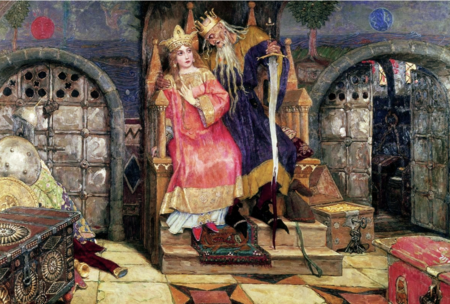
A central villain in Slavic folklore, Koschei the Deathless is usually portrayed as a gaunt, skeletal old man, both repulsive and menacing. He is cruel, vengeful, greedy, and a powerful sorcerer, often appearing in tales as the abductor of young women.
His defining trait is his conditional immortality. His death is hidden far away in a nested chain of objects: on a magical island stands an oak tree; beneath the tree is a chest; inside the chest is a hare; inside the hare is a duck; inside the duck is an egg; and within the egg is a needle. Only by destroying the needle — or, in some versions, breaking the egg against his forehead — can he finally be killed.
Leshy
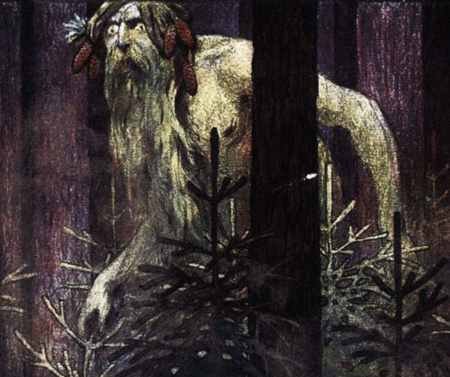
The Leshy is the forest spirit and guardian of animals in Slavic folklore. He is usually depicted as a tall, long-bearded figure, often covered in hair. Though not inherently evil, he is a powerful and unpredictable presence who roams the woods, protecting them from human intrusion.
A master shapeshifter, the Leshy can take the form of plants, mushrooms, animals, or even people. He is often recognised by certain uncanny details, such as eyes that glow with magical fire or shoes worn on the wrong feet. Encounters with him can be dangerous: he may lead travellers astray and lure them deep into the forest. Yet those who treat nature with respect may win his favour and even receive his help.
Rusalka
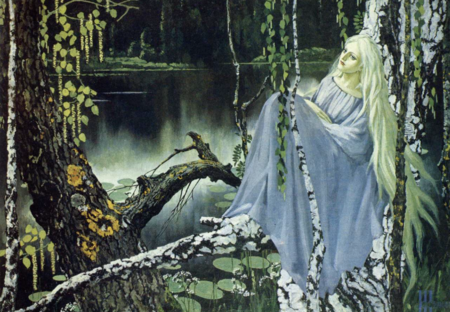
In Slavic mythology, the Rusalka is a water spirit, often portrayed as both seductive and dangerous. She is commonly believed to be the spirit of a drowned girl, a woman who died near water, or someone whose death occurred under inauspicious circumstances. In some traditions, rusalki were associated with mavkas, the souls of the unbaptized dead.
They are often described as malevolent beings with eyes that burn with a green, otherworldly fire. According to folklore, they lure swimmers and wanderers to their deaths, dragging them beneath the water or enticing them from the shore to drown. Their laughter was sometimes said to be fatal, much like the cry of the Irish banshee.
At the same time, other traditions portrayed rusalki in a less sinister light, as benevolent nature spirits akin to bereginy, protective female beings connected with water and the landscape, who could even save those in danger.
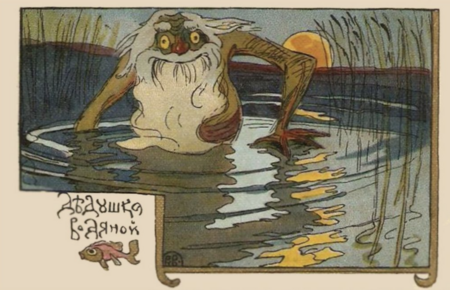
Vodyanoy
In Slavic folklore, the Vodyanoy is the master spirit and ruler of freshwater realms, including rivers, lakes, deep pools, and especially millponds. He is usually depicted as an ancient old man with a swollen body, a huge belly, and a long green beard and moustache tangled with silt and algae.
His skin is often described as bluish or covered in fish scales, while his eyes bulge unnaturally and his body is perpetually wet and cold. The Vodyanoy is commonly imagined as commanding a retinue of rusalki, drowned souls, and other water creatures that inhabit his domain.
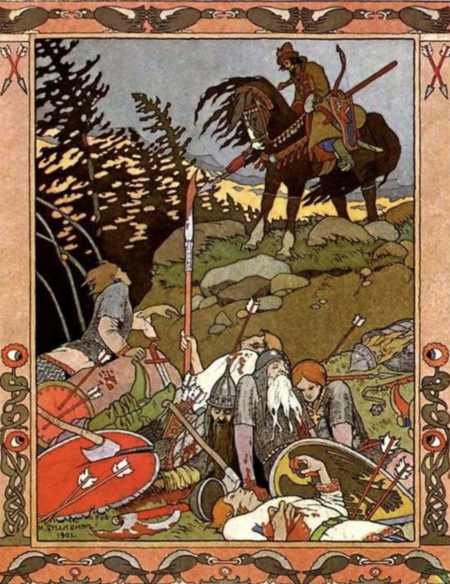
Solovei the Brigand
A monstrous villain from Slussian legends, Solovei the Brigand is depicted as a hybrid of bird, sorcerer, and warrior. For thirty years, he blocked the road to Kiev with his devastating whistle, whose force was said to deafen, destroy, and kill. His lair was a nest built high among seven oak trees.
He was ultimately defeated by the hero Ilya Muromets, who struck him by shooting out his eye. Brought to Kiev, Solovei was ordered to whistle before the prince, and the sound nearly destroyed the city. Ilya Muromets then executed him, although some versions of the tale suggest that Solovei later became his ally.
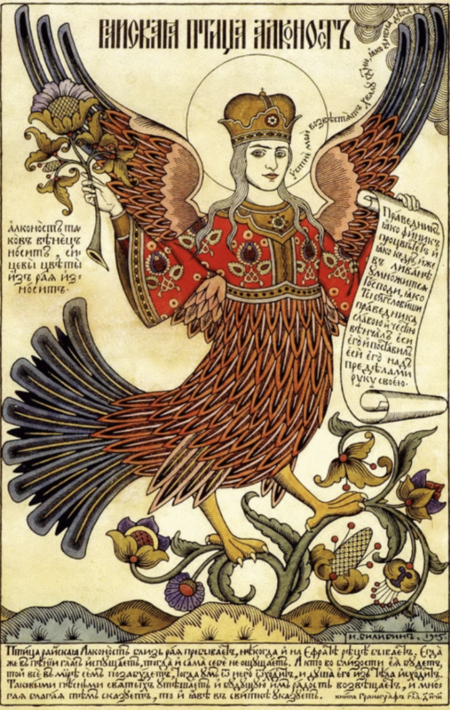
Sirin
Sirin is a mythical creature with the head of a woman and the body of an owl, often a tawny owl, and is known for her irresistibly enchanting voice. Unlike Alkonost and Gamayun, however, Sirin is not a benevolent or divine messenger, but a dangerous being whose song poses a direct threat to human life.
According to legend, these birds dwell in the «Indian lands near paradise» or by the River Euphrates, where they sing heavenly songs for the saints. Yet for mortals, hearing Sirin’s song brings ruin: those who listen lose their memory and will, and sailors who hear her are fated to perish in shipwrecks.