Communication theory: izdoma
Communication theory in the field of design

Design is a key communication tool between a brand and its audience, shaping the effectiveness of a project. Through visual elements—color, form, typography, and composition—a brand conveys its values and identity, while the audience perceives and interprets these messages. Understanding communication principles explains why some designs resonate emotionally and others do not. Effective design considers audience perception, cultural context, and psychological factors that influence interpretation and decision-making.
Early approaches to design communication often imply that meaning is embedded in the object itself and transmitted to the audience through visual form. Applied to brand design, this suggests that carefully chosen aesthetics, materials and narratives will communicate a clear and stable message. However, as the brand’s works demonstrate, design does not function as a fixed container of meaning. What the audience understands is not simply what is designed, but what is interpreted through personal, cultural and emotional frameworks.
Craig’s communication traditions help clarify how meaning emerges through these works. From a rhetorical perspective, the brand relies on narrative rather than direct persuasion. Personal memories, short written reflections and references to family history are integrated into the visual language of the brand. These narratives do not instruct the audience on how to think; instead, they invite reflection and emotional engagement. Meaning is formed through identification, allowing the brand to be perceived as sincere, intimate and emotionally credible rather than overtly promotional.
This process is further shaped by semiotic mechanisms. Within the brand’s design, materials, textures and handmade elements operate as signs. They signify care, time, memory and continuity, extending meaning beyond the functional qualities of the product. Nostalgia functions as a semiotic system in which visual and material choices evoke shared cultural associations. As a result, the brand’s identity is constructed not only through what is shown, but through what these signs culturally and emotionally represent to the viewer.
Phenomenological aspects of communication are also central to the design approach. The works are grounded in lived experience, treating the designer’s personal memories as legitimate sources of meaning. Communication with the audience is not positioned as one-directional, but as a dialogical encounter shaped by presence, attention and subjectivity. Individual interactions, whether through fittings, measurements or direct communication, emphasize authenticity and mutual understanding. Meaning emerges through experience rather than abstraction.
At the same time, the design operates within a broader sociocultural context. Through its visual language and communication practices, the brand reinforces values associated with slow fashion, craftsmanship and respect for personal history. It contributes to the formation of a small cultural space in which shared attitudes toward consumption, memory and emotional depth are sustained. In this sense, design functions not only as expression, but as a cultural practice that reproduces specific social meanings.
The works also carry a critical dimension. By foregrounding handmade processes, time investment and personal involvement, the brand implicitly challenges dominant norms of mass production and fast fashion. Design becomes a form of critique, questioning systems that prioritize speed and uniformity over meaning and care. Communication here is not neutral; it proposes an alternative model grounded in attentiveness and emotional value.
Finally, social psychological processes shape how the audience engages with the brand. Emotional identification and empathy play a central role in how meaning is received. Viewers recognize elements of their own experiences within the narratives and symbols, strengthening trust and long-term attachment. Rather than encouraging immediate consumption, the design supports lasting relationships built on shared emotional understanding. Taken together, these perspectives show that the brand’s design cannot be reduced to visual style alone. Meaning is continuously produced through narrative, signs, experience and interaction.
Communication theory reframes these works as part of an ongoing exchange between designer and audience, where intention and interpretation meet. Design, in this context, becomes a shared process of meaning-making—dynamic, contextual and deeply human.
A clothing tag with a branded metal button (appealing to tactile experience and demonstrating product details).


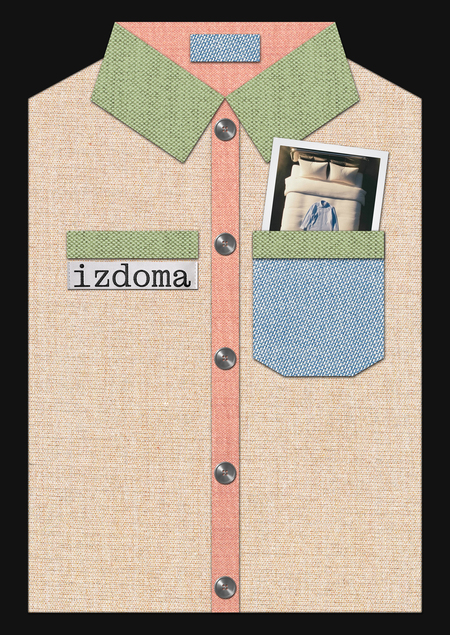
Creative advertising: promotional posters created from real shirts (posters work as a sample of the product, causing a powerful affective reaction due to their tactile properties).
Presentation of the izdoma brand for a general audience
izdoma
is a brand created by a woman who fell in love with sewing and wanted to turn it into something more than just a hobby.
Packaging: a product, cookies and a tag in a case in the form of a branded button (the case refers to memories and imitates a metal cookie box that was used to store sewing tools).
Details: izdoma brand label.


Gift carrier: handmade homemade oatmeal cookies in the form of a large button (the flavors can be different and are associated with childhood memories).
My mom, while recovering from depression, rediscovered sewing. She became so passionate about it that she bought an overlocker, ordered a dress form, and even seemed to befriend the fabric shop assistant. Recently, she asked me to design a clothing label with my name on it, but I realized it should be her brand, her story, her words — and that’s how «izdoma» was born.


Packaging: a branded bag with a logo and two huge sewn buttons, appealing to tactility (if desired, the buttons can be opened and used as stands for jewelry or other small items).
Visual content on social media
It is important for us to feel cozy and homely while remaining stylish and relevant. The brand maintains a balance between boldness and softness.
An invitation poster made in a minimalistic style (since the show is focused on the demonstration of fabrics and accessories, the layout is specifically devoid of excessive visual means).


Gift carrier: ceramic branded plate in the form of a large button with recesses in which candles can be placed (the plate is available in 6 branded colors).
Gift carrier: fragrance for home (scents appeal to childhood memories and create an atmosphere of comfort and nostalgia).


Gift carrier: a metal branded thimble in a gift case in the form of a branded button (the case refers to memories and imitates a metal cookie box that was used to store sewing tools).
A ruler for allowances (a tool for cutting products).




Concept for a pop-up space for the izdoma brand boutique.
Presentation of the izdoma brand for a professional audience
The logo of the izdoma brand.
During the development of the brand concept, it was very important for us to draw on childhood memories: the color palette was chosen based on the things that surrounded us back then—mown grass, apples in the orchard, baked goods.
The basics of corporate identity: corporate colors refer to collective memories of childhood and its small joys.
Besides nostalgia, it was important for us to keep things simple, since my mom is not a designer and didn’t want to deal with the complexities of creating layouts. The style is based on the monospaced font Even Mono by Bold Italic, which is technical yet has a friendly character, reminiscent of old recipe books.
The basics of corporate identity: corporate fonts are monospaced antiques that support the idea of nostalgia and sensuality and refer to the functionality and precision of sewing patterns.
izdoma is a boutique brand that works with each client individually. There are no collections, large drops, or trends—only a thoughtful, attentive approach to every piece.


The business card of the izdoma brand.
Details: izdoma brand fabric samples.
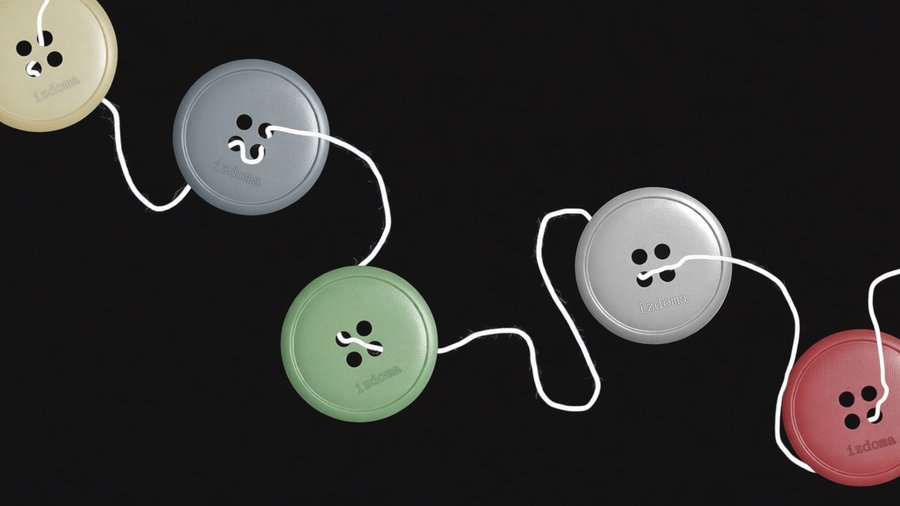

Details: izdoma brand fabric samples; branded buttons in the brand’s signature colors.
Samples of the brand’s fabrics and accessories (an opportunity to evaluate the quality and choose the right one for everyone).
An invitation to a brand show (an envelope made of translucent material, inside which are stored cards with memories from childhood).
Communication theory as basis for the presentations
The foundation of this brand is an understanding of communication as a process of meaning-making and relationship building rather than simple message transmission. The brand communicates personal values, memory, and care, using clothing as a communicative medium.
General Audience Engagement Messages addressed to a wide audience are perceived through emotional aspects, such as the atmosphere of comfort and home, nostalgic images and a sense of comfort. The focus here is on mood and creating a place that appeals to tactile and emotional memory rather than complex analysis.
Professional Audience Engagement Presentations for professionals, on the contrary, use a more structured and analytical approach. They explain why specific visual decisions were made, for example, metaphors of personal history and clothing elements were used, certain materials were chosen (for example: metal, natural fabrics, branded buttons), sensual but calm typography and technical minimalism.
Message Design Logics (author: Barbara O’Keefe)
1. Expressive logic The brand conveys the main idea: clothes are not only about beauty and functionality, but also about the history of their owner, the history is in things, and the personal history is inside each person.
2. Traditional logic — A simple and understandable language is used for a wide audience (for example, «we offer you a thing with your story»). — Specialized terminology and arguments are used for professionals (for example, «natural materials and an individual approach contribute to building trust between the customer and the brand»).
3. Rhetorical logic — For a wide audience, the emphasis is on emotional benefits (such as relaxation, unity with oneself, and access to one’s own memories). — Convincing explanations are important for professionals (for example, the use of natural materials, an individual approach with a study of the history and needs of the buyer and the principles of nostalgic consumption).
Social Exchange Theory
The relationship between the brand and the client can be understood as a social exchange rather than a purely economic transaction. Clients receive personalized attention, emotional engagement, and a sense of uniqueness in addition to the garment itself. In return, the brand gains trust, loyalty, and long-term relational value. The perceived benefits of the exchange are largely symbolic and emotional, not only material.
Overall, the brand is built on communication as a form of relationship and shared meaning. Nostalgia, personal narrative, and individualized interaction function as core communicative principles, positioning the brand as a space where clothing becomes a medium for emotional and cultural exchange.
Craig’s Communication Traditions
A number of theoretical approaches proposed by Craig contributed to the formation of the visual and verbal style of the brand:
Rhetorical Tradition The brand relies on narrative as a persuasive communicative strategy. Personal memories, short essays about the mother, and references to childhood function as rhetorical tools that shape how the audience perceives the brand. Instead of direct marketing persuasion, the brand uses storytelling to create emotional resonance and credibility. The narrative invites the audience to interpret the brand as sincere, reflective, and emotionally grounded.
Semiotic Tradition Nostalgia operates as a system of signs within the brand’s communication. Hand-made garments, manual measurements, and the pocketbook with essays function as symbolic elements that signify care, intimacy, memory, and continuity between generations. The meaning of the brand is produced not only through the physical product, but through the symbolic associations attached to these signs.
Phenomenological Tradition The brand is grounded in lived experience and subjectivity. The designer’s personal memories are treated as valid sources of meaning, and communication with the client is built as a dialogical encounter. Individual fittings and hand measurements create an interpersonal communication setting, emphasizing presence, authenticity, and mutual understanding between designer and client.
Sociocultural Tradition Through its communication practices, the brand reinforces specific cultural values such as slow fashion, craftsmanship, and respect for personal and family history. The brand contributes to the creation of a small cultural community that shares similar attitudes toward consumption, memory, and emotional depth. Communication here helps reproduce and sustain these shared meanings.
Critical Tradition The brand implicitly critiques mass production and fast fashion. By emphasizing handmade work, time investment, and personal interaction, the brand challenges dominant industry norms that prioritize speed, scale, and uniformity. Communication becomes a way to question mainstream fashion values and propose an alternative model based on meaning and care.
Social Psychological Tradition The brand engages mechanisms of emotional identification and empathy. Audiences recognize elements of their own experiences in the narratives and symbols used by the brand, which strengthens emotional attachment and trust. This identification supports long-term brand attitudes rather than short-term consumer interest.
Communication Theory: Bridging Academia and Practice // edu.hse.ru URL: https://edu.hse.ru/course/view.php?id=133853 (дата обращения: 14.12.2025).
Some of the photos are taken from Veronika Kirichenko’s projects (the rest of the photos were created additionally as part of the course): https://hsedesign.ru/project/f99cc43c7e36474e92aae2d60a986bb5 (дата обращения 14.12.2025)
https://portfolio.hse.ru/Project/258960 (дата обращения 14.12.2025)