Ubur Brand Communication
Communication Theory in Design and Contemporary Art
Communication can be defined as a complex process of generating meaning and sending verbal or universal messages that are influenced by context.
According to this definition, art and design can be interpreted as a form of communication. In this case, the artist or designer acts as the sender. Their ideas, emotions, or intentions are transformed into a visual message through images. The audience becomes the receiver, who observes the artwork or design and tries to understand its meaning. However, meaning is not fixed. The receiver actively participates in the process by decoding the message. This means that different viewers may interpret the same artwork in different ways, depending on their social, cultural, and historical context.
The role of the designer is especially important in this process. A designer must carefully study the context in which the message will appear. This includes the target audience, cultural symbols, medium, and environment. Based on this knowledge, the designer chooses the most effective form to communicate the message clearly and meaningfully.
In contemporary art, communication is often less direct. Artists may intentionally leave space for ambiguity, encouraging viewers to reflect and create their own interpretations. Even in this open form, communication theory helps explain how visual messages are created, shared, and understood.
Project Objective
The objective of this project was to develop and strengthen the communication of the fictional brand Ubur — a theatre-aquarium where jellyfish perform as actors.
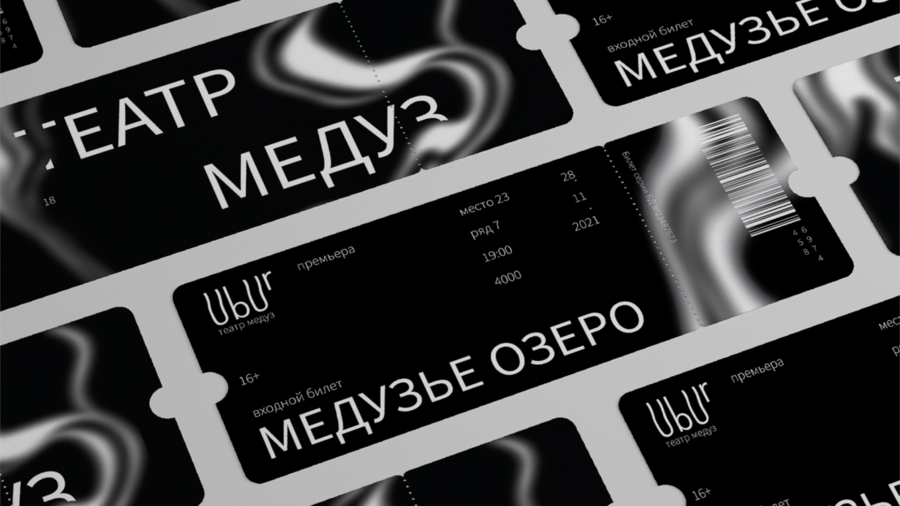
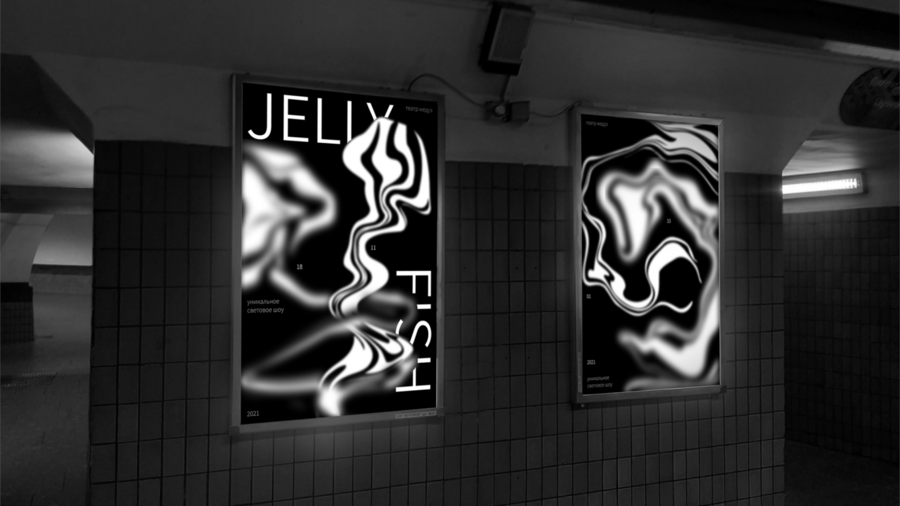
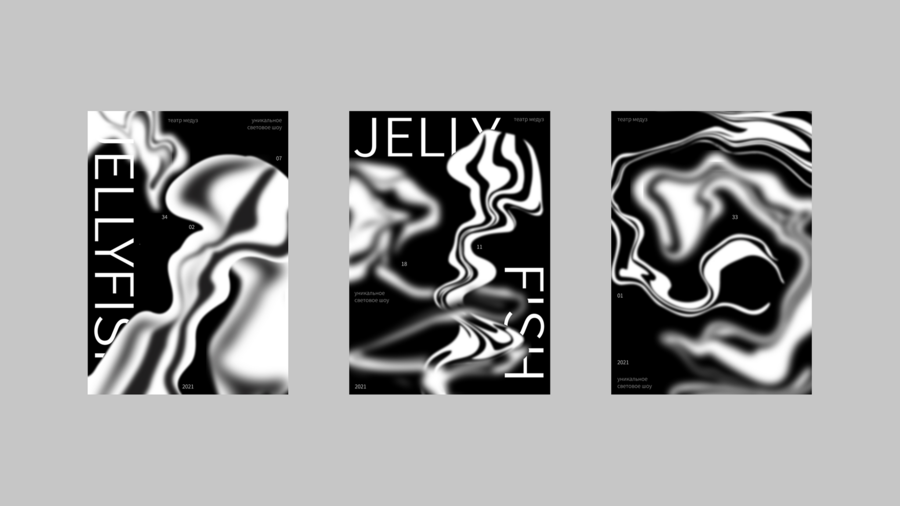
At the initial stage, several key communication tasks were already addressed through visual branding:
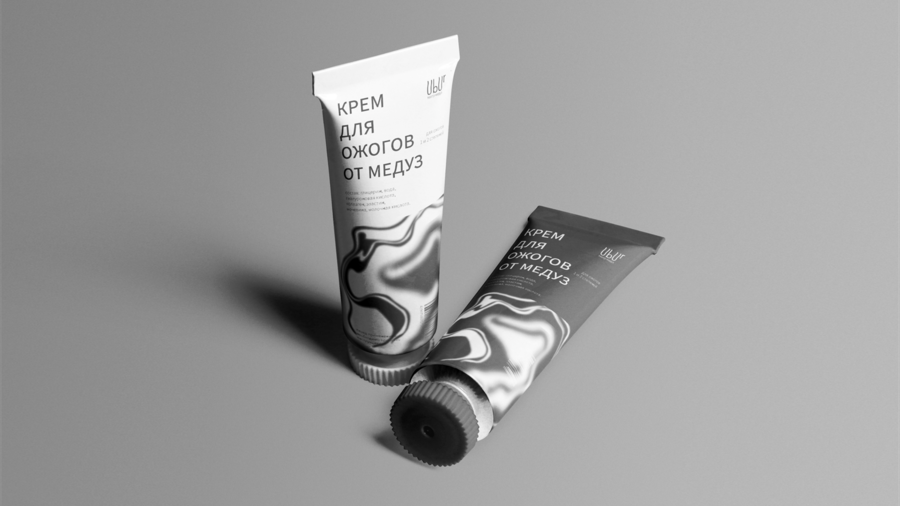
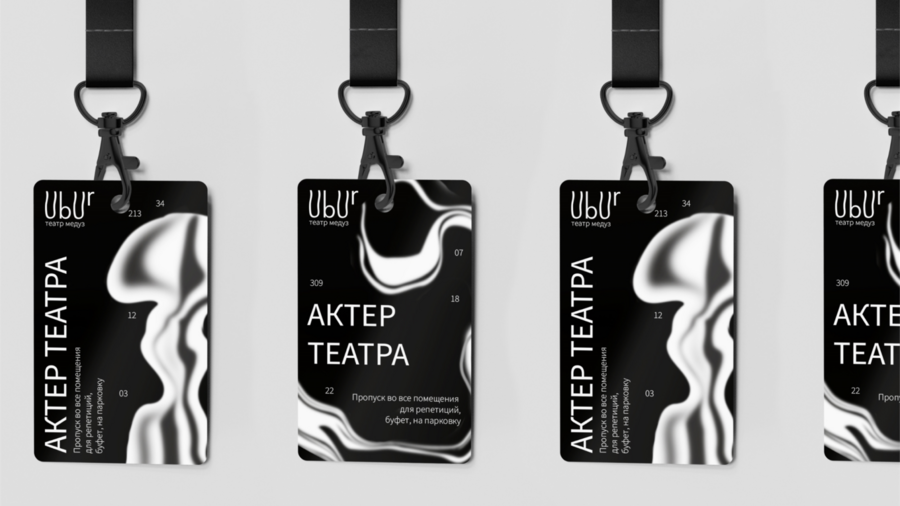
Building on this foundation, we decided to strengthen the verbal communication of the brand, applying principles from communication theory. The goal was to align verbal and non-verbal messages and make the brand’s meaning clearer and more structured for different audiences.
To achieve this, we developed:
Through this approach, the project aims to create a coherent communication system in which visual and verbal elements work together to convey the identity, atmosphere, and concept of the Ubur brand.
Brand Presentation for a General Audience
Target Audience
Ubur is designed to captivate anyone seeking a unique, immersive experience, from curious explorers of art and nature to families, tourists, and lovers of visual storytelling. These are people who appreciate beauty, calm, and wonder, and who are open to experiencing performances that go beyond traditional theater.Presentation text
Ubur — A Theatre Like No Other
Imagine watching a performance where there are no human actors. Only jellyfish, floating and moving with the rhythm of water. Welcome to Ubur, a theatre-aquarium where nature itself becomes the performer. Slow, hypnotic movements, soft light, and the quiet drama of the deep create an experience you won’t find anywhere else. No rush. No noise. Just pause, immerse, and feel. Every visit is unique — a moment of calm, wonder, and timeless beauty.Brand lines
A Theatre Where Jellyfish Perform. No rush. No noise. Rhythm and observation only. Pause. Immerse. Feel. A Theatre of Living Motion. Nature on Stage. Silence in Motion. Watch the Water Breathe. Pause the World. See the Eternity. Dance of Eternal Beings. Timeless waves.
Brand Presentation for a Professional Audience
Target audience:
Leading global experts in immersive shows, large-scale performances, and visual spectacles. These are the creators who push the boundaries of theater, circus, and multimedia: directors, scenographers, choreographers, and producers working with interactive spaces, technology, and nature, for example:Presentation text
Ubur — A Laboratory for Contemporary Performance and Professional Exchange
Ubur is more than a theater — it is a living laboratory for contemporary performance, designed to inspire, educate, and connect professionals from around the world. Here, creativity, experimentation, and collaboration are at the heart of every experience. Hands-on professional experience: Explore innovative approaches to immersive performance, stage design, lighting, and choreography in a space where each moment evolves in real time.Ubur is designed to nurture the next generation of professionals, offering opportunities to test ideas, study movement and space, and refine creative techniques. Directors, scenographers, choreographers, and lighting designers can observe, exchange methods, and co-develop cutting-edge performance concepts.
Study how dynamic lighting and environmental design interact with movement, creating new possibilities for immersive storytelling. Connect with international experts, share experiences, and collaborate on projects that push the boundaries of contemporary performance.
Brand lines
Experience. Share. Create. A Living Laboratory for Performance Art. Connect Across Borders, Learn from the Deep. A Global Stage for Creative Exchange.
Connection to Communication Theory
This work focuses deliberately on language as the main communicative tool: brand texts, slogans, and short verbal lines adapted for different audiences. The theoretical framework from the course Communication Theory: Bridging Academia and Practice was used as an analytical lens to structure, refine, and justify these verbal choices.
Communication as Meaning Construction Through Language
Following the course definition of communication as a process of meaning creation (Griffin), the project treats language not as neutral description, but as an active constructor of meaning. The brand texts are designed to guide interpretation rather than explain the concept directly, allowing meaning to emerge through reading and reflection.Semiotic Approach to Brand Language
The project primarily relies on the semiotic tradition (Craig), which understands communication as a system of signs. Short poetic lines such as «Silence in Motion» or «Pause. Immerse. Feel.» function as symbolic cues, encouraging audiences to decode atmosphere and values instead of receiving explicit information.Craig’s Traditions as Analytical Lenses
Craig’s idea of theories as lenses informed the decision to adapt verbal communication to different contexts. The project does not change the core concept of Ubur, but reframes it linguistically depending on the audience and communicative goal.Socio-Cultural Differentiation of Audiences
Drawing on the socio-cultural tradition, two distinct verbal systems were developed. The general audience texts emphasize emotional experience and contemplation, while the professional audience texts use the discourse of experimentation, research, and professional exchange. This reflects how meaning is shaped by social roles and interpretive communities.Rhetorical Structuring of Language
Elements of the rhetorical tradition appear in the strategic use of tone, rhythm, and repetition. Persuasion is achieved indirectly, without calls to action, aligning the verbal language with the calm and observational nature of the Ubur concept.Language as Performance (Goffman)
Inspired by Erving Goffman’s dramaturgical approach, the project uses language to stage reality. By naming jellyfish as «actors» and the space as a «theatre, ” the verbal texts assign roles and expectations, demonstrating how language alone can construct a performative frame.Text and Image Sources
Griffin, E. (2012). A First Look at Communication Theory. 8th ed. New York: McGraw-Hill.
Craig, R. T. (1999). Communication Theory as a Field. Communication Theory, 9(2), pp. 119–161.
Goffman, E. (1959). The Presentation of Self in Everyday Life. New York: Anchor Books.
Ulyana Morozova’s personal portfolio