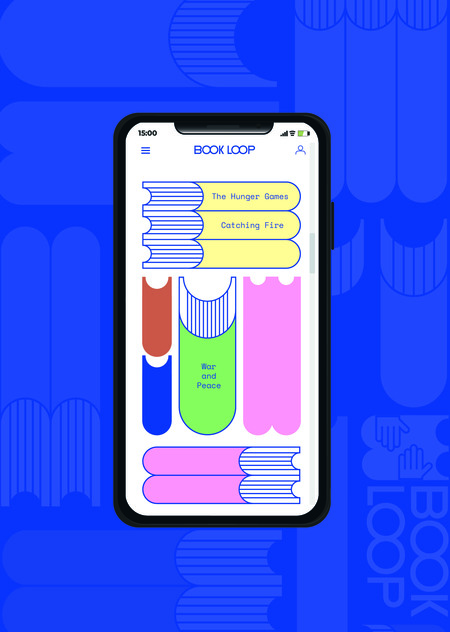
Book Loop — a book-exchange service
Project Description — Book Loop
Book Loop is a conceptual brand for a community-driven book-exchange service that integrates physical street micro-libraries with a digital platform that tracks the journey of each book. The project explores how communication theory can shape contemporary design practices and how a brand can function not only as a visual identity, but also as a cultural and social system. The main idea behind Book Loop is simple: a book becomes more valuable when it is shared. Instead of remaining unused on a shelf, each book travels through the city, connecting readers and creating a living network of stories, interactions, and personal experiences. The service consists of small urban book stations (mini-libraries) placed in accessible public spaces and an app where users can scan a book’s QR code to see its history, previous readers, locations, and personal notes.
The goal of the project is to encourage reading, activate public space, and build a sense of community through shared cultural practices. By combining participatory communication, network theory, and experience design, Book Loop positions itself as more than a simple book-swap system — it becomes a communication platform that visualizes and celebrates the invisible connections between people. Ultimately, Book Loop aims to demonstrate how thoughtful design can transform everyday objects into tools of social interaction, how a small urban initiative can support sustainability, and how communication theory can serve as a foundation for creating meaningful, human-centered branding.
Design system
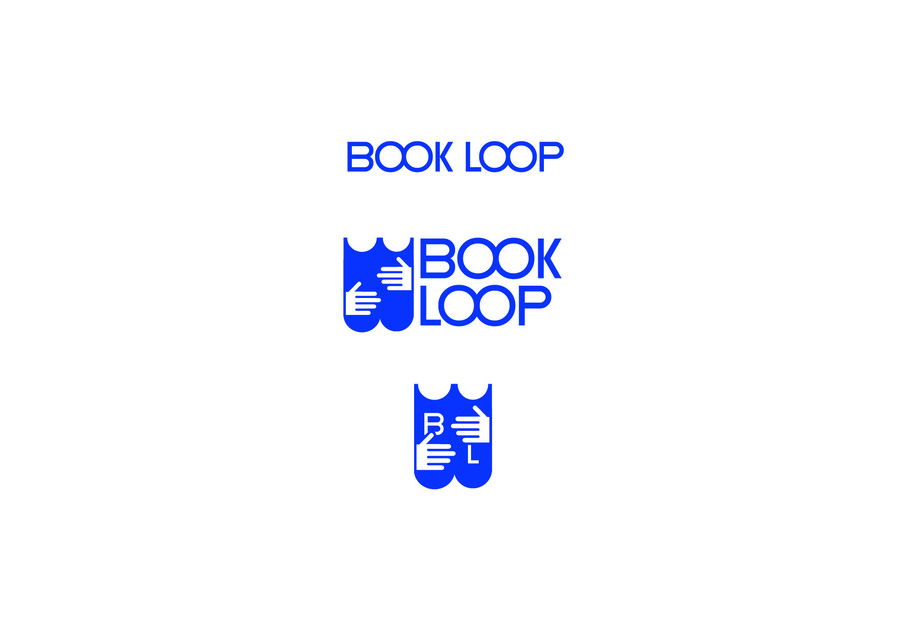
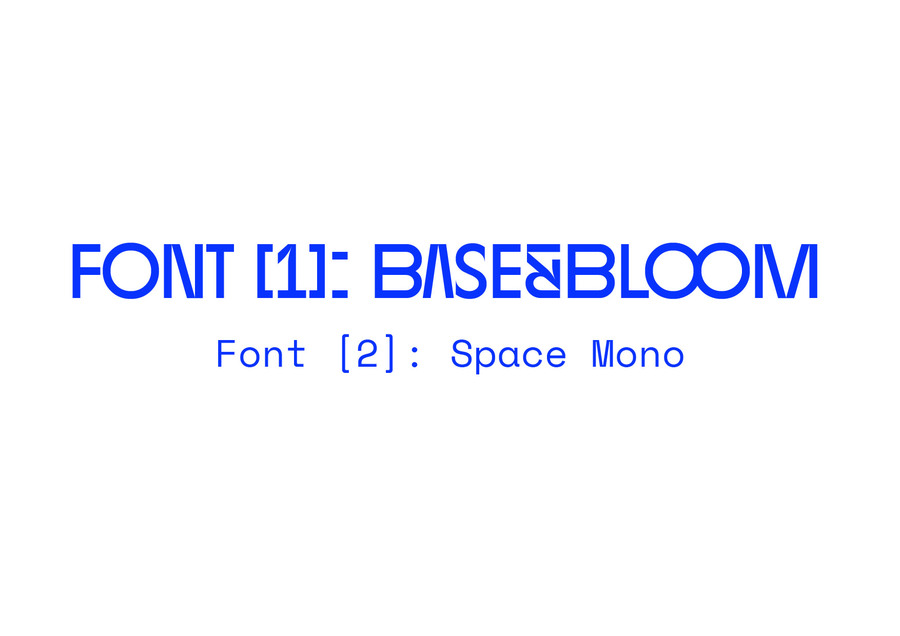
Logo variations Typography & color system Iconography Modular library stand design
AUTHOR’S REASONING ON COMMUNICATION THEORY
What communication means in design Communication = creation and exchange of meaning through visual, spatial, and interactive forms
Theories selected for the project
Semiotics (signs and symbols): book as a cultural sign Participatory communication: community-driven meaning Network theory: book as a node moving through people Experience design: communication through interaction
Why these theories matter for Book Loop
They help conceptualize: the book’s «journey» as a narrative community as co-authors of the brand the city as a communicative interface
Main communication hypothesis
«Every book is a moving story — communication happens not only through reading, but also through sharing.»
How this shaped the brand
Symbolism inspired the logo Participatory theory shaped the app Network theory shaped the map interface Experience design shaped the physical mini-libraries
BRAND PRESENTATION FOR GENERAL AUDIENCE
Simple. Clear. Emotional.
The problem
Books gather dust at home Bookstores are declining People read less Cities lack accessible cultural exchange points
Book Loop is an urban book-sharing service created in response to the declining culture of reading and the lack of accessible cultural exchange spaces in modern cities. Many books remain unused at home, while public reading initiatives are becoming less visible. Book Loop offers a simple and engaging solution by combining street mini-libraries with a mobile application that tracks the journey of each book.
Our solution: Book Loop
An urban book-sharing system that combines: street mini-libraries a mobile app that tracks the life path of every book
How it works
Take a book from a Book Loop mini-library Scan the QR code See its previous readers and locations Read & leave feedback Return it to any mini-library
Mission
Users can take a book from a mini-library, scan its QR code, explore its previous readers and locations, and then return it to any Book Loop station after reading. This process transforms reading into a shared experience rather than a private act. The mission of Book Loop is to build community through shared reading and to give books new life cycles. The brand is based on values of openness, sustainability, and cultural enrichment, expressed through a friendly visual identity, a warm tone of voice, and accessible design across both physical and digital touchpoints.
To build community through shared reading and create new life cycles for books.
Values
Openness & sharing Community Sustainability Cultural enrichment
Tone of voice (audience-friendly)
Warm, inclusive, curious, community-driven.
BRAND PRESENTATION FOR PROFESSIONAL AUDIENCE
Research insight & Benchmark analysis
Growing interest in: affordable cultural practices shared economy community-based city services
Comparable services: Little Free Library Bookcrossing.org Local swap shelves
Target audience
Students Young creatives Families Eco-conscious citizens Urban culture lovers
Customer journey map
Awareness → Book pickup → QR scan → Reading → Tracking → Sharing → Re-engagement
Visual identity overview
Visual identity overview Loop-like book symbol Soft, modern color palette Friendly icons Urban illustrations
Example brand materials QR-stickers Posters «Let your book travel» App mockups (map, book profile, reviews)
Brand Structure, Communication Strategy, and Social Impact
The Book Loop project is designed as a multi-layered communication system that combines physical, digital, and social dimensions into a single brand ecosystem. Its structure reflects the core idea of continuous circulation — not only of books, but also of meanings, experiences, and human connections.
At the center of the brand architecture is Book Loop as the main umbrella brand, which represents the overall concept, values, and visual identity of the service. It is supported by two key components: Loop Stations, the physical mini-libraries located in public urban spaces, and the Loop App, a digital platform that connects users, books, and locations into a visible network. This tripartite structure allows the brand to exist simultaneously in the city, on personal devices, and within social interactions, reinforcing its presence through multiple communication channels.
The design system of Book Loop is developed to ensure visual coherence across all touchpoints while remaining flexible and human-centered. Logo variations are built around the idea of a loop, symbolizing continuity, exchange, and movement. The typography and color system are deliberately simple and accessible, reflecting openness and inclusivity. Iconography plays an important role in navigation and storytelling, translating abstract ideas such as movement, history, and connection into clear visual signs. The modular design of the mini-library stands allows them to adapt to different urban contexts while maintaining a recognizable brand identity.
The UX/UI concept of the Loop App is directly informed by communication theory and experience design. The interface focuses on visualizing relationships rather than simply providing functionality. Key screens include an interactive map showing the locations of Loop Stations, a book timeline that documents the journey of each book, reader reviews that add personal voices to the system, and individual user profiles that encourage long-term engagement. Through these features, the app transforms data into narrative, allowing users to perceive themselves as part of a larger cultural network.
Beyond its functional aspects, Book Loop carries a clear social and cultural value. The project encourages reading by lowering barriers to access and reframing books as shared resources rather than private possessions. It contributes to sustainability by extending the life cycle of books and reducing waste. Most importantly, it creates social connections by enabling people to communicate indirectly through shared objects and stories. By activating public spaces with mini-libraries, Book Loop also strengthens the cultural role of the city itself, turning everyday urban environments into sites of interaction and exchange.
The entire project is grounded in communication theory, which serves not only as an analytical framework but as a practical design tool. From a semiotic perspective, the book functions as a cultural artifact, the loop symbolizes continuous movement and connection, and the QR code acts as an entry point into a narrative system. Network theory informs the understanding of each book as a node and each reader as a link within a dynamic communicative structure, which is visualized through the app. Participatory communication is central to the project, as the brand cannot exist without active user involvement — readers are not consumers, but co-creators of meaning. Emotional communication further strengthens engagement by allowing users to see where a book has traveled, transforming abstract data into personal and affective experience.
In conclusion, Book Loop demonstrates how a contemporary brand can operate as a communicative environment rather than a static identity. By integrating theory, design, and social practice, the project illustrates the potential of communication-driven branding to foster community, sustainability, and cultural exchange in everyday urban life.
HOW COMMUNICATION THEORY INFORMED THE PROJECT
Communication Theory as the Conceptual Foundation of the Book Loop Project
The Book Loop project is based on communication theory, which serves as both a conceptual framework and a practical tool for design and branding decisions. The project draws on semiotics, network theory, participatory communication, and emotional communication to create a system where meaning is produced through interaction, movement, and shared experience.
From a semiotic perspective, the book functions as a cultural artifact that accumulates meaning through each reader. The concept of the «loop» symbolizes continuity, circulation, and connection, while the QR code acts as a bridge between the physical and digital spaces, allowing users to access the narrative history of each book. Network theory informs the structure of the service by framing each book as a node and each reader as a link within a dynamic network. The mobile application visualizes this network through maps and timelines, transforming individual reading experiences into a collective cultural process.
Participatory communication is central to the Book Loop brand, as users actively shape the system by sharing books, leaving feedback, and sustaining circulation. Emotional communication further strengthens engagement by visualizing a book’s journey, creating personal attachment and a sense of belonging within the community. Together, these theories demonstrate how communication-driven design can transform an everyday object into a platform for social interaction and shared cultural meaning.