
Drop 2024
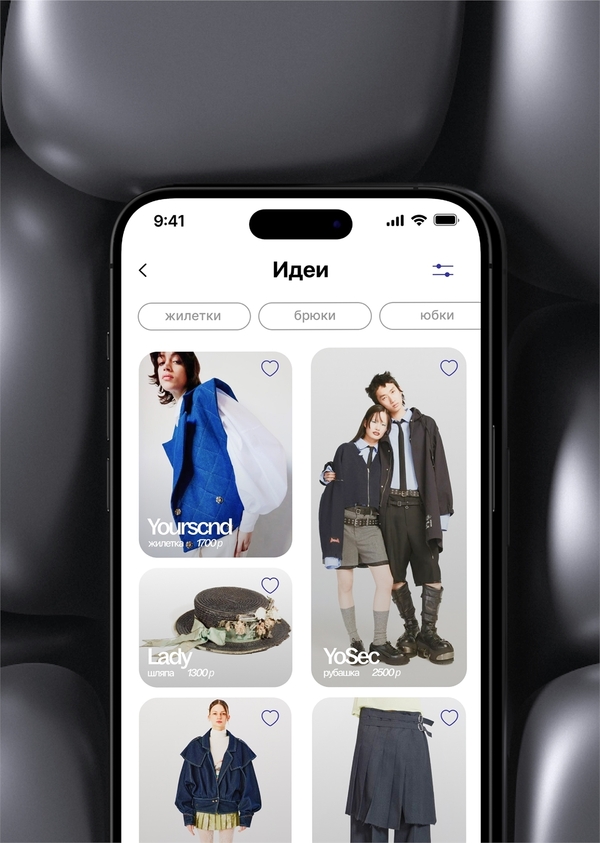
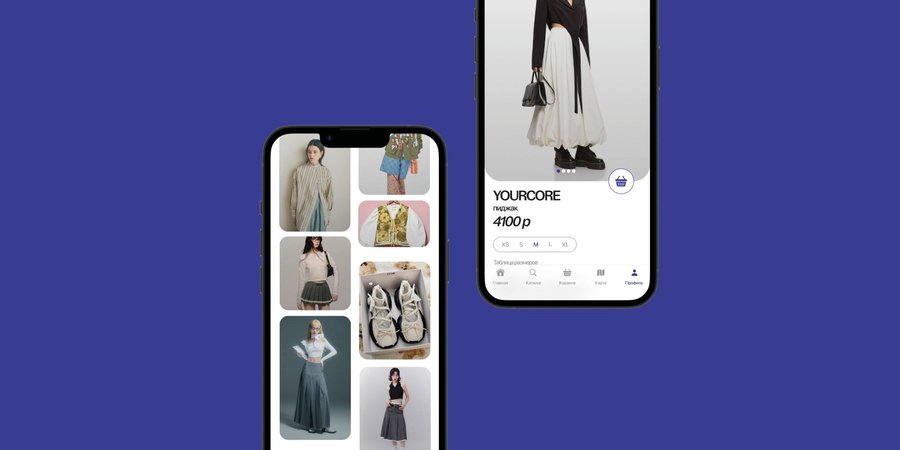
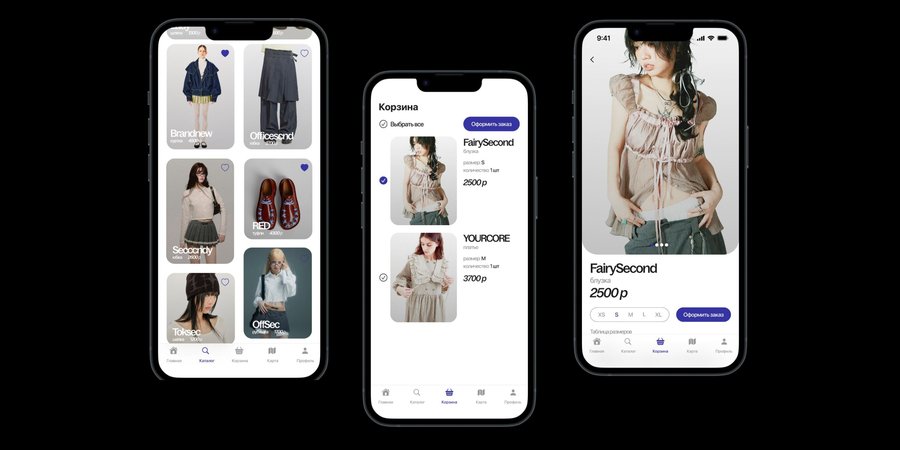
Drop is a mobile application that will help you find new and interesting places to buy vintage clothing
Drop 2024
General theoretical part
Communication theory in the field of design: how a «message» becomes an experience
Drop 2024
Communication in design is not a single act of «sending a message and receiving a reaction,» but a continuous process that is constantly reconfigured depending on context. This is exactly how the course interprets communication: it is dynamic, transactional, and shaped by situation, relationships, and culture. When we apply this framework to design, it becomes clear that any brand and any product is, in essence, a communication system in which the designer and the brand encode meaning, the audience decodes it, and feedback (behavior, reviews, repeated actions) returns to the system and changes it. The classic set of communication elements (sender, receiver, message, channel, feedback, noise, context) works in design quite literally. The sender is the brand and its team; the receiver is the user; the message is the product’s promise and values; the channel is the medium (a poster, an interface, social media, an offline touchpoint); feedback consists of metrics and reactions; context is the audience’s cultural expectations; and noise is anything that interferes with accurate meaning transfer and leads to misunderstanding or refusal to act. In today’s media environment, noise is almost always excessive: the user is surrounded by competing signals, and design either helps them «pull together» and understand—or becomes yet another source of overload.
Drop 2024
In this sense, design can be seen as a tool for working with communicative noise. Using a calm palette, a minimalist visual system, softly modeled forms, and clearly formulated messages helps reduce tension, increase a sense of safety, and allow the user to focus on their own goals and experiences. In the DROP project, this logic is applied to a different task: here, design is aimed at reducing informational noise associated with searching for unique items. Through a structured interface and clear communication, the user’s attention is shifted from a chaotic stream of information to a meaningful, controllable search process. In both cases, design and communication function not as a decorative layer, but as an instrument for directing attention and shaping meaning.
Drop 2024
The course lectures also emphasize why theory is needed: it is not «about smart words,» but about systematizing knowledge and its four functions—description, explanation, prediction, and transformation. For a design project, this is highly practical. Theory helps describe the problem more precisely («not simply inconvenient to search, but a high level of noise and a weak channel structure»), explain the reasons («why the audience loses motivation»), predict consequences («if we reduce noise and provide clear navigation, the likelihood of action will increase»), and finally transform reality—making communication more effective and more humane.
Drop 2024
An important step in the course is distinguishing between objective and interpretive approaches. The objective (positivist) approach looks for patterns and relies on measurement (surveys, percentages, statistics), while the interpretive approach works with multiple meanings, culture, and experience (observation, interviews, scenarios). In a real design project, these approaches do not conflict; they complement each other: numbers show the scale of the problem, while meanings explain why it is experienced in a particular way and what the user ultimately wants to achieve. Finally, Robert Craig’s «seven traditions» can be used as a navigator for building strategy. The cybernetic tradition reminds us that communication is an information-transmission system in which channel, noise, and feedback matter; the semiotic tradition shows that meaning is produced through signs and codes; the socio-cultural tradition highlights that we always «read» messages through the norms and practices of our group; the social-psychological tradition emphasizes that communication influences behavior and decisions; the rhetorical tradition focuses on how a brand persuades and constructs arguments; the phenomenological tradition argues that without respect for the Other’s experience there is no genuine dialogue; and the critical tradition points out that communication always involves ideology and power (for example, which consumption models are normalized, who is included or excluded, and what is considered «good taste»). In the DROP strategy, we intentionally combine these lenses into a single system: rather than memorizing theories, we use them as tools for designing the brand and the interface.
Presenting the brand to a wider audience
«Uniqueness is closer than it seems»: message, audience, context, and noise
Drop 2024
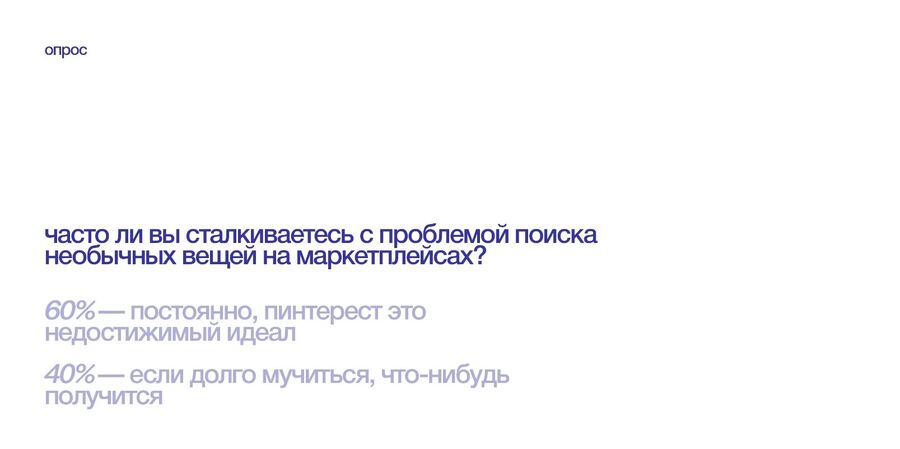
There is a feeling familiar to many people: you see ideal images—on Pinterest, in curated selections, in your feeds—and it seems as if somewhere there exists a whole world of «unusual things.» But once you move to real searching, everything falls apart: marketplaces keep showing the same items, the feed turns into endless noise, and the desire to find something «that’s truly yours» becomes hard work. Your mini-survey captures this almost word for word: for some people, Pinterest is perceived as an unattainable ideal, and searching for something unusual on marketplaces becomes a constant problem. This is an important observation: it points not merely to inconvenience, but to a gap between a cultural image (an ideal style) and the actual accessibility of that experience in real life. DROP appears precisely in this gap. It is a mobile app that brings together popular second-hand stores, vintage shops, and markets—so that searching for new and interesting places to buy vintage clothing becomes clear and fast. The point of DROP is not «yet another address database,» but reducing the informational noise between a person and a find. Where today people have to collect information from friends, Telegram channels, bloggers’ maps, and random tips, DROP consolidates it into a single channel and turns the search into a route.


Drop 2024
The brand’s core message is «Uniqueness is closer than it seems.» It is designed to work according to the rules of communication as a process: the meaning does not live in the slogan on its own—it is confirmed through experience. Here, the idea that «the medium is the message» is especially precise: the mobile-app format literally makes «closer» measurable—on a map, by neighborhood, by distance, and by time. The channel becomes part of the message: DROP communicates not only through words, but through the very mode of interaction—fast, location-based, and everyday.
Drop 2024
The audience context for DROP is young people aged 16–30 who seek self-expression and grow tired of sameness. Importantly, they live in two realities at once: a digital culture of visual ideals and an urban reality where «unusual» things really do exist, but are hidden behind the barriers of search. The survey shows that for most people it is inconvenient to look for different second-hand stores, and they either stick to one trusted option or rely on separate «secret» sources such as TikTok channels. This, again, is about communication: there are many channels, but none provides a stable, calm experience—so the noise remains high. DROP offers a different type of communication—transactional and supportive. The user does not simply «receive information»; they enter a process: they choose a task, refine filters, save places, build a route, and return for new «drops.» Feedback becomes part of the product: user actions shape recommendations and curated lists, while reviews and ratings help others decode the meaning of a place in advance—reducing uncertainty and saving effort. As a result, the brand’s values are formed not through declarations, but through experience: uniqueness as a real outcome, mindfulness as a natural choice rather than moralizing, simplicity as a saving of time and energy, and trust as alignment between expectations and reality.
Presentation for a professional audience
The communication system, visual codes, and UX as noise management
When speaking about DROP in professional terms, its communication strategy is built around a cybernetic logic: we treat the product as a system that transmits information through a channel with inevitable noise and with the necessary feedback loop. Within this approach, the key design task is not to «add more content,» but to stabilize communication: reduce noise, increase message clarity, and make decoding as effortless as possible. This is especially evident in the project’s initial positioning in the presentation: the app «simplifies the search for new places to shop and offers choice.» The wording matters here: «simplifies» and «choice» refer to the structure of the channel, not to the amount of information. Visually, the project establishes a code of «cleanliness and order» from the outset: a white field, plenty of whitespace, careful typography, and a saturated blue as a recognizable marker. This decision works semiotically: amid urban and digital noise, such a code is read as a promise of clarity and control.
Drop 2024
UX communication in DROP is designed as a dialogue. A phenomenological lens helps keep the focus on the user’s experience: it is important not only to «find an address,» but also to feel understood—to feel that one’s journey is supported rather than judged. Your job stories are especially useful here: they show that motivations differ, but the final meaning converges in the same experience—"to stand out» and «to enjoy shopping.» Therefore, interface scenarios should not only be logical, but emotionally humane: provide a quick start, support decision-making, reduce the fear of «wasting time,» and offer small confirmations that the user is moving in the right direction. The social-psychological tradition adds pragmatics: communication influences behavior, so we design triggers that lead to action. That is why short place cards, filters, and routes are important—they turn the «dream of a find» into a sequence of simple steps. The rhetorical tradition shapes a language of persuasion: the slogan «Uniqueness is closer than it seems» is an argument against the main barrier («it’s difficult and far away»), and the entire structure of the product becomes evidence of that argument. A critical perspective keeps the framework of responsibility in view: DROP does not romanticize endless consumption; instead, it offers a practice of more sustainable choice and gently normalizes reuse and recycling—without moralizing and without exclusionary snobbery. Thus, for a professional audience, DROP is interesting because it builds communication not around «content,» but around managing noise and cultural meanings: it combines the cybernetic clarity of the system, the semiotic precision of its codes.
How we arrived at this strategy
Theory as a tool: from describing the problem to transforming the experience
The logic behind developing DROP’s strategy follows a key point emphasized in the lectures: theory is needed not for abstraction, but to structure reality and to be able to change it. We began by describing the problem as a communicative one: people struggle to find unusual items amid the noise of marketplaces, and searching for new second-hand shops is inconvenient precisely because information is scattered across many channels and requires effort to collect. The survey in the presentation provided an objective foundation—percentages and wording that show the scale and nature of the barrier, as well as the ways people currently compensate for the lack of a single, unified channel. This is part of the objective approach: measuring and identifying a pattern.
Drop 2024
Next, we moved to the interpretive layer: job stories helped us understand how users themselves explain their motivation and what meaning they want to obtain as an outcome. Here it is important not to confuse the «product goal» with the «human goal.» People are not coming for an «aggregator,» but for the feeling that they have found something that is truly theirs, that shopping becomes enjoyable again, and that the path to uniqueness does not require heroism. This immediately sets the tone of the strategy: DROP should speak and act like a helper, not like a catalog.
Drop 2024
We then chose Craig’s theoretical lenses as a map for decision-making. The cybernetic tradition gave us the language of «noise» and the necessity of feedback—hence the focus on structure, filters, fewer steps, and collecting user responses. The semiotic tradition explained why the visual language must be stable and easy to read in a noisy environment—hence a minimalist base and a distinct brand marker. The sociocultural tradition highlighted that vintage is a community practice and a culture of recommendations, so DROP’s communication should feel «native» in this context, respecting familiar search practices while translating them into a more convenient format. The social-psychological tradition helped us design behavioral steps and triggers, while the rhetorical tradition helped us frame the brand’s main argument in a clear message and support it through interface logic. The phenomenological tradition kept the focus on human experience, and the critical tradition ensured that the product does not reinforce toxic consumption scenarios or turn vintage into an «exclusive club.» In this way, theory fulfilled all four functions discussed in the lecture: it described the problem (noise and dispersed channels), explained it (context and cultural practices), enabled prediction (reducing noise leads to more action and greater satisfaction), and provided transformation (creating a medium that changes the search experience itself). As a result, DROP’s strategy is built around a simple but powerful idea: uniqueness exists nearby, but to make it accessible, communication must be restructured—by creating a single channel, a clear code, and a human-centered experience.
Drop 2024
The project is based on materials from the Communication Theory course.
DROP // portfolio hse URL: https://portfolio.hse.ru/Project/219308 (дата обращения: 10.12.2025).